

"How to participate creatively in the wildness of the world around us is what we must learn. For great visions must arise from the wild depths of the universe and from the wild depths of our own being."
Thomas Berry
Here we bring an excerpt from the book The Great Work – Our Way into Future by cultural historian and cosmologist Thomas Berry (1914-2009), the Czech edition of which is being prepared by Malvern Publishing House. The excerpt is from Chapter 5, “Wild and Sacred”. Translated by Jiří Zemánek and David Sanetrník. This year’s sixth seminar of the Traveling University of Nature “Becoming Native or the Search for Home”, which will take place from August 2-8 in the Ore Mountains, will also be dedicated to the work of Thomas Berry.
To understand the human role in the functioning of the Earth, we must appreciate the spontaneity that is found in every form of existence in the natural world, the spontaneity that we associate with the wild—with that which is not controlled by human dominance. If we believe that our historical mission is to “civilize” or “domesticate” the planet, as if wildness were something destructive rather than the fundamental creative modality of every form of earthly being, we have misunderstood our role. We are not here to control. We are here to become an integral part of the greater earthly community. The community itself and each of its members ultimately has a wild element, a creative spontaneity that is its deepest reality, its deepest mystery.
We can contemplate this sense of the wild and the civilized as dawn breaks through the morning mist. At such times, the world is filled with silence—an oppressive feeling, a subtle, peaceful transition from night to day. This experience deepens as evening falls, the day fades, and night comes in all its mystery. It is in such moments of transition that we are most aware that the world around us is beyond any human control. And so it is in the transitional stages of human life; at birth, at adolescence, and at death, that we contemplate our presence in a world of mystery that is much larger than ourselves.
I bring all this up because today we are discovering our human role in a different order of magnitude. We are experiencing the disintegration of the planet's life systems at a time when the Earth has reached a unique grandeur in the diversity and splendor of its self-expression. This moment deserves special attention from us humans because we are the ones who are causing this disintegration, and in a way that has never happened before in the entire 4.6 billion years of Earth's history.

We never thought we would be able to damage the very fabric of planet Earth or wipe out the life forms that give it its unique grandeur. In our efforts to reduce Earth to an object of human control, we are actually ending the Cenozoic Era, a lyrical period in the development of life on Earth.
If such moments as dawn and dusk, birth and death, and the seasons of the year are so significant, how tremendous must be the present moment as we witness the dying of the Earth in its Cenozoic form and the renewal of its life in the nascent Ecozoic era. This consideration has a special urgency if we are ever to restore a consciousness of the sacred in every area of our human activity. For it is only when we realize the universe above us as an experience of the revelation of this numinous presence from which the whole world arose into being that we will rediscover our sense of wonder and sense of the sacred that we will rediscover our sense of the sacred. The universe is primarily a sacred reality. We awaken to the spiritual dimension of life by participating in this more sublime dimension of the world around us.
The universe carries within it the standard of authenticity for every spiritual and physical activity that takes place in it. The spiritual and the physical are two dimensions of the one reality that is the universe itself. There is a certain basic wildness to all of this, for the universe, like life itself, is a threatening as well as a benevolent mode of being. While it grants us amazing power over much of its workings, we must always remember that any arrogance on our part will ultimately be held accountable. The beginning of wisdom—in any human activity—is a certain reverence for the primal mystery of existence, for the world around us is a terrifying mode of being. We do not decide the universe. The universe is deciding us right now. We experience this decision in what we relate to as “wild.” We recognize its presence when we are alone in the forest, especially on a dark night, or when we are at sea on a small vessel, when land is not in sight and we temporarily lose our sense of direction. We experience the wild in earthquakes that shake continents with such force, and also in hurricanes that are born in the Caribbean Sea and rush over the land.
Sometimes we think we can tame the world, because it sometimes seems possible, such as our ability to unleash the immense energy hidden in the core of a tiny atom. But when we invade this deepest and most mysterious dimension of matter, nature exposes us to its deadliest forces, wild forces that we cannot handle, forces that make us fear that we are making the planet a wasteland for vast numbers of living beings.
I am speaking of the wild dimension of existence, of the awe and fear associated with wildness, for it is here that life and existence and art itself begin. When Henri David Thoreau wrote in his essay on walking that “in wildness lies the salvation of the world,” he made a statement of unparalleled importance in human affairs. I know of no more serious criticism of civilization than the enormous effort that has been made during these last ten thousand years to bring the natural world under human control. Such an effort would tame even the inner wildness of man himself; and would ultimately end in reducing these vast creative human possibilities to trivial forms of expression.
Wildness can be considered the root of the authentic spontaneity of every being. It is the source of creativity from which spring the instinctive actions that enable all living beings to obtain food, find shelter, give birth to their young; to sing, dance, and fly through the air and swim in the depths of the sea. It is the same inner tendency that gives rise to the vision of the poet, the skill of the artist, and the power of the shaman.
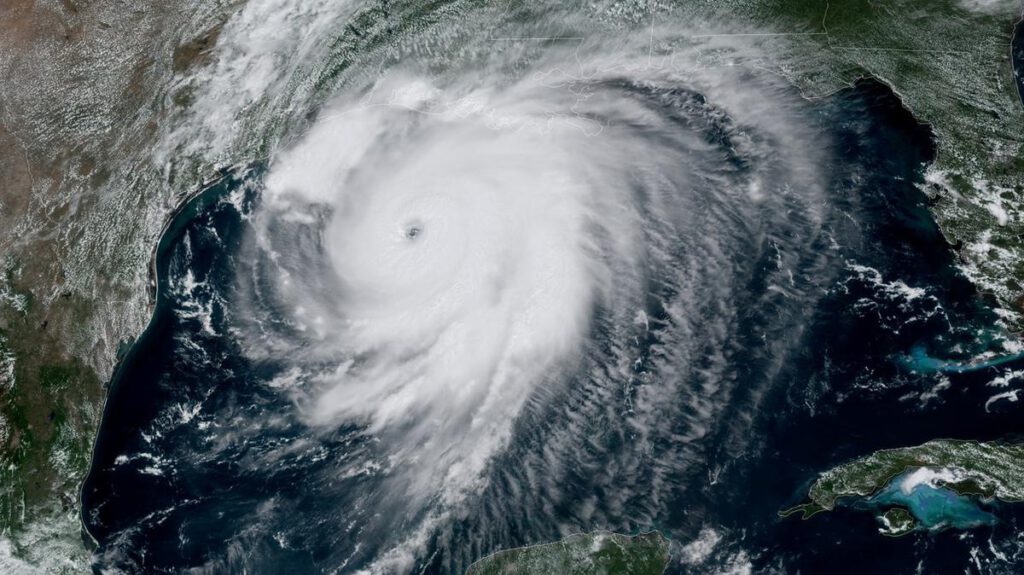
As a woman in Florida put it after Hurricane Andrew. She told a group of people that she did not see herself as a victim, but as a participant in this wild event, with all its creative as well as destructive aspects. She was convinced that the hurricane had something to tell us. It told us how to build our homes if we want to live in this area. It told us to consider the winds and the seas, to remind ourselves that if we live here, we must obey the deeper laws of the place, which no amount of urban planning can override. We can live here if we wish, but under conditions determined for us by non-human forces. The hurricane has its own internal self-control. It is itself the answer to the needs of the region. That is what we need to learn: how to participate creatively in the wildness of the world around us. Because great visions must arise from the wild depths of the universe and from the wild depths of our own being.
We are mistaken if we understand the wild as merely random activity or turbulence. There is a self-control throughout the world that keeps the energies of the universe in a creative pattern of their activities, even though this self-control may not be immediately apparent to our human perception. The emerging universe appears as some wild unconscious act, springing from some infinite abyss in the expansive differentiation process of those first moments when all the energy that ever existed was radiated in the form of radiation too mysterious for us to fully understand. And yet, as this energy articulated itself in the form of matter, the gravitational attraction that every being has for every other being created the basic organizing process, gravity, the primary self-control in the grand structure of the universe.
This mutual attraction and mutual restraint through gravity is perhaps the first manifestation and the first primordial model of artistic discipline. It gave the universe its initial sense of being at home with itself, but it also plunged it into a deep dissatisfaction with any final expression of itself. We can therefore assume that wildness and self-discipline are the two fundamental forces of the universe – the force of expansion and the force of limitation – which are closely linked together within the one universe and are expressed in every being in it.” (…)

And therein lies the greatest mystery of planet Earth. When the solar system first coalesced with the Sun at its center—surrounded by nine fragments of matter that gradually formed into planets—all the planets we see in the sky every night were made of the same material. Yet Mars turned into rock so solid that nothing liquid could exist on it, and Jupiter remained a hot mass of gases so that nothing solid could exist on it.
And therein lies the greatest mystery of planet Earth. When the solar system first coalesced with the Sun at its center—surrounded by nine fragments of matter that gradually formed into planets—all the planets we see in the sky every night were made of the same material. Yet Mars turned into rock so solid that nothing liquid could exist on it, and Jupiter remained a hot mass of gases so that nothing solid could exist on it.
Only Earth became a living planet, filled with the countless forms of geological structure and biological manifestations that we can observe throughout the natural world. Only Earth maintained the creative balance between turbulence and self-control, which are the necessary conditions for creativity. An excess of self-control suppressed the wildness of Mars, an excess of wildness overwhelmed the self-control of Jupiter - their creativity disappeared due to the dominance of one over the other. But the balance of these forces would have presented a different obstacle to creativity, since it would have created an unchanging fixed state in which creativity would have disappeared. The universe solved this problem by establishing a creative imbalance, expressed in a curvature of space that was closed enough to ensure permanent order in the universe and open enough to allow wild creative processes to continue.
We perceive this creative force primarily in the intelligible order that we observe in the universe. Such is the path of the philosopher. Such is the path of St. John in the opening prologue to his Gospel, “In the beginning was the Word,” that is, the principle of order and intelligibility. Or we can perceive the primordial generative force itself in the imbalance of the universe, in the world of spirits, in the wildness of the world, in the dreams that come to our souls in the depths of the night, in dreams that correspond in the human soul to the openness of the curve that holds the universe together and yet allows it to continue its infinite creativity.

Artists have something wild in them, something that is guided and inspired in its very essence by imagination. In the words of William Blake, “divine imagination.” The artist surrenders to the utter imbalance of the world. The philosopher, on the other hand, is governed by the balance and harmony of things, by the reasoning intelligence. Both are valid, both are necessary. The universe has been, from the very beginning, and even now, held in balance between expanding and contracting forces, and no one knows when or whether this creative balance will collapse, or whether it will continue indefinitely. And so both, philosopher and artist, balance between these two possibilities.
In this mysterious balance, the universe and all its grandeur and beauty become possible. It is here that the presence of the sacred is revealed. Here is that overflowing abundance that could scatter the stars across the sky with such ease and yet with such perfect balance, each in relation to countless billions of other shining fragments of primal existence. Musicians who listen to the wild rhythms and melodies that emerge within them experience the mighty forces of the universe. We find them in Johann Sebastian Bach's Toccata and Fugue in D minor, in Ludwig van Beethoven's Eroica symphony. In Vincent van Gogh's painting The Starry Night. Such is also the magic of Claude Monet in his evocation of the mystical qualities of water lilies floating on the surface of a small, dark pond. The architect who looked out over the fields south of Paris and, through the mists of the future, saw the cathedral of Chartres must have experienced a moment when the wild and the sacred merged in a single moment of vision.
A similar experience of the wild wonders of the universe can be seen on a smaller scale in the dream paintings of the Australian Aborigines. Here in the desert regions of this vast continent, situated in the South Seas, live a people who experience the surrounding universe, especially the topography of the land, as the expression of supernatural beings or forces which they call the Dreams. Their paintings, composed of lines and dots in an infinite variety of patterns, colors and shapes, are unimaginable in our Western traditions; they depict the Dreams as creative forces, shaping the landscape and expressing the deepest spirit of the universe.
The indigenous people of Australia were once thought to be completely devoid of the intellectual and cultural skills we associate with even the most primitive peoples we know from elsewhere. They had only one day's food, no permanent dwellings or clothing, only a few tools. Yet today we are discovering the amazing achievements these people have made in their understanding of the physical and spiritual dynamics of the world around them, and in how to respond to those dynamics. Most significant of all is the fact that these people "live in space". (...)
The landscape that surrounds the Appalachian Mountains, the rivers that flow from the mountains down to the sea, the trees that bloom in this environment, the birds that sing in this valley, all came into being during the past 65 million years. It was a time of unparalleled wildness, but it was also a lyrical period in the story of the Earth. Man could perhaps have appeared only in such a magnificent time, for his inner life is directly dependent on the outer world of nature. Only when the human imagination is activated by the flight of great birds high in the sky, by the blossoming of flowers, by the sight of the sea, by the lightning and thunder of great storms that break the heat of summer, can a deep inner experience be born in the human soul.
All these phenomena of the natural world present a challenge to man, to which he responds in literature, architecture, rituals and art, in music, dance and poetry. The natural world demands an answer that goes beyond rational calculation, philosophical reasoning and scientific understanding; it demands an answer that arises from the wild unconscious depths of the human soul. An answer that artists seek to give through color, music and movement.
The answer we give must have the highest creative power, for the Cenozoic era in Earth's history is passing away, as the sun sets in the western sky. Our hope for the future is the hope of a new dawn, the hope of an Ecozoic era in which humans will relate to the Earth in a mutually enriching way.
