

"Patterns of meaning have been shaped by history. How will our own patterns shape the future?"
Jeremy Lent
Here is an excerpt from Jeremy Lenta's book The Web of Meaning: Integrating Science and Traditional Wisdom to Find Our Place in the Universe (New Society Publishers 2021), from the final thirteenth chapter of "Weaving a New Story", which the author published under the title "The Future is Not Spectator Sport" on his website patternsofmeaning.com. Translated by Jiří Zemánek.
Like all self-organizing, adaptive systems, human society moves in a nonlinear way. Even as our civilization crumbles, a new ecological worldview is spreading across the globe. Will it be strong enough to avert cataclysm? None of us know. Perhaps the great transition to ecological civilization is already underway, but we are unable to see it because we are in the middle of it. We are all co-creating the future as part of an interconnected web of collective decisions that each of us makes: what to ignore, what to notice, and what to do about it.
The non-linearity of history
There are many good reasons to watch the unfolding catastrophe of our civilization, which is rapidly heading towards the abyss, and to believe that it is already too late. The ever-increasing carbon dioxide emissions, the ongoing devastation of the living Earth, the hypocrisy and corruption of our political leaders, and the strategy of our corporate media to ignore the issues that are most important to the future of humanity – all these factors combine to form a seemingly unstoppable colossus that is driving our society towards a tipping point. As a result, more and more people are beginning to come to terms with the fatal diagnosis of civilization. According to Jem Bendell, founder of the growing Deep Adaptation movement, we should wake up to the reality that we will face an inevitable societal collapse in the near future.
Our civilization appears to be undergoing a profound transformation. But it remains unclear what this transition will look like, and even more unclear is what new social paradigm will emerge when the smoke clears. Will it be a cataclysmic collapse that leaves a few survivors in a bleak dark age? Will the Earth become a fortress that condemns most of humanity to a pitiful struggle for a bare subsistence while a morally bankrupt minority continues their opulent lifestyles? Or will we be able to retain enough of the knowledge, wisdom, and moral integrity of our past to re-create our civilization in a form that will survive the coming turmoil?
An important lesson from history is that society—like all self-organizing, adaptive systems—changes in a non-linear way. Events unfold in unexpected directions that only make sense in retrospect. They can have catastrophic consequences, such as the start of a world war or the collapse of civilization, but they often lead to unexpectedly positive outcomes. When a dozen or so Quakers met in London in 1785 to form the abolitionist movement, it seemed unlikely that within half a century slavery would be abolished throughout the British Empire, that it would spark a civil war in the United States, and that it would eventually become illegal worldwide. When Emmeline Pankhurst founded the National Women’s Suffrage Association in 1897, it took a decade of struggle before a few thousand courageous women joined her march in London, but within the next few decades women around the world gained the right to vote.

In recent decades, history has continued to surprise those who scoff at the potential for dramatic positive change. It took just eight years from Rosa Parks’ arrest for refusing to give up her seat on a bus in Montgomery, Alabama, to the March on Washington, where Martin Luther King Jr. inspired the American nation with his “I Have a Dream” speech—and the following year saw the passage of the Civil Rights Act. In 2006, civil rights activist Tarana Burke used the phrase “Me Too” to highlight sexual assault; she had no idea that a decade later it would spark a global movement to change violent cultural norms.
The emergence of an ecological worldview
Could people one day look back on our era and say something similar about the emergence of a new ecological civilization hidden in the folds of the one that was dying? A number of groups are already forming the foundations of virtually every component of a life-supporting civilization. In the United States, the visionary Alliance for Climate Justice has set out principles for a just transition from an extractive to a regenerative economy. In Bolivia and Ecuador, traditional ecological principles are good life and sumac kawsay ('good life') are enshrined in the constitution. In Europe, large-scale cooperatives such as Mandragón in Spain are showing that it is possible for businesses to effectively meet human needs without using a shareholder-based profit model.
A new ecological worldview is now spreading across the globe through cultural, political and religious institutions, and is finding common ground with the traditions of indigenous peoples who have maintained their knowledge throughout the world for millennia. The basic principles of ecological civilization have already been set out in the Earth Charter, an ethical framework launched in The Hague in 2000 and endorsed by more than 6,000 organisations worldwide, including many governments. In China, leading thinkers are embracing a new Confucianism that calls for a cosmopolitan, planetary ecological approach, a reconnection of humanity with nature. In 2015, Pope Francis shook up the Catholic establishment with the publication of an encyclical Praise be to you., a masterpiece of ecological philosophy that shows the profound interconnectedness of all life and calls for the rejection of the individualistic, neoliberal paradigm.
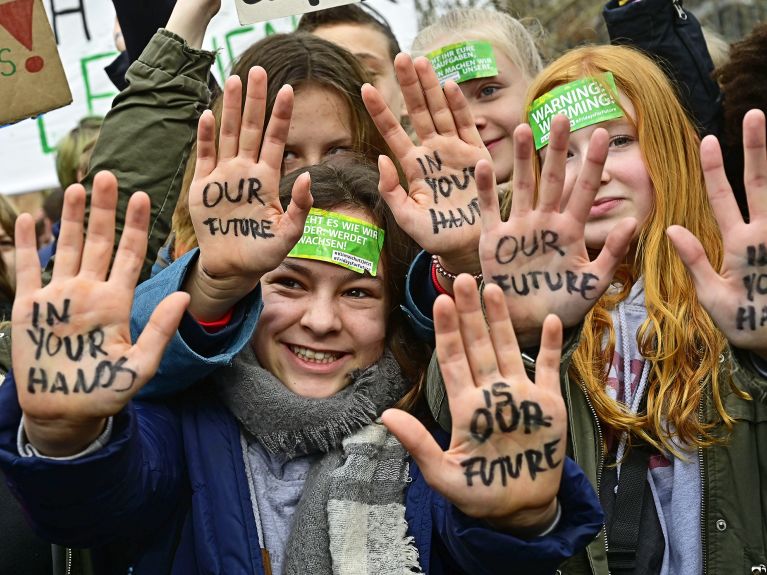
Perhaps most importantly, a grassroots movement for pro-life change is spreading around the world. When Greta Thunberg skipped school to speak out against the climate crisis in front of the Swedish parliament in August 2018, she sat outside alone for days. Less than a year later, more than one and a half million schoolchildren joined her in a global protest to rouse their parents’ generation from slumber. A month after Extinction Rebellion protesters shut down central London in April 2019 to highlight the world’s dire situation, the British parliament declared a “climate emergency” – something that has now been declared by nearly two thousand jurisdictions around the world, representing more than a billion citizens. Meanwhile, a growing “Protectors of the Earth” campaign is pushing to have ecocide recognized as a crime punishable by the International Criminal Court in The Hague.

Will it be enough? Can the collective strength of these movements stand up to the relentless power of corporate capitalism, which has such a firm grip on the political, cultural, and economic systems of the world? When we consider the magnitude of the transformation that is needed, the chances seem slim. These previously described nonlinear historical shifts—revolutionary in their own way—were ultimately swallowed up by a capitalist system that has the tenacity of the mythical many-headed hydra. The transformation now needed requires a metamorphosis of virtually every aspect of human experience, including our values, goals, and norms of behavior. A change of this magnitude would be an epochal event, akin to the agricultural revolution that gave birth to our civilization, or the scientific revolution that gave rise to the modern world. But in this case, we do not have the millennia or centuries that those revolutions took to unfold—this revolution must occur in a matter of decades at most.
Is there a big transition already underway?
Yes, it is daunting, but it is too early to say whether such a transformation is impossible. There are compelling reasons why such a drastic change could happen much more quickly than many people expect. The same close interconnection of global systems that increases the risk of civilizational collapse is contributing to the dizzying speed with which deeper systemic changes can now occur.
The world’s initial response to the coronavirus pandemic in 2020 demonstrated how quickly the entire economic system can react when a clear and immediate danger arises. Most of humanity is now so closely connected via the internet that a relevant trigger – such as the horrific spectacle of the killing of George Floyd in Minneapolis by a police officer – can spark street protests around the world within days.
Most importantly, as the world system begins to unravel due to its inherent flaws, the threads that held the old system together are also beginning to loosen. With each passing year, as we approach the tipping point, as climate-related disasters mount, as shocking racial and economic injustices become more monstrous, and as life for most becomes more unbearable, the old story is losing its hold on humanity’s collective consciousness. As waves of young people come of age, they will increasingly reject what their parents’ generation taught them. They will seek a new worldview—one that makes sense of the current disruption and offers them a future they can believe in. The people who experienced the Industrial Revolution had no name for the changes they were experiencing—it took a century for them to find a name. The great transition to ecological civilization may already be underway, but we don’t see it because we are in the middle of it.
When considering these questions, you don’t have to decide whether to be optimistic or pessimistic. Ultimately, it’s debatable. As writer Rebecca Solnit notes, both positions become mere excuses for inaction: optimists believe that things will turn out well without them; pessimists believe that nothing they do can make things better. But there is every reason for hope—hope not as a prognosis but as an attitude of active participation in co-creating that future. Hope, in the words of the dissident and statesman Václav Havel, is “a state of mind, not a state of the world.” It is “a deep orientation of the human soul that can be sustained even in the darkest of times… It is the ability to work for something because it is good, not just because it has a chance of success.”
This points to the most important characteristic of the future: it is something we all co-create as part of an interconnected network of our collective thoughts, ideas, and actions. The future is not a sporting spectacle. It is not something created by others; it is the collective choices that each of us makes every day: thinking about what to ignore, what to notice, and what to do about it.
Return to life
We live in a world designed to keep us numb—a culture steeped in countless doses of spiritual anesthesia designed to chain us to a hedonic roller coaster, to tossing and turning with everyone else in a “consensual trance.” From early childhood, we are trained to become zombie agents of our growth-driven capitalist system—to find our appropriate role as consumer, enforcer, or victim, as the case may be, and to expend our energy in furthering its goal of draining the life from our humanity and the abundance from nature.
But however powerful the influence of this system, we have the potential to free ourselves from our cultural conditioning. If we learn to open our eyes that our dominant culture has closed to us, we can recognize the meaning that has always been there for us. We can awaken to our true nature as people on this Earth, to feel within ourselves the life we share with all other beings, and to recognize our common identity as a moral community that affirms the primacy of fundamental human values. If we open ourselves to the awareness of our co-existence, our ecological self, we can experience ourselves as “life that wants to live in the midst of life that wants to live” – and realize the profound meaning of our existence on Earth, which is to care for Gaia and to participate fully in her ancient, sacred rebellion against the forces of entropy.
There are many effective methods for shedding the layers of conditioning. Each person’s journey is unique. Some choose to spend extended periods in nature; others may tap into psychedelic insights or learn from indigenous communities; engage in meditation or embodied practices; or simply open to the deep living nature within themselves. This path has been trodden before by those who have embraced their sacred responsibility and created ramps for others in their footsteps. For example, eco-philosopher Joanna Macy has developed a set of transformative practices, “reconnection work,” that is now offered in communities around the world to help people navigate the steps of what Macy calls “returning to life.” It begins with gratitude and spirals toward a full acceptance of the Earth’s broken heart—in Thich Nhât Hanh’s words, a willingness to “hear within ourselves the voices of the weeping Earth.”

But accepting this pain does not mean wallowing in it; rather than providing a path to hopelessness, it becomes a springboard for action. “Reconnecting Work” thus leads participants to experience the profound interconnectedness of all things and continues the spiral toward conscious, active action. As the neo-Confucian philosopher Wang Yang-ming noted, “There have never been people who knew but did not act. Those who should know but do not act simply do not know yet.” You will know that you have reached a place where you are fully experiencing the broken heart of the Earth because you suddenly realize that you are being drawn to action—not because you think you should do something, but because you are driven to do it.