
In the Anthropocene, the so-called new normal is characterized by uncertainty, unpredictability, chaos, and relentless change. Shouldn’t we rather think of this era as a new abnormality? Environmental philosopher Glenn Albrecht argues that we need to move beyond the Anthropocene narrative, and proposes the Symbiocene (from the Greek. sumbiosis, or community). The scientific meaning of the word "symbiosis" means living together for mutual benefit, and so the author asks: what if we used this idea as the basis for the next period of Earth's history? Glenn Albrecht is the author of the award-winning book Earth Emotions: New Words for a New World; is a fellow at the Center for Humans and Nature. This essay was originally published in the journal Minding Nature, which this center publishes online. Translated by Jiří Zemánek.
The period of Earth's history in which we live today has been aptly named the "Anthropocene."1 This name is derived from the increasing dominance of humans and their observed influence on the Earth’s climatic, biophysical and evolutionary processes. However, the problem of human dominance is not just climate change (bad as it is), but the entire capitalist development paradigm, which is the dark core of bad development – development that undermines and destroys the very foundations of life on Earth.
The relative stability and predictability of the last twelve thousand years are gone as the established patterns and regularities of Holocene phenology begin to fall into chaos. While some cosmic constants remain – for example, the cycles of day and night, the influence of the Moon on the tides, the dates of the solstices, including the time it takes the Earth to orbit the Sun – many other patterns and rhythms of terrestrial phenology are undergoing fundamental changes. A rapidly warming climate is throwing everything out of balance. Synchronicity and timing are important, and when, for example, the instinctive migrations of mammals and birds – which are tied to “stable” global rhythms and patterns – do not coincide in time (trophic mismatch) with the flowering, flowering and fruiting of once reliable food sources, accelerated by great warming, death and extinction follow.
Exiting the Anthropocene
In the Anthropocene, the so-called new normal – or what I prefer to call the new abnormal – is characterized by uncertainty, unpredictability, real chaos, and relentless change. The planetary crisis manifests itself in global warming, climate change, erratic weather, ocean acidification, pandemics, species endangerment and extinction, the bioaccumulation of toxins, and the overwhelming physical impact of exponentially expanding human development. The Earth’s suffering has its counterparts in human physical and mental suffering. One of the newly emerging forms of mental distress in the Anthropocene is solastalgia – the psychological experience of negative environmental change.2
We must shed the titanic and, on the other hand, fatalistic implications that are built into the concept of the Anthropocene before it covers many more decades of Earth’s history. If the new abnormality I have just described is the result of our human domination of the planet, which is considered inevitable or “technologically manageable,” then I do not wish to be associated with the Anthropocene. I want this historical period to become unnecessary as soon as possible. The longer it prevails, the more likely it is that we will fail catastrophically as a species here on Earth. While this would be a tragedy of enormous proportions for humans, we would also drag thousands and perhaps millions of other species down with us. Popular literature and film—often sensitive barometers of society’s deep anxieties—already depict such an apocalyptic turn in the relationship between man and nature.
While we have already tried to build a new viable society based on concepts such as democracy, sustainability, sustainable development and resilience, all of these concepts have been corrupted by the forces that have chosen to incorporate them into the Anthropocene, where they have become normalized, business as usual. Sustainability as a concept is inadequate because it does not specify what is to be sustained and over what time frame. “Sustainable development” likewise fails to define what is to be sustained about development, perhaps apart from development itself, for its own sake.3 However, development on a global scale, which is diametrically opposed to both microlife and planetary forces, is leading us on a path to dislocation and, subsequently, extinction.
The concept of resilience has also been appropriated by forces committed to the status quo – it has been pulled into the gravitational pull of a toxic industrial society on a global scale.4 Instead of helping us to reconfigure successful patterns of life after a period of disruption, we are now witnessing how complex adaptive systems and so-called resilience are being used to justify the continued existence of processes and activities that lead people to disease and extinction. The coal, oil, and gas fracking industries claim that they are not only sustainable, but even that they promote health and ecological resilience. Persistent undesirable features of social systems they are more correctly referred to as “negative resistance” or “perverse resistance.”5 These forms of resilience occur where pathological social relations – which oppress and exploit people and ecosystems – are resistant to change due to economic and political subsidies, corruption, political support, bullying, actual violence, terrorism, and vested interests.
The dominance of powerful interests has become characteristic of what is called democracy. Government of the people (demos) became a corrupt government (kratos) of the powerful, and therefore it is no longer a democracy at all, but rather an oligarchy or plutocracy. But it is even worse: capitalism is now governed by what can be technically called corruption. Corporations and oligarchs use their autocratic power and wealth to influence politics, manipulate public officials, and minimize regulation. This form of government is evident in most parts of the world today, but it is stronger, if not more sophisticated, in the so-called developed countries of the Western world.
This form of political economy has been called "corruptalism"6, but an even more appropriate name for it would probably be "corruptalism" (from the Latin to corrupt, “to destroy”). Corruption is the ability to corrupt and destroy the integrity of a social system and its biophysical basis by distorting all forms of development through disinformation, lies, money, and/or violence in order to achieve self-interests that are the opposite of true cultural and ecological interests. We have seen corruption manifest itself publicly in the recent Volkswagen scandal, the FIFA scandal, the Olympic drug scandal, the Exxon climate change scandal, the Panama Papers revelations, and many other cases around the world, from local to global. Given the corruption that has already occurred, there can be no “good Anthropocene.”
To counter all these negative trends in the Anthropocene, we need visions and memes of a different future in popular politics and culture. We will also need further fresh conceptual developments, because the foundations we are building on right now are truly flawed and contribute to nothing but great waves of apathy, grief, fear, solastalgia, mourning, and melancholy. We must quickly leave the Anthropocene with its unsustainability and perverse resilience, with its authoritarianism and corruption. The new foundation built on a new meme will have to be an act of positive creation.
Entering the symbiocene
I propose that the next era of human history be called the Symbiocene (from the Greek sumbiosis, sociability, coexistence). The scientific meaning of the word "symbiosis" means living together for mutual benefit, and I want to use this very important concept as the basis for what I hope will be the next period of Earth's history. Symbiosis, as a fundamental aspect of ecological thinking, affirms the interconnectedness of life and all living things.
As many thinkers have emphasized, such interconnectedness and interaction return our human worldview to the community of life and defy the Hobbesian and Spencerian view of nature as essentially a hostile and competitive war of all against all. Conflicts between organisms undoubtedly exist, but an overall balance of interests (eco-homeostasis) is in the absolute interest of all life. Ecology itself is, moreover, a radical concept because it requires us all to live within the limits of nature, to live together with all the other forms of life that share this home we call Earth. At this present historical moment, when we are aware of the threat of global warming, one of the first thinkers to warn us of its dangers was Murray Bookchin, who in 1962 cogently summarized what an ecological understanding of the world means and what it does to our understanding of our place in it: “The critical edge of ecology, the unique feature of this science in an era of general scientific obedience, comes from its subject matter—its very domain. The problems with which ecology deals are inescapable in the sense that they cannot be ignored without calling into question the survival of man and the survival of the planet itself. The critical edge of ecology is given not so much by the power of human reason—the power that science has sanctified in its most revolutionary periods—but by an even higher power, the sovereignty of nature… Ecology clearly shows that the totality of the natural world—nature viewed in all its aspects, cycles, and interrelationships—overrules human claims to rule the planet.”7
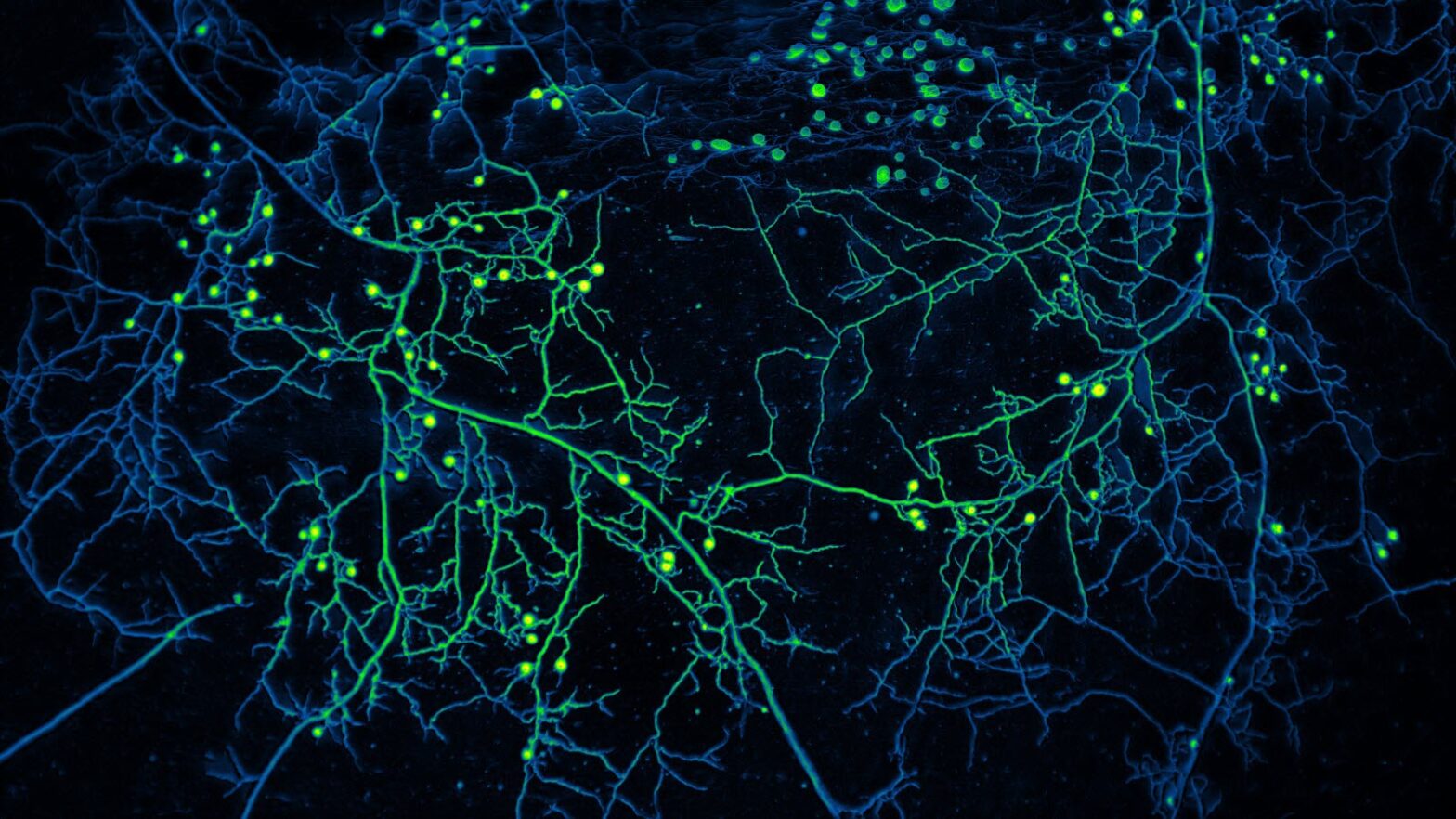
As a scientific term, symbiosis is used to describe the nature of interactions between different organisms living in close physical association. For example, it has recently been discovered that in ecosystems around the world, large-scale, mutually beneficial associations of macrofungi with flowering plants exist in complex positive, metabolic, and symbiotic relationships. These scientific discoveries have challenged the view that evolution and life are based solely on competition between species.8
We are now closer to understanding how ecosystem parameters can be controlled by key ecological players in the system to maximize the benefits to the survival of entire species. In essence, a form of “natural justice” prevails. For example, we now know that the health of forest ecosystems is regulated by so-called “mother trees,” which control fungal networks that connect trees of different ages. This control system works by regulating the supply of nutrients to trees that need them most, such as very young trees.9 It also functions by transferring information and energy from dying species to those that can continue to thrive, thereby maintaining the forest as a larger system.10 These fundamentally important insights have not yet been incorporated into ecological thinking applied to politics and human society.
Given that forest ecosystems are the basis for most life on Earth, including humans, the so-called "wood-wide-web" represents a prime example of natural justice and the effort to maintain balance or overall homeostasis in nature; in this way, Kropotkin's early insights, contained in his book Mutual Aid: A Factor of Evolution” (Mutual aid: a factor of evolution), a contemporary scientific confirmation. Kropotkin's idea was that evolution - although partly composed of conflict and cooperation within and between species - is fundamentally the result of cooperation and mutual aid. This insight can now be reaffirmed as key to all aspects of human action. As Kropotkin wrote: "...in the practice of mutual aid, which we can trace back to the earliest beginnings of evolution, we find the positive and undoubted origin of our ethical concepts; and we can affirm that mutual aid - not mutual struggle - has played the leading role in the ethical progress of man."11
Let us now try to imagine the symbiocene and the politics of its operation. The new era will be characterized by human intelligence that replicates the symbiotic and mutually reinforcing forms and processes of life reproduction that occur in living systems. Given that we as a species evolved within a pre-existing evolutionary matrix, such intelligence lies within us as a latent potential. Its elements include full recyclability of all inputs and outputs, the elimination of toxic waste in all aspects of human enterprise, safe and socially just renewable energy, and the complete and harmonious integration of human industry and technology with material and living systems at all scales.
In the Symbiocene, human activity, human culture, and human enterprise will exemplify cumulative types of relationships and characteristics that enhance the interdependence and mutual benefit of all living things (which is desirable), all species (which is necessary), and the health of all ecosystems (which is mandatory). Human development will consist of creative activities that utilize the best of biomimicry along with other eco-industrial, eco-technological, eco-agricultural, and eco-cultural innovations.
But in addition to biomimicry, we must also have what I call “symbiomimicry.” Many simply think that copying the shapes and forms of life is enough, but such forms have no connection to the processes of life. We are not just copying the form of life, but in all types of human creativity we are also replicating the processes of life that make the mutually beneficial connections between different life forms strong and healthy. Examples like the “wood-wide-web” suggest to me that arranging resources and processes so that the young, the weak, and the vulnerable get their fair share is essential for life, so that the whole has the best chance of survival and flourishing. Symbiomimicry will be the creation and distribution of resources in the human enterprise so that, while we care for all people, we also care for the life support system on which we all depend.
Sumbiocracy
In building the symbiocene, we will also create a new political system that I call sumbiocracy (from the Greek sumbiosis, from sumbioun, to live together; from sumbios, to live together). I define sumbiocracy as a political administration or government committed to the types and sum of mutually beneficial or favorable relationships in a given sociobiological system at all scales (mutualism, or radical reciprocity).
The basic idea is that if the processes that support ecosystems and biomes are identified, protected, and maintained, species will thrive in these healthy ecosystems. We do not need to further democratize a failing, biased democracy, such as the “council of all beings” approach of deep ecology, in which the interests of species are “represented” in decision-making structures by well-intentioned people. Rather, we need to elect to such a government people who understand and affirm the organic forms, processes, and relationships that support life, and we need to give this governing body the authority to carefully consider various creative proposals.
For example, if a certain aspect of human development is known to have long-term toxic effects on a basic life process, such as metabolism, then it simply cannot be allowed. Or if this toxic effect is already occurring, it needs to be urgently eliminated (for example, lead in gasoline, asbestos in building materials, phthalates in plastics).
Unlike democracy, which is inherently anthropocentric and capable of only partial answers to human-centered questions, sumbiocracy requires those who govern (sumbiocrats) to have a deep understanding of entire ecosystems and the mutual symbiotic relationships that enable them to function. In order for humans to live together, they must apply their intelligence and ingenuity to achieve overall harmony in a community of diverse interests. Under sumbiocracy, the rulers of the Earth must consider what kind of mutual development is permissible to enable coexistence by answering the following questions:
– Is there full recyclability of all inputs and outputs?
– Are we using safe and socially just forms of renewable energy?
– Is there full and harmonious integration with biogeochemical systems at all scales?
– Have we achieved the elimination of toxic waste in all aspects of this business?
– Are the interests of all species, large and small, taken into account?
– Do we have harmony or balance of interests?
Sumbiocratic governance by scientifically and traditionally informed people (including those engaged in citizen science) considers the interrelationships between elements of complex Earth systems at all places and scales before committing to any action that will affect the health of the system. We must also recognize that place is key to effective sumbiocracy, because only those who have a close and intimate relationship with a place are able to know their place and make decisions about its health and vitality.
Sumbiocracy is a form of governance in which people govern for the benefit of each other on Earth at all scales, from local to global. For example, governance to protect the interests of the Amazon Basin (the lungs of the Earth), the Great Barrier Reef (global fish hatchery), and the Arctic cryosphere (all forms of ice) will ultimately also protect medium- and long-term human interests. In this new type of government, there is an organic form (all biodiversity including humans) and an organic process (Earth systems and life systems). Sumbiocracy is, in Lincoln’s words, “government of the Earth, by the Earth’s people, for the Earth, lest the Earth perish.”
We currently have very sophisticated knowledge about how the natural world works, and because it was there and worked long before we man evolved as Homo sapiens, it is we who must adapt to its processes and its functioning. We understand many of the conditions of life, but we are deliberately destroying them through toxic overload. We are changing the climate for the worse, making previously habitable areas unsuitable for life, destroying ecosystems and wiping out species (the sixth great extinction). In these ways, we are proving that we are Homo non-sapiens, and not only that, but also that we are a kind of pathological plague to all species on this Earth. But we can be better than that.
Conclusion
In a relatively short period of human history, we have witnessed the emergence of an industrial-technological society dependent on growth, which has achieved its success at the expense of the vitality of the Earth. The productive capacity of the system called capitalism has brought great wealth to some people, but it has also caused pollution, negative climate change, and mass extinction of species on a global scale. At the same time, the capitalist system has impoverished and damaged many efforts to harmonize human enterprise with the Earth’s life systems. The usurpation of concepts such as democracy, sustainability, sustainable development, and resilience by the power elite (with tools such as the mass media) has occurred in my lifetime, that is, over the course of sixty-three years.
I believe that the time has come, rather than rehabilitating these concepts – now much abused – to create new concepts that are urgently needed today, concepts that are very difficult, if not impossible, to corrupt. In this spirit, symbiocene, sumbiocracy and symbiomimicry are suggested. But I can offer another neologism that might help. EO Wilson and before him Erich Fromm gave us the concept of “biophilia” as something we can hope is inherent in our human nature.12 Our instinctive love of life and life forms might outweigh necrophilia and possible ecocide. However, while “bio” means life, it is often understood in the context of a reductionist science that dissects things and isolates particulars. As a complement to biophilia, I now offer “sumbiophilia” – a love of communal life. Given that we evolved within a pre-existing ecological matrix as an intensely social species and lived in relative harmony with all other life forms, sumbiophilia must be deeply ingrained in us. If I am not mistaken, then leaving the Anthropocene and entering the Symbiocene will be a deeply satisfying experience for most people. When the politics of sumbiocracy unfolds and we live in all our technologies and environments according to symbiomimicry, the Earth will breathe a huge sigh of relief.
Comment
- PJ Crutzen and EF Stoermer, “The 'Anthropocene,'” International Geosphere-Biosphere Program Newsletter 41 (2000): 17-18. ↩︎
- GA Albrecht, "The Age of Solastalgia." August 7, 2012. Available here. ↩︎
- GA Albrecht, “Ethics, Anarchy and Sustainable Development,” Anarchist Studies 2, no. 2 (Autumn 1994): 95-118. ↩︎
- CS Holling, “Understanding the Complexity of Economic, Ecological, and Social Systems,” Ecosystems 4 (2001): 390-405; BH Walker and D. Salt, Resilience Thinking: Sustaining Ecosystems and People in a Changing World (Washington, DC: Island Press, 2006). ↩︎
- C. Gallopin, “Linkages between Vulnerability, Resilience and Adaptive Capacity,” Global Environmental Change 16 (2006): 293-303; Holling, “Understanding the Complexity of Economic, Ecological, and Social Systems”; E. Ráez-Luna, “Third World Inequity, Critical Political Economy, and the Ecosystem Approach,” in The Ecosystem Approach—Complexity, Uncertainty, and Managing for Sustainability, ed. D. Waltner-Toews, JJ Kay, and N. Lister (New York: Columbia University Press, 2008), 323-34. ↩︎
- SF Cohen, "Renaissance or Ruin? Yeltsin's Desperation Dismantles Democracy," Washington Post, October 10, 1993. Available here. ↩︎
- M. Bookchin, Post-Scarcity Anarchism, (Palo Alto, CA: Ramparts Press, 1971), 59. ↩︎
- GA Albrecht, “Applied Ethics in Human and Ecosystem Health: The Potential of Ethics and an Ethic of Potentiality,” Ecosystem Health 7, no. 4 (2001): 243-52; B. Scofield and L. Margulis, “Psychological Discontent: Self and Science on Our Symbiotic Planet,” in PH Kahn and PH Hasbach, eds., Ecopsychology: Science, Totems, and the Technological Species (Cambridge, MA: MIT Press, 2012). ↩︎
- SW Simard, AK Asay, KJ Beiler, et al., “Resource Transfer between Plants through Ectomycorrhizal Networks,” in Mycorrhizal Networks, ed. TR Horton (Dordrecht, Germany: Springer, 2015). Available here. ↩︎
- J. Frazer, “Dying Trees Can Send Food to Neighbors of Different Species,” Scientific American, May 9, 2015. Available at: http://blogs.scientificamerican.com/artful-amoeba/dying-trees-can-send-food-to-neighbors-of-different-species. ↩︎
- P. Kropotkin, “Mutual Aid: A Factor of Evolution” (1902; repr., London, UK: Freedom Press, 1987), 234. ↩︎
- E. Fromm, The Heart of Man: Its Genius for Good and Evil (London, UK: Routledge and Kegan Paul, 1965); EO Wilson, Biophilia (Cambridge, MA: Harvard University Press, 1984). ↩︎