

"In times of bleakness, it is helpful to rekindle our ability to imagine a better future."
Adrian J. Ivakhiv
This is the text of a lecture that the author gave on August 16 of this year at the seminar "From the Anthropocene to the Symbiocene or Paths to a Civilization That Supports Life" (Toulcův dvůr, Prague Hostivař, August 12-18, 2024). It discusses the birth of the idea of the Symbiocene (ecological civilization) and introduces two of its protagonists: the Australian philosopher Glenn Albrecht and the British-American ecological thinker Jeremy Lent.
We are now in the Anthropocene, or in the words of cultural historian and cosmologist Thomas Berry, inthe terminal stage of the Cenozoic, at a time of multifaceted planetary crisis, when our human activities have become a large-scale geological force that affects the atmosphere, oceans and terrestrial ecosystems of the planet with severe and in many cases irreversible impacts and consequences for the climate and viability of the entire terrestrial ecosystem. The question of the very survival of human civilization arises, which is not idle catastrophism. Clearly, one epoch in the history of the Earth is ending and something new is being born. The scale and nature of the changes we face are often compared to the agricultural revolution or the scientific revolution of the 17th century. However, it seems that this is an even deeper change and it is obvious that how we respond to this crisis in the coming decades will determine our future, or rather the future of the Earth itself.
The tremendous technological breakthroughs of the past few decades have led many techno-optimists to believe that technology is the way to solve our current problems. That ocean acidification will be solved by genetically engineering coral, or that global warming will be solved by dimming the sun by scattering geoengineered particles in the upper atmosphere. These technophile modernists, such as Stewart Brand, believe in a “good Anthropocene” and are inclined to believe that we humans are like gods—that when Earth’s systems stop working, we can begin to shape the world in our own image through genetic manipulation and a host of other transhumanist enhancements. That we can, in short, look beyond biology, beyond the web of life, and create our own parallel transhuman world after the collapse of ecosystems and the extinction of species on Earth. However, if we remain within these anthropocentric techno-optimistic frameworks, it will have very bleak prospects for humanity, according to Freya Mathews and Jeremy Lenta, the two main speakers of our seminar.
As the concept of our seminar makes clear, we are not striving for a future dominated by humans or machines, a future that allows only us humans to prosper, but a future that will lead to the flourishing of mutually beneficial relationships among all earthly beings, including humans. We might say with Thomas Berry, “We are not here to run the world. We are here to unite with the greater earthly community.” At this critical moment when cognitive processes are beginning to play a significant role in the functioning of the Earth, “our overriding imperative must be,” as Jeremy Lent put it, “to harmonize the power of conceptual awareness with&nbwithp;living intelligence, which is within us and which is inherent in all life on Earth. Only through this process of integration can we find a form of symbiosis that will allow the mutual flourishing of human and non-human nature into the distant future.” According to Lent, the current critical situation of the Earth opens up before us a completely unique opportunity to form a new common identity and to participate consciously in the flourishing of all life.
In this seminar we will try to outline the contours of this new story that is being born today. In this context, we are talking about a regenerative paradigm, a regenerative culture, a symbiocene, a new ecological civilization, the core of which is the effort to develop a symbiotic and cooperative model of society that would, as the Australian philosopher Freya Mathews says, serve and support the biosphere at all levels. In addition to Freya Mathews, who will give three lectures entitled "The Deep Law at the Core of Being: The Key to an Ecological Civilization?", which are based on her book "The Dao of Civilization", and the British-American philosopher and visionary of ecological civilization Jeremy Lenta, the German biologist Andreas Weber will also directly participate in our seminar. We will also recall the important contribution of another Australian philosopher, Glenn Albrecht, who invented the concept of symbiocene and outlined the vision of a new society of sumbiocracy; and the Slovak philosopher Vlado Lobotka, founder of the Gaia Institute, will introduce us to the book by the British educator and cultural activist Christian Wahl Designing Regenerative Culture, which he translated into Czech. The local supporters of non-growth will introduce us to alternative economic paths that create the conditions for the development of a new society that will not accumulate wealth by exploiting nature, but will rather strive for planetary health. We will also talk about the transformation that is taking place today in the field of architecture, design and building regenerative cities - we will get acquainted with the ideas of the visionary British architect Michael Pawlyn, a pioneer of biomimicry, who claims the legacy of Richard Buckminster Fuller, and with the concept of LO-TEK technologies by landscape architect Julia Watson, inspired by indigenous cultures. And last but not least, we will also talk about syntropic and urban agriculture and green architecture projects in Prague.
We are not superior – the age of humility
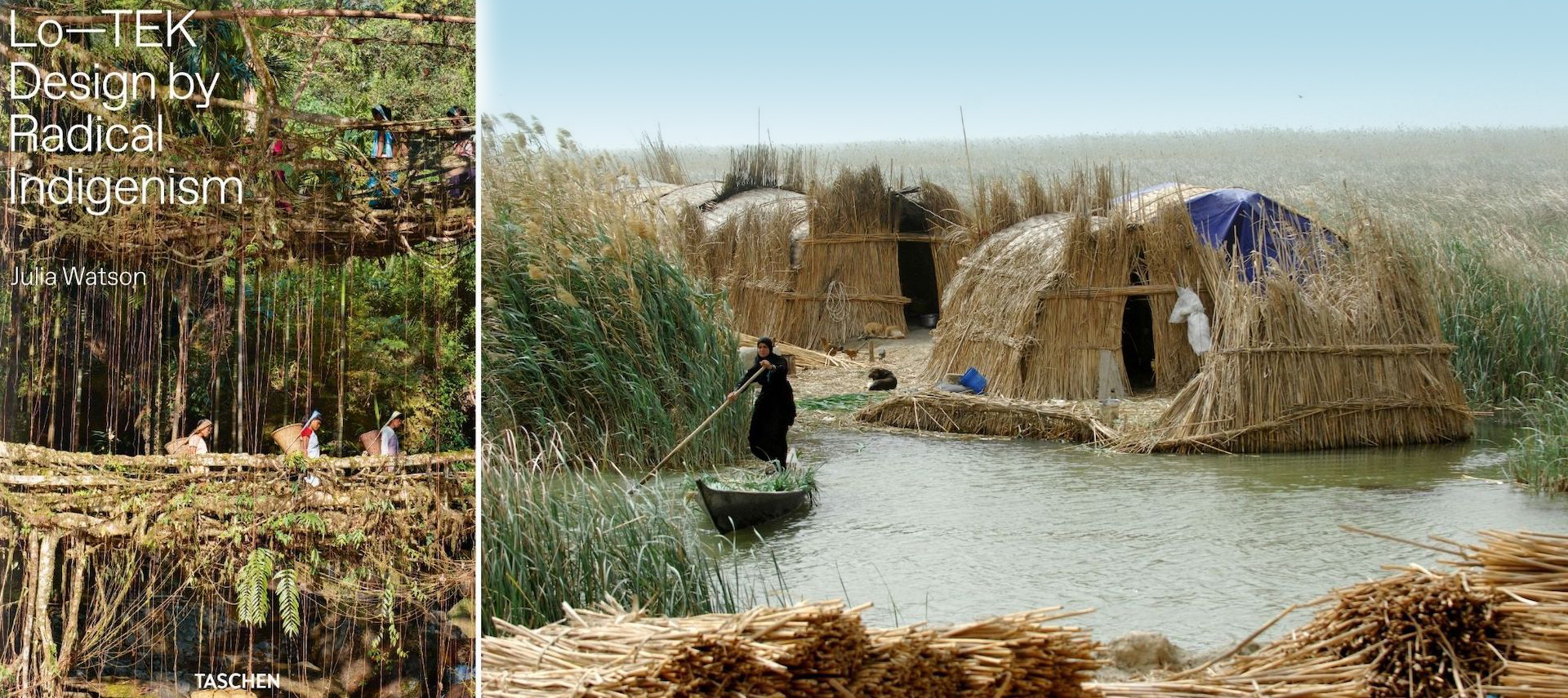
In her book LO-TEK, inspired by indigenous cultures, Julie Watson writes about the need for a new mythology of technology, based on the understanding that “we are not superior,” a technology that re-teach us to live in symbiosis with natural systems. Watson argues that this is the only way we can move forward today. I would like to expand on this idea through a reflection by philosopher David Abram, recently published in an anthology on the rights of nature.1/
In this essay, Abram notes that the concept of the Anthropocene is in marked contrast to his own concept "more than the human world". He writes that while the Anthropocene discourse, like the notion of a “more-than-human world,” dissolves the division between culture and nature, the Anthropocene does so not by nesting the human world within a broader more-than-human world, but by dissolving any boundary between the human world and the biosphere; “more precisely,” he writes, “the Anthropocene discourse elegantly denies the possibility of a more-than-human world because it explicitly proclaims that man—the anthropos—is now fully coexistent with all of terrestrial reality. Within the Anthropocene, there is nothing outside human goods—there is nothing of this world that is beyond the reach of human activity, there is no reality outside the human anthropo-scene. Despite the countless other organisms that still inhabit and influence this planet (many of which are still unknown to us), the Earth in the Anthropocene—and in the long term future—is understood as purely our human world.
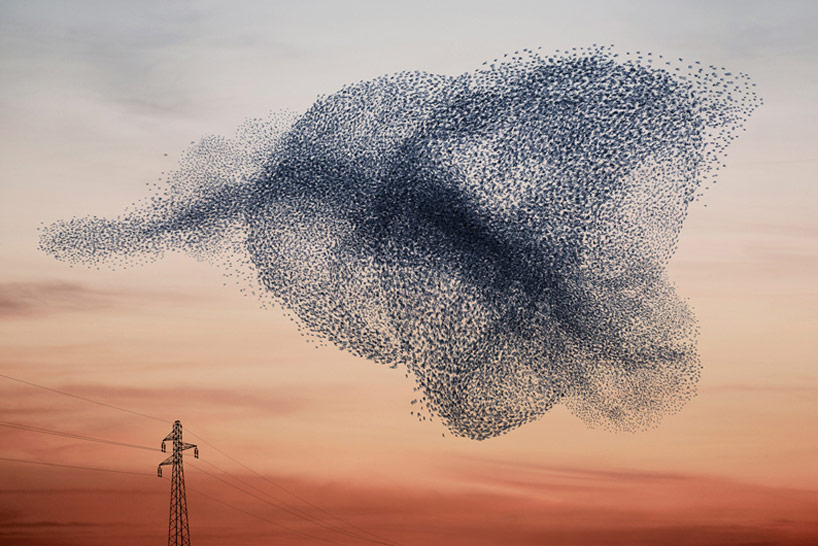
The Anthropocene discourse, Abram argues, precludes any possibility of turning away from such pride; by proclaiming humanity the most significant force in the world (and proclaiming this primacy for a thousand years to come), it precludes any turn to humility. “It precludes any gesture of restraint in relation to the wildly blooming otherness of a world that vastly exceeds us. It suffocates or pushes deep into the unconscious those moments of our imaginative amazement when we lose ourselves in the bottomless strangeness of a storm or in the graceful swirls of a flock of starlings; or when we watch a spider spin its web.” In such moments, we are humbly amazed by the strangeness, the mystery of a world that vastly exceeds all our knowledge.
Abram writes that after we have crossed so many boundaries and destroyed so much of the Earth’s autopoietic capacity, many theorists argue that it is now up to us, humanity, to take control of the biosphere and to construct and manage it for our own good. This, of course, is the logic of the merchant’s statement: “You broke it? It belongs to you!” After we have broken the biosphere, it is now our property and we can do with it as we please.
If it is important to emphasize the central role of our unique species in the transformation of the Earth – in the transformation of the Earth’s atmosphere and oceans, in the alteration of the carbon cycle and the hydrological cycle, in the destabilization of the seasonal cycle – if we are looking for a name for this new epoch that would emphasize our species’ responsibility for the emergence of the current catastrophic situation and that would at the same time open up the possibility and indeed the necessity of an ethical turn, why, asks David Abram, not rely on the etymology of the word “human” instead of the term “anthropos”. The term “human” (derived from the Latin humanus) is related to the Latin word humus, which means the ground underfoot, soil or earth, and is therefore closely linked to the term “humility”; the quality that keeps us close to this earthly soil. Perhaps, Abram writes, a more appropriate name for the geological epoch that lies before us today would be the concept Humilocene– the age of humility.
Some researchers might argue that Humilocene sounds too embarrassing, meaning “humiliation.” Abram, however, believes that this vaguely felt echo is entirely appropriate. Shouldn’t we feel a certain amount of shame? Shouldn’t we feel humbled when we realize our guilt for the callous destruction of so many ecosystems, for the loss of so many other species, for the obliteration of so much of the earth’s beauty? “If geological epochs last thousands of years—and if some of our clever species manage to survive the next few centuries—wouldn’t it be important for our descendants to remember the terrible consequences of our arrogance?” Wouldn’t it be important for them not to repress the memory of the countless other animals, plants, and places, the countless other forms of living intelligence, that were lost to our recklessness in this era? To remember that it was not an accident, but rather our own human forgetfulness and recklessness, that caused the ever-accelerating extinction of species and led to devastation that will likely mark our planet for many long centuries to come?
That's what David Abram suggests a suitable name for this geological epoch could do for our species. It could help us remember and perhaps avoid repeating the same monstrous mistake. Humilocene, the age of humility. The author muses that this initial, transitional phase we are now experiencing—the dawn of humilocene – will perhaps be known in oral tradition as the time that teaches us humility. And he emphasizes that from the beginning, the intention of the phrase “more than a human world” was to remind us of our embeddedness in a terrestrial cosmos that we humans did not create, that we do not control, and that necessarily transcends all our knowledge.
Changing the metaphor
Learning humility today means, among other things, relearning to live in symbiosis with natural systems. Recognizing the uniqueness and intelligence of nature, the intricate interconnectedness of the complex web of life, and integrating our human culture into the more than human world (into ecological systems) and placing the nonhuman world in ethical decision-making and ethical concepts. In the words of Julia Watson: we must shift our thinking from the metaphor of “survival of the fittest” to the metaphor of “survival of the most symbiotic.” In this endeavor, we have crucial lessons from indigenous cultures, which, as Watson has demonstrated, possess an invaluable bank of ecological intelligence and indigenous innovations. This lesson also reveals the lesson of humility, which today, at the dawn of Abram’s humilocene we get from indigenous cultures.
Most of the authors I will discuss here are convinced that the key to facing current global challenges iscultural transformation, not technological transformation. From this perspective, the nature of our basic metaphors that we use and with which we relate to the world is important. The way we perceive our relationship to nature will be of key importance for the possible future prospects of our species here on Earth. Jeremy Lent formulated in his book Patterning Instinct (2017) theorizes that “culture shapes values, and these values shape history.” In other words, the cognitive frameworks through which we perceive reality determine our reality.
In the book, Lent demonstrates that the fundamental difference between the Eastern and Western models of knowledge occurred with the emergence of dualism in ancient Greece. The separation of mind from body in the philosophy of Pythagoras and Plato contrasted sharply with the perspective of "harmonious webs of life", which was the basis of Chinese culture (in this context, he compares the Chinese navigator Zheng He with Christopher Columbus). Non-dualistic thinking It was also a key part of many Hindu philosophies (such as Advaita Vedanta). The “web of life” perspective is shared by indigenous cultures around the world – they have a kinship with the Earth, they relate to it as something to be cared for. In contrast, in our Western culture, within the framework of dualistic thinking, the metaphor developed thanks to the philosopher Francis Bacon "mastery of nature", which René Descartes followed up with his metaphor "nature as machines". Lent argues that Descartes' philosophy has had an unsurpassed impact on modern knowledge. Jeremy Lent shows that Descartes' dualism is the basis of the modern view of our relationship to nature: if the mind is separate from the body and is the source of our identity, if it is what makes us human, then our bodies are mere matter with no intrinsic value. And if this is true of our bodies, it is true of the rest of nature as well. In doing so, Descartes eliminated any intrinsic value from the natural world. Metaphor "conquering nature"" became the basis of the scientific revolution and was later globalized as the dominant modus operandi of 20th-century Western culture. As Sarah Ichioka and Michael Pawlyn point out, Lent's thesis leads us to recognize that our dominant values and metaphors are an essential part of what has brought us to the brink of collapse today.
Jeremy Lent asks how this could have happened and whether it is an inevitable consequence of human nature. Or whether our current situation is not culturally conditioned, whether it is not the product of certain thought structures that could be reshaped. He argues that the answer to this question will influence the future direction of the human race. The dualistic view of the world is being questioned by more and more people today, but the collective way of behaving in most developed countries and their prevailing capitalist economic systems are based on seeing nature as something that can be plundered for its resources. This belief system in human privilege, the unspoken feeling that the Earth belongs to humanity and that non-humans are just resources, the feeling of human superiority, is, as the writer Eileen Crist says, the deepest causal layer of the current exuberant growth and human expansionism, the feeling of justification to constantly increase our numbers, our economy, our infrastructure. But even though this worldview is so deeply ingrained in our Western culture, clearly recognizing it, according to Sarah Ichioka and Michael Pawlyn, is the first step toward challenging it and creating a new framework or metaphor that can redirect our human behavior. As Jeremy Lent writes, “Collapse is not an inevitable consequence of human nature… We can consciously choose to change our thinking patterns in a way that fosters regenerative relationships with the living world.”

Symbiosis and symbiogenesis
One of the inherited paradigms that hinders the regenerative transformation of our society is the idea competition, inspired by the Darwinian concept of “survival of the fittest.” However, the knowledge of the ways of indigenous cultures and ancient traditions, and the latest discoveries in the field of biology, are opening the way for us today to a new paradigm of symbiosis, as developed by Glenn Albrecht and Jeremy Lent; or symbiogenesis, as conceived by Ichioka and Pawlyn. They argue in their book Flourish they deal with what social consequences competition has for us and, on the other hand, what consequences symbiogenesis can have for us and what its practical implications are for the ways in which we design our neighborhoods and cities, our businesses, our institutions and processes.
Fundamental research on symbiosis, or symbiogenesis, was conducted by Lynn Margulis. Her hypothesis of endosymbiosis, the idea that new species can arise not by division and competition, but by convergence—symbiogenesis, the absorption of previously separate cells that began to exist symbiotically as integrated parts within more complex cells—is now considered a fundamental contribution to evolutionary biology and has been confirmed by later research. As other researchers (Scott F. Gilbert, J. Sappa, and A.J. Tauber) in the field of evolutionary biology have shown, symbiosis is now becoming a fundamental principle of contemporary biology. It replaces the essentialist conception of individuality with a systems inquiry that leads us in directions that transcend the dichotomies of self/non-self, subject/object, that have characterized Western thought.” Gilbert et al. conclude their article by saying, “In animals, as in plants, there have never been individuals. This new paradigm of biology asks new questions and seeks new relationships between the various living beings on Earth.” Ichioka and Pawlyn believe that “symbionogenesis is a powerful paradigm that needs to be worked toward, and that we should strive not only to live cooperatively (in symbiosis) but to actually become something new together through cooperative interaction.” We ourselves, as human beings, are complex systems, composed of multiple species, and beyond the physical boundaries of our bodies, we depend on ecosystems that provide us with oxygen, filter our water, grow our food, among many other things. We are inextricably linked to the web of life and are dependent on it for our long-term flourishing. Research by evolutionary thinker John Stewart has shown that as ecosystems develop, their diversity and complexity increase, as does their interconnectedness, or symbiosis. Ecosystems gradually reach a so-called climax ecosystem and go through such regular cycles to increasingly sophisticated forms of symbiosis.
In this regard, we can also be inspired by numerous indigenous cultures whose worldview includes concepts of interconnectedness and reciprocity, the “web of life.” For example, the Lakota concept Mitakuye Oyasin (all my relationships), or the Nahuatl ethos Nepantla, which means "between-being" or "merging into one". The South African concept is also knownUbuntu, which is often shortened to the phrase "I am because we are" and which expresses the "relational form of personality". As human beings we develop in relationships with others, not only with other living beings, but also with other aspects of the environment such as plants, water and ancestors. There is no independent evolution, but co- (dependent) emergence.
These new scientific biological insights and inspirations from traditional cultures offer us new concepts for the regenerative transformation of our industrial societies. From this perspective, the best chance for fostering a thriving future lies not in a view that transcends biology, as some futurists claim, but rather in a deep look into the web of life.
Glenn Albrecht's Sumbiocracy
Australian philosopher Glenn Albrecht, now an honorary associate professor in the School of Geosciences at the University of Sydney, explores the manifestations of “planetary distress” in the Anthropocene and its associated physical and psychological impacts on humans. He argues that we no longer have the words to express the anxiety and sadness that climate change and extensive development are destroying the world we took for granted. Albrecht has coined new words for these earthly emotions, such as solastalgia, ghedeist ad.. Albrecht, like Lent, believes in the power of new concepts and new metaphors to shape reality and argues that we should think of the Anthropocene as a new abnormality. Concepts such as democracy, sustainability, sustainable development and resilience have been corrupted by forces determined to incorporate them into the Anthropocene, where they have become business as usual. He argues that we are in this situation because corporations and oligarchs use their autocratic power and wealth to influence politics, manipulate public officials and minimize regulation. Therefore, we need new stories and new concepts to evolve beyond these compromised or abused concepts; we need to create visions and memes of a different future and he suggests that we call this new era symbioceneGlenn Albrecht is considered the creator of this term.
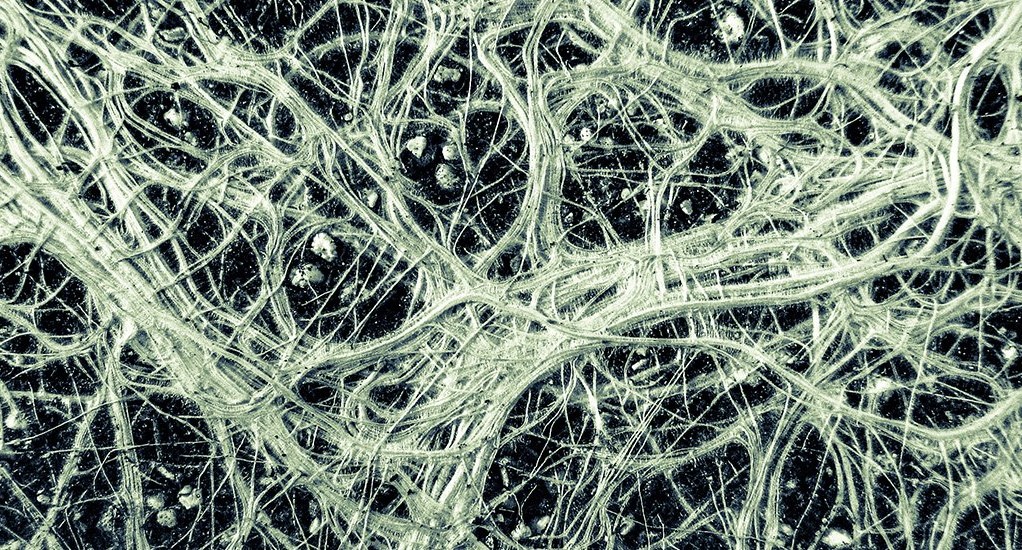
Albrecht understands the scientific meaning of the word symbiosis – “living together for mutual benefit”, which confirms the interconnectedness of life and all living things – as the basis for what he hopes will be the next period of human history. He rejects the view that nature is hostile, that it is a competitive war of all against all. “Conflicts between organisms undoubtedly exist, but the overall balance of interests (eco-homeostasis) is in the absolute interest of all life.” And as life becomes more complex, its importance increases. As an example of a cooperative natural system, Albrecht cites the so-called “wood-wide-web”. He sees it as a prime example of natural justice and the effort to maintain balance or overall homeostasis in nature: tree communities communicate and cooperate with each other through a fungal network, controlled by “mother trees”, which can transfer nutrients from dying trees to younger individuals. He recalls that social thinker Pyotr Kropotkin thought similarly, for whom the cooperative properties of ecosystems provided a model for social systems of mutual aid. According to Kropotkin, evolution is fundamentally the result of cooperation and mutual aid, which can be traced back to its earliest origins. In this vein, Glenn Albrecht makes the case for cultivating a symbiotic and cooperative model of society based on ecosystems.
According to him, the politics and functioning of society in the symbiocene will be characterized by human intelligence that will replicate the symbiotic and mutually reinforcing forms and processes of life reproduction that occur in living systems. Based on the concept of the symbiocene, Albrecht proposes a completely new political system, which he calls "sumbiocracy" (from the Greek sumbios, to live together). He defines it as "a government that commits to mutually beneficial or favorable relationships within a given sociobiological system at all levels and scales."In the symbiocene, human activity, human culture, and human enterprise will exemplify those cumulative types of relationships and properties that enhance the interdependence and mutual benefit and health of all ecosystems, all species, and all beings."
Unlike democracy, which is inherently anthropocentric and capable of only partial answers to human-centered questions, sumbiocracy requires those who govern (sumbiocrats) to have a deep understanding of entire ecosystems and the mutual symbiotic relationships that enable them to function. In order for humans to live together, they must apply their intelligence and ingenuity to achieve overall harmony in a community of diverse interests. Under sumbiocracy, the rulers of the Earth must consider what kind of mutual development is permissible to enable coexistence by answering the following questions:
- Is there full recyclability of all inputs and outputs?
- Are we using safe and socially just forms of renewable energy?
- Is there full and harmonious integration with biogeochemical systems at all scales?
- Have we achieved the elimination of toxic waste in all aspects of this business?
- Are the interests of all species, large and small, taken into account?
- Do we have harmony or balance of interests?
Sumbiocratic governance by scientifically and traditionally informed people (including those engaged in citizen science) considers the interrelationships between elements of complex Earth systems at all places and scales before committing to any action that will affect the health of the system. We must also recognize that place is key to effective sumbiocracy, because only those who have a close and intimate relationship with a place are able to know their place and make decisions about its health and vitality.
Sumbiocracy is a form of governance in which people govern for the benefit of each other on Earth at all scales, from local to global. For example, governance to protect the interests of the Amazon Basin (the lungs of the Earth), the Great Barrier Reef (global fish hatchery), and the Arctic cryosphere (all forms of ice) will ultimately also protect medium- and long-term human interests. In this new type of government, there is an organic form (all biodiversity including humans) and an organic process (Earth systems and life systems). Sumbiocracy is, in Lincoln’s words, “government of the Earth, by the Earth’s people, for the Earth, lest the Earth perish.”
Visions of fractal flourishing Jeremy Lenta
Jeremy Lent, a British philosopher, writer, and educator, explores the root causes of our civilization's existential crisis and seeks pathways to a life-sustaining future. He seeks to change the future trajectory of humanity, convinced that our society needs a transformational shift in fundamental values if we are to achieve a sustainable and prosperous future for humanity. Lent is the founder of the Deep Transformation Network, a global community exploring pathways to an ecological civilization, and the non-profit Institute of Liology, dedicated to promoting a worldview that offers the experience of integrated, embodied, and connected life that could enable humanity to thrive sustainably on Earth. He is the author of the award-winning books The Patterning Instinct: A Cultural History of Humanity's Search for Meaning and The Web of Meaning: Integrating Science and Traditional Wisdom to Find Our Place in the Universe.
a) Symbiosis and ecological civilization in general
Jeremy Lent's thinking about ecological civilization draws on both the discoveries of contemporary systems science, ecology, biology, neuroscience, psychology, and complex systems science, as well as a new appreciation of the insights of traditional and indigenous cultures; he is particularly inspired by the neo-Confucian thought of China. In this he is similar to Freya Mathews and Thomas Berry, who were also inspired by Taoism and Confucianism. Lent articulates an alternative worldview that he characterizes as liology (after the Confucian concept of "li"). This view is based on the recognition of the profound interconnectedness of us humans with each other and with all aspects of the universe, and emphasizes the primacy of life. A society based on this worldview would be inspired by the principles that life has developed over billions of years of evolution. Natural ecologies are characterized by both competition and cooperation, but the major evolutionary changes that brought life to its current state of abundance were the result of a dramatic increase in cooperation. The key to each of these evolutionary steps, and to the effective functioning of all ecosystems, is mutually beneficial symbiosis, in which the contributions of each party together create a whole that is greater than the sum of its parts.
- According to Lent, one of the consequences of symbiosis is that ecosystems can be maintained for an almost unlimited period of time thanks to circulation of energy flows, which they obtain from the sun for the optimal benefit of all their parts. The waste of one organism becomes food for another organism – the principle of a circular economy in which nothing is wasted.
- The complex interconnection of various organisms in a symbiotic network leads to another fundamental principle of nature – to harmony. Harmony arises when the individual elements in a system express their own needs in such a way that the system as a whole is enriched. Harmony can arise only when the various forces that make up an organism are in balance: a balance between competition and cooperation, between the efficiency of the system and its resilience, between growth, maturation and decline.
- Nature, which operates on a self-organizing basis, organizes itself fractally: from microscopic intracellular structures to Gaia herself; each system contains its own fully integrated living intelligence that identifies and fulfills its own needs while contributing to the well-being of the larger systems in which it is embedded. In nature, the health of the system as a whole requires the flourishing of each of its constituent parts. Each system is interdependent for its long-term health on the vitality of each of the other systems. In order for the system as a whole to function optimally, it needs all of its parts to maintain good health.
b) Ecological civilization in practice
In practice, the transition to an ecological civilization would mean restructuring some of the fundamental institutions that are leading our current civilization to extinction.
- Instead of an economy based on constant GDP growth, an economy that emphasizes quality of life and uses alternative measures to measure success, such as the Genuine Progress Indicator (GPI), would be introduced.
- Economic systems would be based on respect for the dignity of the individual and on the fair reward of each person's contribution to the greater good, ensuring that the needs for nutrition, housing, healthcare, and education are fully met for everyone.
- Multinational corporations would be fundamentally reorganized and held accountable to the communities they purport to serve, to optimize human and environmental benefits rather than shareholder profits. Locally owned cooperatives would become the standard organizational structure.
- Food systems would be designed to emphasize local production using state-of-the-art agroecological practices instead of fossil-fuel-based fertilizers and pesticides; while production would favor circular flows, where efficient reuse of waste products is built into the process from the very beginning.
- In an ecological civilization, the basic building block of society would be the local community. Face-to-face interaction would once again become a key part of human flourishing, and each community's relationships with others would be based on principles of mutual respect, learning, and reciprocity.
- Technological innovation would still be encouraged, but it would be valued for its effectiveness in increasing the vitality of living systems rather than for the monetary gains of billionaires.
- The driving principle of business should be the fact that we are all connected in the web of life and that long-term human prosperity is based on a healthy Earth.
c) The fractal nature of our inner transformation
Just as principles of life can form the basis of a healthy civilization, they can also inspire the process of our own transformation. Our internal transformation is fractal, taking place in relationships with others around us and in an engaged awareness of our community’s role within larger systems. Even simple acts of intentional transformative practice with others can organize themselves into larger structures of social change. The prevailing individualistic culture has fostered a tendency for heroism in many of us, encouraging us to strive to be the change-maker. Part of becoming an ecological self is recognizing this tendency and rising above it, finding a participatory role within the larger community of change-makers who make up what George Monbiot calls "a new politics of belonging"Just as trees in a healthy forest communicate through a network, each of us can be most effective in transforming change by connecting with the existing network of life-supporting groups already operating around us.
The way we interact with others is crucial. Every action we take, every conversation we have, is shaping the future of humanity, writes Jeremy Lent. A deep appreciation of interdependence can be the basis for what Buddhist scholar David Loye calls “bodhisattva activism,” in which each new situation becomes an opportunity for us to reorient ourselves from individual separateness to shared identity. An ecological civilization will emerge only when the symbiotic bonds between people become a more powerful force than the competitive impulses of the dominant culture. Each of us can participate in weaving this vital web of synergy. We may not know what the future holds, but we do know that we can live each day of our lives for the future we desire for ourselves and for others. We can choose to live as ecological selves, as an integral part of the emerging human planetary consciousness that seeks to find its way into synergy with the multitude of other sacred sentient beings who make up Gaia. “With every thread we weave into the web of meaning, we intertwine with Gaia’s future – becoming an intimately integrated node in Indra’s web, endlessly reflecting into mystery.” (Jeremy Lent)
As we engage our love for the flourishing world and weave our own threads of meaning, we may be surprised to discover that many others are doing the same, that many others are devoting their energy to activities that support life. More important than the magnitude of such actions is the intention: a deep authentic commitment to the well-being of life, translated into action. Ultimately, it is the quality of our engagement that resonates throughout the network. Everything we do, everything we say, creates waves of “li” in the fabric of existence. Many of these waves will eventually die out, some of them resonate with the “li” waves of others to create larger waves. We can never know what will become of every ripple of li that we send out into the universe—what will become of every conversation, every moment of eye-to-eye contact, every action we take. Yet deep within us, we know whether that particular ripple comes from a deep intention for our own well-being, for the well-being of others, and for all sentient beings. With every decision we make, every word we speak, every action we take, we contribute to slowing down or catalyzing the great transformation that our society needs if we want to bequeath a prosperous world to future generations.
“Just as bacteria have learned to pass genes to each other, creating a virtually immortal quasi-superorganism, so too are humans developing the ability to pass ideas to each other and participate in shaping global consciousness. Can we awaken in time to appreciate our shared identity and participate in something greater than our fixed selves? As Thich Nhat Hanh has suggested, the next Buddha may not take the form of an individual, but of an awakening community.
The possibility of future flourishing requires us to awaken not only to ourselves as a collective consciousness, but to our deeply rooted role in relation to other life. We must realize that as an integral part of Gaia, we are involved in the process by which the Earth begins to become aware of herself.”
Jeremy Lent
Literature:
Julia Watson, Lo-TEK / design by Radical Indigenism. Taschen GmbH 2019.
David Abram, ´On the Origin of the Phrase “More-Than-Human”´. In: More Than Human Rights: An Ecology of Law, Thought, and Narrative for Earthly Flourishing, César Rodríguez-Garavito, ed. (New York: NYU Law, 2024), p. 341-347.
Sarah Ichioka - Michael Pawlyn, Flourish / Design Paradigms for Our Planetary Emergency. Triarchy Press, Axminster (England), 2021.
Glenn Albrecht, "Enter the Symbiocene"; in: Next Nature / Magazine, 2021; Czech translation see: https://potulnauniverzita.cz/glenn-albrecht-vstupte-do-symbiocenu/
Jeremy Lent, Patterning Instinct: A Cultural History of Humanity's Search for Meaning. Prometheus 2017.
Jeremy Lent, The Web of Meaning: Integrating Science and Traditional Wisdom to Find our Place in the Universe. New Society Publishers 2021.