
David R. Boyd is a Canadian lawyer, activist, and diplomat who is the United Nations Special Rapporteur on human rights and the environment. In his influential book The Rights of Nature: A Legal Revolution that Could Save the World (Nature's Rights: The Legal Revolution That Could Save the World, ECW Press, Toronto 2017), a "real-life legal thriller" (D. Suzuki), comprehensively and convincingly chronicles the rise of the nature rights movement that is now taking place in courtrooms, legislatures, and communities around the world. It is a brilliant call to support a movement whose time has clearly come. This excerpt is Chapter 9 of the aforementioned book (pp. 147-157), which documents the transformation of Te Utewera National Park from state ownership to a legal entity that must be managed in a way that respects its rights. Translated and edited by Jiří Zemánek.
The origins of the rights of nature in Te Urewera have their roots in a dark chapter of history. As European settlers flooded Aotearoa, New Zealand, in the 19th century and took over the land, there were occasional armed uprisings by Maori. The government responded with brutal, indiscriminate and disproportionate force. A particularly violent incident occurred in the 1860s, when the army pursued the Maori armed resistance leader Te Kooti. Colonial forces used a scorched earth approach against the Tuhoe people of the Urewera, where they believed the rebels were hiding. Innocent men, women and children were killed, their villages were destroyed, crops and food supplies were razed to the ground, cattle and horses were slaughtered and those who survived were left to starve. The Waitangi Tribunal found that the military had committed serious human rights violations, concluding: "... that the Crown committed a series of wrongdoings in attacking people who were merely retreating or defending themselves. The reprehensible nature of the mass destruction and killing by Crown forces cannot be overstated. These events constituted a serious breach of the principles of the Treaty." The New Zealand government also confiscated 400,000 acres of Māori land in the Te Urewera area during this period. Only 142 acres were eventually returned to the Māori, and no compensation was paid.
One hundred years of the Tuhoe people's struggle for self-government over Te Urewera
A crucial aspect of this history is that the Maori tribe (iwi) Tuhoe refused to sign the Treaty of Waitangi. They consistently asserted their desire and intention to retain sovereignty and control over their territory. In the 1890s, negotiations between Tuhoe and the Crown seemed to have reached a historic breakthrough. The New Zealand government passed a unique law called the Urewera District Native Reserve Act 1896. The Tuhoe were to be given back their rights to self-government, including authority over the land and waters, over a large area. The newly created reserve was to provide permanent protection for the land, rivers, forests, birds, people (iwi) Tuhoe and his way of life. According to the Waitangi Tribunal, “the Act seemed to herald a new era of Urewera, in which the relationship between iwi Tuhoe and the Crown shall be based on a continuing mutual recognition of their rights and obligations”. Unfortunately, the promise of a new relationship was short-lived. The government violated both the intent and the letter of the new law by continuing to acquire land on the reserve through “unfair, predatory and sometimes illegal purchases”, as the Waitangi Tribunal characterised it.
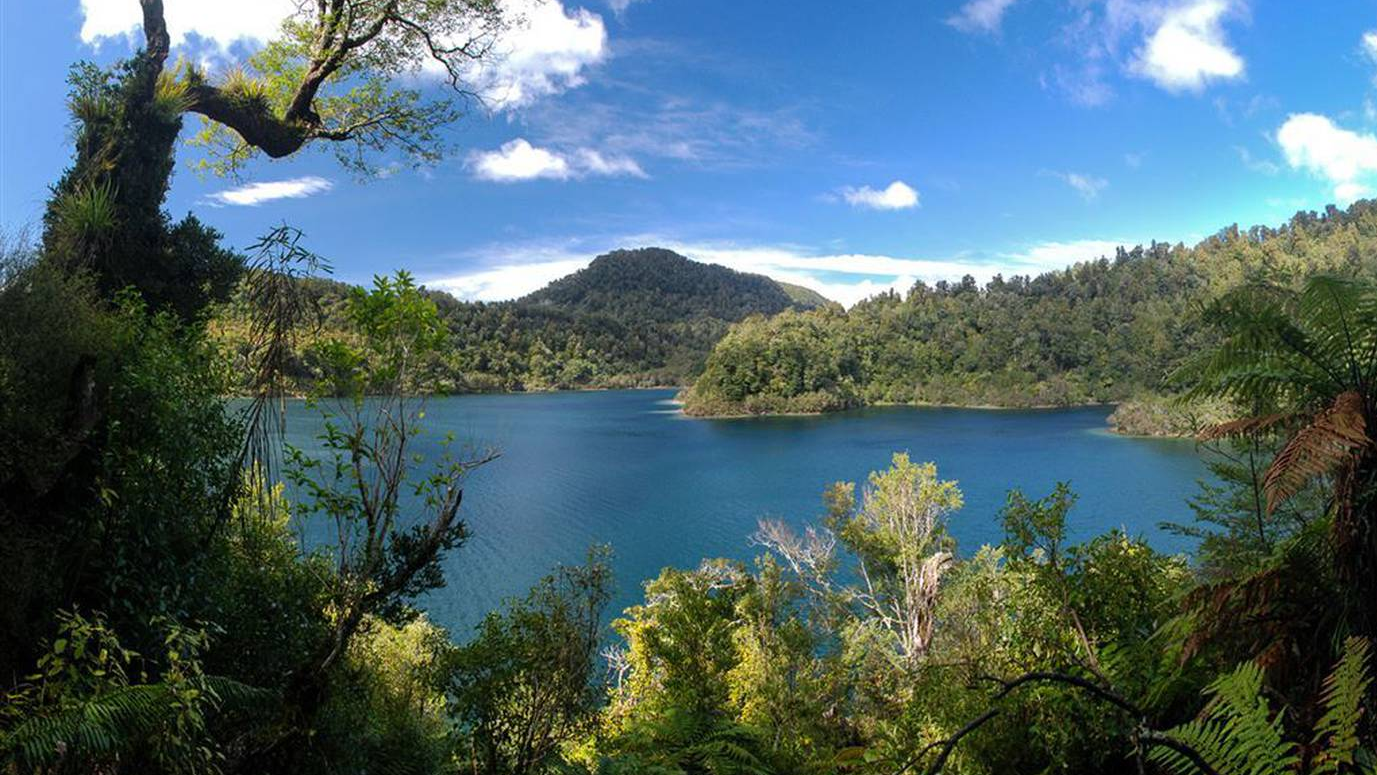
For its rugged and remote beauty, pristine rainforests and blue lakes, Te Urewera was declared a national park in 1954, and was significantly expanded three years later. The area is home to a rich biodiversity, including many endangered species such as kiwi, kokako, kaka and the distinctive whio, or blue duck. The park’s name has an unusual origin. Te Urewera is a Maori phrase meaning “burnt penis”; it comes from the story of a Maori chief who died after rolling over too close to a fire in his sleep one night.
In 1987, the Tuhoe tribe filed a claim with the Waitangi Tribunal alleging that there had been more than forty treaty breaches in connection with Te Urewera, which had caused catastrophic hardship to their people. The tribunal hearings into the Tuhoe claims for Urewera took place between 2003 and 2005 and became a national affair, not least because they provided a forum for the pent-up frustration and anger of the Tuhoe people over more than a century of unfair treatment. In one of the most famous incidents at Ruatoki, Maori activist Tame Iti, a bare-chested man with an impressive that girl (with a face tattoo), fired a shotgun at a United Kingdom flag in front of a tribunal. Iti was convicted of several firearms offences, but his conviction was eventually quashed when the Court of Appeal ruled that his actions had been foolish rather than harmful. A subsequent massive police raid in the Te Urewera region in 2007, involving around three hundred officers, was reportedly based on fears of Māori terrorists planning a guerrilla war to establish a sovereign Tuhoe state. This controversial raid, which resulted in only four convictions for minor firearms offences, further strained relations between Tuhoe and the government.
The Waitangi Tribunal eventually issued six reports totalling 3,500 pages. It was highly critical of the government's actions in Te Urewera and concluded that the Crown had broken a number of promises. These included the commitment to self-government, the unlawful expropriation of land and the de facto dispossession of the Tuhoe from their homeland. The tribunal found that "in some communities in Te Urewera, poverty and the absence of public services to alleviate its effects have reached almost Third World proportions". Furthermore, there had been no meaningful consultation with the Tuhoe on either the creation or expansion of the park. The new park was administered under a law that did not take Maori interests into account. In the decades since 1954, the government has "ignored, undermined and, more recently, paid lip service to the obligations guardian of the Te Urewera peoples”.
Te Urewera Act 2014
In light of this dark history, the agreement, which culminated in the Te Urewera Act 2014, marked a clear step forward for reconciliation between Tuhoe and Pakeha (New Zealanders of European descent), as well as legal recognition of the rights of nature. At the signing ceremony, Minister Christopehr Finlayson formally apologised, saying: “The relationship between Tuhoe and the Crown – which should have been defined by honour and respect – has instead been marred by many injustices, including indiscriminate confiscations, unjust killings and years of scorched earth warfare. The Crown apologises for its unjust and excessive behaviour and for the burden it has placed on generations of Tuhoe who have suffered greatly and bear the pain of their ancestors.”
The new Act recognises that Te Urewera has its own value and that it has “all the rights, powers, duties and obligations of a body corporate”. Just as the Whanganui River owns its own bed, Te Urewera owns itself and has extensive legal rights. Te Urewera is no longer a national park, although the public can continue to use its trails, lakes and campsites. According to Tuhoe iwi "Te Urewera continues to be a source of inspiration for our culture, our language and our identity, which are inseparable." Te Urewera is inalienable, meaning that no part of it can ever be sold.
Section 3 of the Te Urewera Act 2014 contains unexpectedly poetic language:
(1) Te Urewera is ancient and enduring, a fortress of nature that lives on in its history, its landscape abounds in mystery, adventure and remote beauty. (2) Te Urewera is a place of spiritual value, with its own mana and mauri. (3) Te Urewera has an identity in itself and inspires people to commit to its care. (4) For the Tuhoe, Te Urewera is Te Manawa o te Ika a Maui; it is the heart of the great fish Maui, whose name is derived from Murakareke, the son of the Tuhoe ancestor. (5) For the Tuhoe, Te Urewera is their ewe whenua, their place of origin and return, their homeland. (6) Te Urewera expresses and gives meaning to the culture, language, customs and identity of the Tuhoe. The Tuhoe hold the mana ahikaroa there; they are the tangata whenua (indigenous people) and kaitiaki (guardians) of Te Urewera. (7) Te Urewera is valued by other iwi and hapu who recognise a special connection with parts of Te Urewera and customary interests therein. (8) Te Urewera is also valued by all New Zealanders as a place of outstanding national and intrinsic value; it is valued by all for the distinctive natural values of its extensive and rugged rainforest and the integrity of those values; for its indigenous ecosystems and biodiversity; for its historical and cultural heritage; for its scientific significance; and as a place for outdoor recreation and spiritual contemplation. (9) Tuhoe and the Crown share the view that Te Urewera should be legally recognised as a separate site, with responsibility for its care and conservation being determined by New Zealand law. To this end, as set out in this Act, Tuhoe and the Crown have jointly adopted a unique approach to the protection of Te Urewera in a way that reflects New Zealand culture and values. (10) It is the intention of the Crown and Tuhoe that this Act will contribute to addressing Tuhoe grief and to strengthening and maintaining the connection between Tuhoe and Te Urewera.
Some terms in the Act are written only in Māori, due to concerns that they may not be defined in English and concerns that they may be misinterpreted. The purpose of the Act further illustrates its unique approach, where the interests of people and nature are seen as interrelated and interdependent: The purpose of this Act is to create and permanently preserve the legal identity and protected status of Te Urewera for its own value, for its distinctive natural and cultural values, for the integrity and integrity of those values, for its national significance and in particular – in order to (a) strengthen and maintain the connection between Tuhoe and Te Urewera and (b) conserve to the greatest extent possible the natural qualities and beauty of Te Urewera, the integrity of its indigenous ecosystems, its biodiversity and its historical and cultural heritage; and (c) ensure that Te Urewera serves as a place for public use and enjoyment, as a place for recreation and for education and for spiritual contemplation and as an inspiration for all.
Te Urewera is now managed by a board, not the Department of Conservation. The Te Urewera Board is mandated to “act on behalf of Te Urewera”. Tamati Kruger, the Tuhoe iwi spokesperson who is now the chair of the board, said in a press release: “Recognising that Te Urewera has its own identity confirms the Tuhoe view that Te Urewera is not something that anyone can own. Te Urewera exists in its own right and we as Tuhoe and New Zealanders have a duty to recognise its mana and commit to its care and protection.” For the first three years, the board will have eight members, half appointed by the Tuhoe tribe and half by the government. Thereafter, the board will consist of six members appointed by Tuhoe and three members appointed by the government. The board’s decision-making must be guided by Tuhoe principles, which include mana me mauri (sensitive perception of the living and spiritual power in a place), rahui (prohibition or restriction of use for an appropriate reason) and tapu (a state or condition that requires certain respectful human behaviour, including raising awareness or knowledge of spiritual qualities that require respect). The Council has issued a statement of principles that will guide the development of a unique Te Urewera management plan by 2017.
While the concept of Te Urewera as a national park was based on the protection of wildlife, which strictly prohibited activities such as hunting or collecting native plants, in the newly conceived Te Urewera Nature Reserve these activities are permitted under certain circumstances. For example, hunting may be permitted if it does not adversely affect the status of certain species, if its effects on Te Urewera are negligible, if iwi and hap support such use and if “the proposed activity is important for the restoration or maintenance of customary practices that are important to the relationship iwi and hap to Te Urewera”. The new regime reflects the Maori worldview, according to which human use can be part of a thriving natural world, if properly managed.
Responses to the Te Urewera Act and its revolutionary legal and cultural significance
Tamati Kruger said he was most surprised by the lack of opposition following the announcement of the Te Urewera agreement: “Both the Crown and the Tuhoe expected some negative reaction, but there was none.” Dr Nick Smith, the Minister for the Environment, marvelled at “how far this country and this Parliament have come to get this Tuhoe agreement today on the precious Te Urewera National Park. If you had told me 15 years ago that Parliament would be able to pass this bill almost unanimously, I would have said, ‘You’re just dreaming, mate.’” Dr Pita Sharples, a former Māori minister, said the Te Urewera Act 2014 “is a profound alternative to the human assumption of our dominion over nature.”
Professor of Maori law Jacinta Ruru from the University of Otago, who completed her doctoral thesis on the potential of using national parks for reconciliation between settlers and indigenous peoples, wrote in the journal Maori Law Review: "The Te Urewera Act is undoubtedly legally revolutionary, both here in New Zealand and globally. I am immensely proud to be a New Zealander." Professor Rawinia Higgins of Victoria University commented in the same journal: "Te Urewera existed before humans and will exist long after them. Our job is to care for Te Urewera for future generations."
Now, talk is starting to turn about the fate of the other national parks in Aotearoa/New Zealand, which make up almost thirty percent of the country's land area. Professor Ruru has suggested that the approach to Te Urewera could be replicated, so that all national parks would become legal entities, owned neither by the Crown nor by Maori, but by themselves. According to Ruru, these national parks have "their own pulse, their own place and their own identity".
For the first time in the world, a government has enacted laws that recognize that a particular area of nature is no longer subject to legal claims of human ownership. In the eyes of the law, the legal status of Te Urewera and the Whanganui River has undergone an unprecedented and profound transformation, from that of property and natural resources to that of independence and interdependence. This legal development is as potentially transformative as the decision by British judge Lord Mansfield in 1772 that James Somerset, an enslaved African, was a legally free person whom no other person could own. This British case dealt a mortal blow to slavery, although it took several more decades for the abominable practice to be largely eradicated; its shadows still linger today. Couldn’t the Te Urewera and Whanganui River laws be a mortal blow to our human conceit that nature is nothing more than property to be exploited for our exclusive benefit?
Pioneering legal developments in Aotearoa/New Zealand emphasise the fundamental understanding that humans are part of and dependent on nature, not separate from and dominating it. The Whanganui River and former Te Urewera Park Acts recognise the rights of nature, but also emphasise the importance of corresponding human duties. They signal that the government and society of Aotearoa/New Zealand have begun to embrace, or at least accept, Maori views that see nature from an ecocentric perspective as connected to us, with intrinsic value and legal rights. In this view, nature is much more than just an endless supply of exploitable resources.
From the transfer of ownership of the group of lakes to a trust in 2006, to the recognition of the Waikato River as an indivisible physical and metaphysical entity in 2010, to the recognition that Te Urewera and the Whanganui River are legal entities in their own right, the law has made a series of rapid leaps of development that we rarely witness. In the eloquent conclusion of an award-winning essay published in Maori Law Review Law student Laura Hardcastle speculates: “Perhaps Te Awa Tupua and its younger companion Te Urewera are the beginning of a journey towards a new set of fundamental values on which our law should be based.” Acknowledging that this journey may be long and difficult, she notes that “a single drop of water will not change the landscape, but if we put many of them together and give them enough time, they can create caves, waterfalls and cliffs that will irreversibly change the landscape, just as the majestic Whanganui River has done.”
While treaty negotiations focus on reconciliation between Pākehā and Māori, there is also a deeper rapprochement between people and nature. In this regard, the legal revolution underway in New Zealand is of fundamental importance not only for relations between indigenous and colonial peoples around the world, but also for pointing the way towards a more holistic restoration of a healthy and sustainable relationship between us humans and the ecosystems of which we are a part.