

As a nation with a unique opportunity to unleash the Earth's forces to re-regulate its systems and secure the future of human civilization, Russia could well deserve gratitude. and recognition from all.
Freya Mathews
In this letter to Russian President Vladimir Putin, Freya Mathews, a leading Australian philosopher and Emeritus Professor of Environmental Philosophy at La Trobe University in Melbourne, reminds him that in the 21st century, greatness and international prestige cannot be sought through aggressive wars of conquest such as the one he is currently waging in Ukraine. She warns him that the key to restoring Russia’s greatness and international moral prestige – in line with the current unprecedented civilizational challenges, coupled with the urgent task of mitigating the advancing climate crisis – lies, however, right on its own soil. It is the visionary project of the Pleistocene Park by Russian scientist Sergei Zimov, which shows the way to a new form of civilization “that honors and supports our planet as our main protagonist.” This letter to Freya Mathews was published on the portal ABC religion and ethics December 9, 2022. Translated by Jiri Zemanek.
Dear Mr. President Putin,
I write to you from a land of distant opposites with sorrow and grief over the war in Ukraine. We are told that you believe that the state of Ukraine is historically part of Russia and that when the war began, your goal was to return this lost territory to the Fatherland. You assumed that this would be achieved by a quick and relatively bloodless overthrow of Ukrainian forces. The government of President Volodymyr Zelensky would then be deposed in favor of a regime that would agree to Ukraine’s political annexation to Russia. Such a return of the seceded territory to the Fatherland was to be, we were told again, your crowning achievement, your glorious legacy, your own authentic title of greatness in the line of the great Russian emperors. Having finally achieved this goal of your life, you might even feel ready to pass the baton of leadership to a new president.
It is surely right and proper for a country’s leader—and especially the president of a great power with a proud imperial past—to strive for greatness and to carefully consider the question of his legacy. It is certainly appropriate, and it is no less than what people expect, for such a leader to seek to restore to the country the greatness it believes it has lost. In the search for this lost greatness, it may seem natural to turn to history and try to restore what was considered great in the past by the same means used by earlier rulers and leaders.
Russia's history is, of course, full of great and important grand dukes and great emperors - most notably Peter the Great and Catherine the Great. The latter two, like many other Russian emperors, were famous for expanding Russia's borders through annexation and the absorption of neighboring lands, whether they had once been separated or not. This whole tradition of greatness is indeed militaristic and territorial: Russia's greatness consisted primarily in its ability to absorb foreign territories into its empire through military force.
But is history really a good guide to understanding the meaning of greatness today? What constituted greatness in the nineteenth century and earlier may no longer seem great to us in a world where global conditions have changed so dramatically. Let's look at some of these changed conditions.
New size conditions
First of all, after two catastrophic world wars in the twentieth century, the old gloss of bravery and romance that had hitherto accompanied military prowess had disappeared: war was now seen as barbaric and abhorrent, and in the new nuclear context as potentially anthropocidal. A centralized political instrument, the United Nations, was established, tasked with preventing war by diplomatic means as far as possible and, if it broke out, with condemning and punishing it. Military aggression by one state against another established sovereign state with its own language and ethnic profile, whatever the history of the empire, could no longer be internationally sanctioned, let alone considered a sign of greatness. Rather, it was to be morally condemned.
Secondly, nations are now much more economically interconnected than they were in previous eras. If one nation violates the international moral order by launching an unprovoked military attack on a sovereign territory beyond its borders, it is likely to find itself economically isolated and subject to sanctions by other nations. Economic isolation in today's highly complex and specialized production and distribution system of global markets quickly leads to economic stress and impoverishment. This is, by any measure, hardly the path to national greatness.
Thirdly, the economic interconnectedness that characterizes today's international order is accompanied by, and to a large extent facilitated by, unprecedented interconnections between states at the level of communications. In this new era of global communications, it is impossible for a nation that has drawn the scorn of other nations to hide this fact from its citizens. Its government may try to isolate the public from world opinion, but—unless it becomes a hermit kingdom that, like North Korea, signals its existence only with nuclear fireworks—it cannot be entirely successful. The literate sections of society will find ways to circumvent communication barriers and ensure that they remain informed.
Once these citizens realize that their nation is morally rejected by the rest of the world, they will lose the creative energy and self-confidence necessary for the flourishing of an authentic culture. They will either leave the country or retreat into outward conformity but internal defection. In either case, the culture of the nation will begin to wither. Without an authentic culture, a nation cannot claim greatness and cannot give its citizens a strong (not loud and empty) sense of national identity. With a demoralized population that is inclined to emigrate, such a nation will be of little interest to potential immigrants. The demographic decline that Russia is already experiencing will likely follow.
Fourth, The old anthropocentric scale of meaning and value, which in previous centuries was the axis of civilization, is now demonstrably being challenged in the 21st century. Where societies have always pitted themselves against each other in an attempt to prove their superiority and thus increase their own prestige, a completely new horizon of meaning and value is now emerging. From a time when the planet was taken for granted, a mere backdrop to human affairs, it now comes to the fore as the main protagonist.
Today, it appears that all our political, economic, and social institutions have been based—since the agrarian turn of the Neolithic—on the stable climatic and biospheric conditions that characterized the Holocene. All the basic categories of our discourse in post-agrarian societies have also been shaped by these conditions—the assumptions of seasonality; of meteorological limits; of certainty of renewal; of the possibility of permanence and hence settlement; of providence and hence religion; of inductive continuity and hence science. As the fixed climatic parameters of what has hitherto been understood as civilization disappear today, we will have to reimagine past and future, ancestors and descendants, human identity and the meaning and purpose of our human existence.
"Greatness" will be measured in entirely new ways in these radically new conditions. It will no longer have anything to do with societies trying to prove their superiority and sovereignty by subjecting other societies to their domination. Humans are no longer "masters and owners of nature," as Descartes proclaimed in the seventeenth century at the time of the Scientific Revolution; they now find themselves in a rather hopeless situation, huddled together on all fours with each other and with nature. The Fortress of Man, in which we have hitherto physically and psychologically enclosed ourselves and our competition, is already crumbling around us.

In Russia's own backyard, the Arctic is burning and vast expanses of permafrost are melting rapidly. We have created an adversary on our once hospitable planet that is orders of magnitude more powerful than we are. The heroic steps that old warrior traditions invoke will not help. The task for humanity now is to discover new, more humble ways of living that honor and support the planet as our main protagonist.
A new path to ecological détente
In this new context, nineteenth-century ideas of greatness, rooted in petty tribal rivalries and disputes, blind to the earthly environment, appear old-fashioned, as outdated as nineteenth-century costumes, as the crinolines and corsets of bygone times. The earth is no longer a self-evident backdrop but a powerful disruptor; it demands that its laws, its own logic of self-realization, be recognized and respected, under threat of extinction. Greatness will belong to those nations and leaders who can lead humanity to a new epochal – ecological – form. détente.1Policy détente is a term that comes from French and means the release of tension. Originally, it was an expression from the vocabulary of old-school diplomats. In international politics, it has been used since about 1970, mainly in connection with the Cold War and diplomatic efforts to reduce tensions between the Soviet Union, the United States and China (the so-called ping-pong diplomacy). In the Soviet Union, this term is known as "разрядка" (release, discharge).
So far, no nation has taken this lead. Instead, leaders of nations bicker over the details of meaningless agreements, without looking up to see the ominous planetary specter that looms over the table. Yet people around the world—especially young people—see this specter clearly. They are waiting for the leader of any nation to see it too and light the way to ecological détenteThey will respond to this leader with loyalty and gratitude, and the world will readily acknowledge greatness to such a leader.
Coincidentally, Russia is already potentially at the forefront of a movement towards such a détente. With more untouched wilderness than any other country, it is aware of its responsibility to protect nature. A network of protected areas has long been established, but they represent only a fraction of the total wilderness area. However, the seed of a new approach to easing the tension in our relationship with the Earth has been sown in these Siberian wildernesses. This seed is still small, but it has the potential to have far-reaching, even planetary, consequences. I am talking about a visionary experiment called the Pleistocene Park in far northeastern Siberia. In recent years, this experiment has attracted the attention of scientists and conservationists around the world.
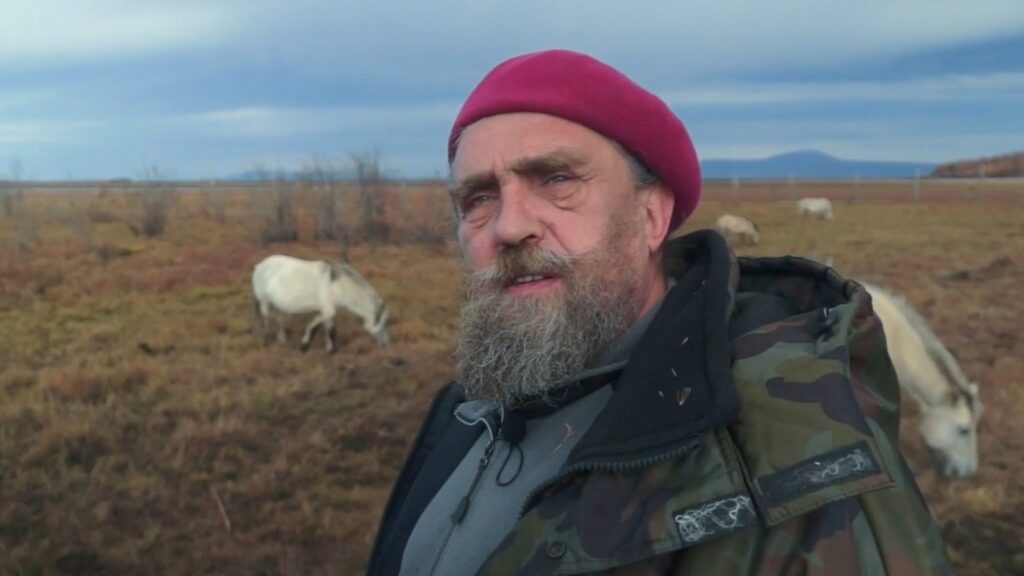
The Pleistocene Park is the brainchild of renowned scientist and Arctic ecologist Sergei Zimov. In 1996, Zimov established a research station and reserve in Siberia, in the Kolyma River region, with the aim of re-introducing large herbivores to the ecologically poor northern tundra ecosystems. His goal was to study the impact of these herbivores on the ecology of the reserve. Arctic ecosystems were once steppes or grasslands full of megafauna; this was during the Pleistocene epoch, which lasted from about 2.5 million to 12,000 years ago. When megafauna species disappeared from these landscapes at the end of the Pleistocene – probably due to the overpopulation of the first humans who appeared on the Arctic scene around this time – these grassland ecosystems were degraded.
Steppes, as is evident from those that survive to this day in Mongolia or Africa, are maintained and managed by large herbivores: grazing activity, the destruction of young shrubs and trees by trampling, together with the high turnover of nutrients and the dispersal of seeds through the digestive cycles of animals, create the conditions on which grasslands depend. Moreover, it is now known that during the last ice age (approximately 115,000 to 12,000 years ago), grassland ecosystems rather than forests and woodland and shrub landscapes dominated the terrestrial environment. The largest of these grasslands, which stretched from the Arctic to China and southern Europe, was the so-called mammoth steppe, which was home to large populations of mammoths, muskoxen, bison, reindeer and horses, and their associated predators such as wolves and tigers.
Zimov suspected that if large grazing herbivores, functionally equivalent to Pleistocene megafauna, were reintroduced to the tundra scrublands at these northern latitudes, pastures could reappear. If this project were expanded, the mammoth steppe could begin to recover in a functional sense. Such an ecological transition would be desirable for many reasons, but primarily because, as Zimov hypothesizes, steppe ecology could halt the permafrost thaw that is already alarmingly evident in the Pleistocene park today.
Permafrost, the deep subsurface layer of permanently frozen soil that makes up a quarter of the Northern Hemisphere's land area, contains organic matter that has been frozen for thousands of years. As the soil thaws, this organic matter decomposes, releasing carbon dioxide and methane; but also methane trapped in underground hydrates (pockets of gas trapped in ice). Given that the amount of carbon contained in permafrost is twice the amount of carbon in the atmosphere today, it is likely that the thawing of permafrost, if not stopped, will lead to global warming on a scale not yet anticipated.

One reason why functional restoration of the mammoth steppe on a continental scale would likely slow, if not stop, permafrost thawing, Zimov says, is that the reintroduced megafauna, at an overall density comparable to the Pleistocene, would systematically trample down the snowpack that insulates the soil during the long Arctic winters. If global warming did not raise atmospheric winter temperatures above freezing at these latitudes, this thinning of the snowpack would ensure that soil temperatures would remain below freezing. Another reason why restoring the steppe would help stop the thawing of permafrost is that during the summer months, grasses sequester carbon more efficiently than tundra or taiga, and their deep root systems bind and stabilize grassy soils. Grasslands also have a much higher albedo, or ability to reflect sunlight, than tundra or taiga, and therefore absorb less heat than the continental (land) ecosystems that currently dominate the Arctic. The Mammoth Steppe functioned as a planetary-scale climate regulator during the Pleistocene.
The Pleistocene Park experiment continues to this day; still led by Sergei Zimov and now in collaboration with Sergei's son Nikita. Their joint findings so far confirm Sergei's original assumptions. In Pleistocene Park, grasses have indeed returned to the tundra ecosystems thanks to the reintroduction of large herbivores. During the winter months, the difference between soil temperatures measured inside and outside the reserve has been shown to be 25°C. Scientists around the world are now following Zimov's studies with enthusiasm.
So here is a potential path to ecological détente – a path that truly sees the Earth as a protagonist with whom humanity can collaborate, rather than an adversary against whom we are inevitably pitted. If the Russian government were to support and significantly expand the Pleistocene Park initiative, it would demonstrate the visionary leadership that is so needed in our troubled times, but so lacking, especially in the West. If Russia were to take the lead in this way, it would shame the West and its long-standing claims to moral and intellectual superiority. Yet it would be welcomed with enthusiasm by millions around the world, and it would win the hearts of especially the younger generations, who would readily offer their allegiance to it. For the Russians themselves, it would surely be a source of moral pride, helping them to restore a lost sense of importance.
Attempts to industrialize and modernize Siberia over the past century have consistently failed. Siberia remains one of the most sparsely populated regions on Earth, and even that sparse population is now shrinking. So why not turn Siberia's relative uninhabitability to national advantage and instead make the region a "engine room" for climate restoration, a planetary laboratory for exploring new strategies that work better than ever before? with the logic of Earth's self-realization than against Not only would this benefit the biosphere, but Russia could legitimately use its historical power to demand adequate compensation for these ecological services provided to the international community. To this end, it could establish a much-needed system of fair compensation for countries that preserve and restore terrestrial systems important for the stability of the biosphere. Here too, Russia could play a moral leadership role. On this new path to ecological détente his prestige could indeed continue to grow.

About the Russian vastness
If there is such a thing as a “Russian temperament,” and if I, as an outsider, can take the liberty of commenting on it, then I would venture to say that it might be consistent with it to consider the Siberian wilderness as the “engine” of planetary processes and not as a periphery in need of “development.” For this temperament (if such a thing exists) certainly owes much to the vastness and wildness of Russia’s territory, three-quarters of which lie in Siberian regions.
If there is a certain “masculinity” in the Russian outlook on life, a certain toughness, independence, and spaciousness that is not easy to maintain within domestic borders—or within the parallel borders of international and diplomatic protocols—is it not because Russians have always had access to such harsh, uninhabited spaces? And could it not also be because, at an even deeper level, they have internalized this vastness as the terrain of their own inner selves?
If the Siberian wilderness were to be transformed back into the mammoth steppe that would be the key and core of a new vision of a distinctive Russian civilization, wouldn't that be an affirmation of Russian belonging that would strengthen the Russian people and emotionally unite them with the trajectory of this new civilization?
Potential for greatness
So, Mr. President Putin, I appreciate your efforts to restore Russia’s greatness. However, as a philosopher of civilization, I dare say that concepts of greatness are context-sensitive. The greatness that a leader aspires to must correspond to current needs and circumstances. In the unprecedentedly uncertain conditions of the twenty-first century, waging aggressive wars against neighboring states serves no one, least of all the people of the aggressor state, and as a result, in the long term—in which greatness is measured—such a state does not gain prestige.
But if Russia – as a nation with a unique opportunity to unleash the forces of the Earth to re-regulate its own terrestrial systems, and in this way secure the future of all human civilization – were to embark on this path, it could earn the gratitude and recognition of all. The people of such a nation could hold their heads high, and others from all over the world would come to it as enthusiastic Russophiles, as imitators, as tourists, or as immigrants. The potential for greatness – the greatness of Russia, your own greatness – is right there in front of you. I hope you will seize it.
Best regards,
Freya Mathews

Beautiful. Did he answer her?
That would really be Greatness.