"... the beauty of the universe, love it, not man separated from it, otherwise you will share in the pitiful confusions of man, or you will drown in despair when man's days become dark."
 — Robinson Jeffers (Solution, translation by Kamil Bednář)
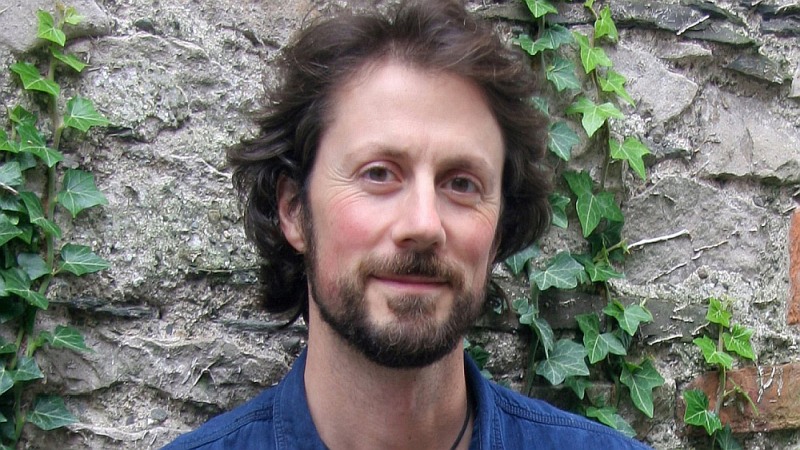
Paul Kingsnorth is an English writer, poet and thinker. He is the former deputy editor of the magazine The Ecologist and co-founder of the Dark Mountains Project. He lives in the west of Ireland.
While studying modern history at Oxford University, he became deeply involved in the environmental protest movement in the early 1990s. After graduating, he spent two months in Indonesia, working on conservation projects in Borneo and Java. After returning to the UK, he worked for a year on the editorial board of the newspaper Independent and after a three-year engagement for an environmental NGO as a campaign writer, he was appointed deputy editor-in-chief of the magazine The Ecologist, where he worked for two years. In 2003 he published his first book One No, Many Yeses, a political travelogue that explores the role globalization has played in the destruction of historical cultures around the world. At the beginning of the second millennium – after spending time with the tribal people of West Papua, brutally colonized by the Indonesian government and military – was involved in founding the West Papua Liberation Campaign, which he helped lead for a time. In his second book Real England (2008), Kignsnorth reflects on how the forces of globalization have transformed the face of his own country in terms of cultural homogenization; this book has received great acclaim.
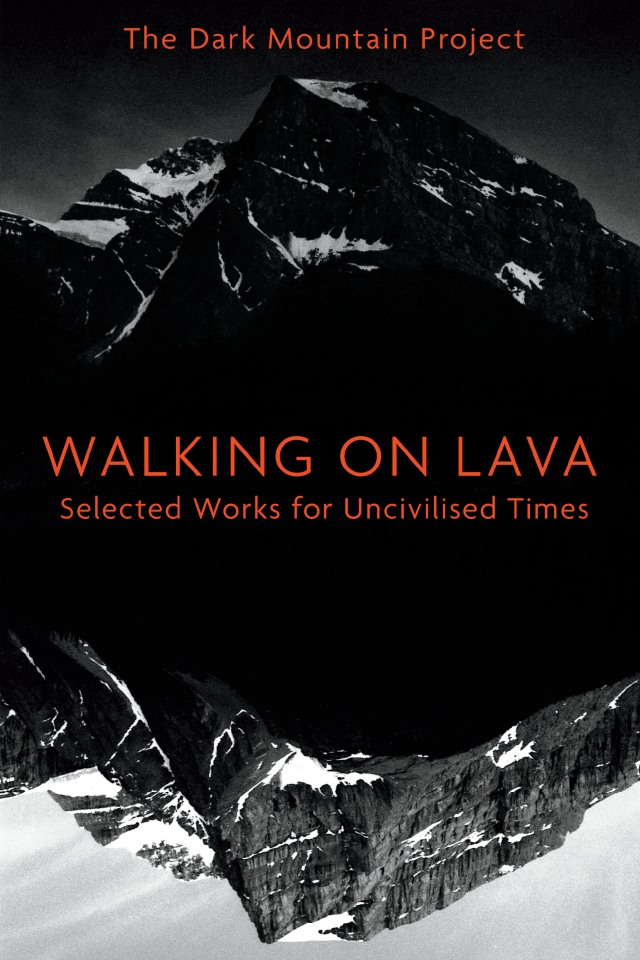
In 2009, Paul Kigsnorth and writer and social activist Dougald Hine launched the Dark Mountains Project, calling for a literary movement to respond to the ongoing collapse of the world's ecological and economic certainties. What began as a samizdat pamphlet has become a global network of writers, artists and thinkers who aim to challenge the foundations of our civilisation. Since 2009, the project has organised a series of summer festivals and smaller events, and produced bi-annual anthologies of texts. UncivilizationPaul Kingsnorth is now the director of this project and one of its editors. In 2011 he published his first collection of poetry Kidland and Other PoemsHis poetry has been published in a number of magazines and as a poet he has been awarded the BBC Wildlife Poet of the Year Award and the Poetry Life Award. He is also the author of short stories The Weak and (2014) and Beast (2016). In 2017 he published a book Confessions of a Recovering Environmentalist and Other Essays, v in which he formulated a new vision, which he called 'dark ecology', which stands firmly in opposition to the belief that technology can save us and which advocates for the restoration of the balance between the human and non-human world. This text is the author's talk at the Big Tent Festival in Scotland 2010 (translated by Jiří Zemánek). See also: paulkingsnorth.net and dark-mountain.net.
I'm going to try to explain what the Dark Mountain Project is, how it came about, what it's for, and where it might be headed. I say "try" because one thing I've found about the Dark Mountain Project is that it's strangely hard to explain. People often ask me what it is and expect a quick summary, and I find that a quick summary is basically impossible. The project seems too complicated and multifaceted for that. Or maybe I'm just not very good at explaining things.
The Dark Mountains project was born out of a collapse of faith and a search for what came next. It came from a feeling that I no longer believed the stories I had been telling myself about the world, how it worked, and what I could do with it. I have been a writer and an environmentalist for fifteen years, and often, though not always, a writer about the environment. During that time, I found myself saying many of the things that environmental writers say, and adopting many of the political, cultural, and ideological positions that environmentalists take. The problem was that I was increasingly losing faith in them. More precisely, I was losing faith in the possibility of preventing many of the global crises that we had tried to prevent. It seemed to me that our civilization was a train on a collision course, and that we were too close to it now to be able to stop it and make a difference. It was climate change that was the deciding factor; This is where my train of thought took me. The “scientific consensus” we hear so much about today tells us that we need to reduce greenhouse gas emissions by 60 to 80 % below current levels in order to stabilize the climate. Of course, this will not stop climate change, which already seems to be affecting us, but it can prevent it from getting worse. But we need to do it quickly, within two, three decades at most.
And we have to do this in the context of a global industrial economy that is growing at the fastest rate in human history and that is globalizing at a rate that is also unprecedented. Then we have a large human population, and the rate of population growth is also unprecedented. Moreover, the vast majority of the world's states have joined together in a happy capitalist alliance that places industrial expansion and economic growth at the very center of their raison d'être. Economic growth is completely dependent on fossil fuels to make it possible. No other fuel source that we know of provides the rapid pace of cheap growth that is needed to keep this global economy from collapsing. If we had a hundred years today to reduce emissions by 60 to 80 %, we might be able to do it, although it would still require a level of international consensus and cooperation that has never been seen in human history. But we don't have that much time. And meanwhile, more and more people are beginning to believe that climate change isn't even real. And we're only talking about climate change. We haven't even touched on the many other global ecological problems that we are happily causing: a quarter of the world's mammals are facing imminent extinction; one and a half acres of rainforest are being cut down every second; 75% of the world's fish stocks are on the verge of collapse. And here are two calculations that really make it clear to me what we are causing the Earth.
1: Humanity consumes 25% more of the world's natural "products" per year than the Earth can replace, and this number is expected to increase to 80% by mid-century.
2: It was calculated that If the global economy grows at an average rate of 3% over the next twenty years, we will consume resources during that period that will equal all the resources we have consumed since humanity first appeared on Earth.
Now imagine that you are an alien, a visitor from another planet, who has come to inspect the progress of homo sapiens. What do you think you will conclude from this situation?
It took me a long time to accept the conclusion I draw from all this today: namely, that the civilization we currently take for granted is an unstoppable death machine, consuming itself as it devours the Earth. The inner logic of this civilization is leading us to a painful downfall. We are not equipped to prevent it, nor are we even convinced that we want to. It is “almost certainly” too late to prevent the worst that climate change, peak oil, and ecocide will bring upon us and the planet we live on.
I have come to believe that the great challenge of the 21st century for those of us who live in the rich world today will not be to build a great “sustainable” civilization with offshore wind farms, electric cars, solar power plants, and all the other forms of alternative technology to prevent our privileged bubble from bursting, but that the great challenge for us will be to cope materially and existentially with the decline when the fossil fuel bubble bursts and we have to adapt to a harsher reality.
I believe that the 21st century will see the end of industrial society as we know it. The strange thing is that when I talk to people in this way, and especially to environmentalists, they react with great resistance. They don't want to hear it. They want to hear that even though it's bad, there is still hope if we act now. I don't share this hope, and that's why I'm accused of hopelessness. After all, hopelessness is the opposite of hope, and if we don't feel one, we must feel the other.
However, false hope is worse than no hope, and false hope is exactly what we are dealing with here. For example, think about what we hope for when we hope that we can stop climate change, say through something like the Copenhagen process.
We hope that the vast, deeply entrenched, legally guaranteed interests of the fossil fuel conglomerate and the entire mining industry, the car corporations, the military-industrial complex, the political parties, the unions, all the wide and winding alleys of the global economy, built on cheap fossil energy, can somehow be overcome in a very short time. We hope that an economy that is built on the necessity of constant growth can somehow, and also in a very short time, be rethought into some kind of fluffy harmless stable system. We hope that this can be achieved in a world with a rapidly expanding human population with its rapidly expanding appetites that must constantly grow in order to keep this economy on track.
We hope that the “rich world consumers” that we are will be prepared to radically change their lifestyles, either through personal choice or because their governments force them to do so. It also requires us to hope that democracies that depend on giving their voters what they want and promising them even more will be able to suddenly turn around and tell them they must have less of everything.
If all this fails, we turn to the “supply side” and, in the best tradition of the post-Enlightenment rational man, we hope that our technology will save us. We hope that we can build enough wind farms fast enough and that they will work. We hope that we can invent a “carbon capture” system that will allow us to continue burning coal. We hope that we can cover the Sahara with mirrors and get a super grid up and running. We hope that electric cars or hydrogen fuel cells or decentralized energy systems will work. We hope that we can get the Canadians to stop digging and selling the tar sands and convince the Saudis to leave the rest of the oil in the ground. We hope that we can “decouple” destructive pollution from uncontrolled growth.
We hope to do all this against the interests of those who run the fossil fuel economy and against the inert and inadequate political systems that supposedly govern it, and against the competitive nature of people and nations. If we can't do that, we hope to figure out some way to start pumping carbon out of the atmosphere and storing it under the sea, or sending it into space, or creating a cloud that blocks the sun's rays; or sending space mirrors into the darkness of space to reflect the light back into space.
And behind all this false hope, there is in any case a larger unanswered question: what are we hoping for? Because we fundamentally fail to distinguish between life and lifestyle. When we campaign for the sustainability of our society, what are we really campaigning for? We say we are campaigning to “save the earth,” but in reality we are campaigning to save our civilization. I wonder if we can even tell the difference anymore.
Environmentalism should begin—and once did—with a simple question: what is best for the rich web of life on Earth? But that question has been, almost unnoticed, gradually replaced by another question: how can we maintain our lifestyle and extend it to everything else on Earth while doing as little harm as possible to the “environment”? But these are two very different questions, and they offer two very different answers.
We all like to attack climate skeptics for their “denial.” But we all live in denial. The civilization we grew up in is falling apart. No amount of green machinery will stop it. The challenge for us, especially those of us who live in a wealthy and overly indulgent world, is how to come to terms with this—and, crucially, how to understand that the end of the world as we know it is not the same as the end of the world. By that I mean that the end of our way of life in the West is not the same as the end of life itself.
After fifteen years of writing about the environment, it took me a long time to accept the logic of my own conclusions and what that logic meant to me on a personal level. When I finally did, I had to ask myself: what would I do if I really believed this? How would I live? And also – how would I write as a writer? Because it seemed to me that this denial, which applies to all of us, was reflected in our cultural production as a society.
In a society experiencing a real emergency, as we often claim, this would surely be reflected in its cultural output. Our novels, our films, our television shows, our media would surely show some acceptance of the fact that our assumptions are collapsing, that the world that is coming will not be the same as the world we are leaving. Surely an era of ecocide will provoke reactions? But I have not seen any significant responses in the cultural mainstream. Denial extends to every aspect of what we produce and every aspect of how we live our lives.
While I was thinking about all this, I came into contact with someone who was thinking pretty much the same thing as me. Dougald Hine, a former journalist like me, got in touch and we started to play around with ideas. What would the cultural response to our times look like, we asked ourselves, if the future wasn't assumed to be a modernized version of the present? What would the cultural response to the age of ecocide look like if it wasn't based on false pretense? What would happen if we looked into the abyss?
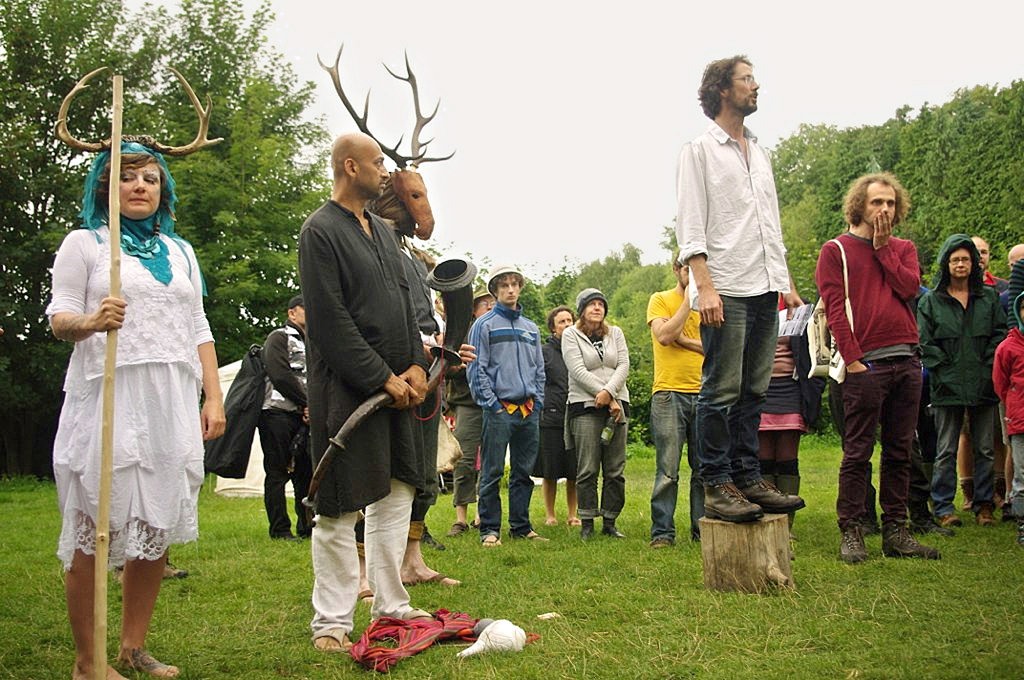
The result was the Dark Mountains project. Dark Mountains is an attempt to unite a cultural movement of people who share this vision of the future. It began as a movement of writers, but has expanded to now include artists, musicians, filmmakers, but also scientists, engineers, farmers, and artisans, all of whom have stopped believing the stories we as a culture tell ourselves.
We believe that the obstacles we face as a civilization are not just physical, political, or economic, but primarily cultural obstacles—they are obstacles of the imagination. We believe that the stories we tell ourselves as a society—the “myths upon which our civilization is founded”—are one reason we rush toward that brick wall, and also the reason we refuse to accept that we will hit it.
We believe that a number of cultural myths support our current state of delusion: myths about the indescribable march of progress, about our isolation from “nature,” about our uniqueness as a species, about the ability of our machines to save us from the consequences of our actions.
It seemed obvious what we had to do next: write a manifesto. We wanted to set the stage for what we decided to call “uncivilization”—the process of uncovering the narratives of our culture and examining the threads from which they are woven.
We took the name of our initiative from the lines of a poem by the almost forgotten American poet Robinson Jeffers, who half a century ago warned of humanity's suicidal direction and who saw a Shakespearean inevitability in the fate that our species seems to have chosen for itself:
"I would burn my right hand in a slow fire To change the future ... I should do foolishly. The beauty of modern Man is not in the persons but in the Disastrous rhythm, the heavy and mobile masses, the dance of the Dream-led masses down the dark mountain".
—Robinson Jeffers, Rearmament
We were interested, if anyone shared our views. We printed the manifesto, put it on the website and waited to see what would happen. Within a few months we had sold several hundred manifestos and printed more. We received responses from every continent and thousands of visits to our website. The media, from the Australian Financial Review to the New Statesman, started to take notice.
We got hundreds of emails from people who said they were thrilled to have stumbled upon us—thrilled that we were doing this. What came out of many of these people was a natural reaction. They were thrilled because they had been given permission to stop pretending. They had felt this way for a long time—they had stopped believing these stories too—but somehow they hadn't been given permission to express their feelings. Now they felt they had been given permission. Many people said that giving up this false hope didn't make them feel down, as they had initially thought, but rather cheered them up.
With that, of course, came the attacks. We were called all sorts of strange names: doomsayers, doomsayers, nihilists, misanthropes, Luddites, romantics, utopians—you name it. If it's possible to be a romantic utopian nihilist, apparently some people think I am one. In most cases, we took it as a sign that we were saying something that was getting under people's skin, so we took it as a compliment.
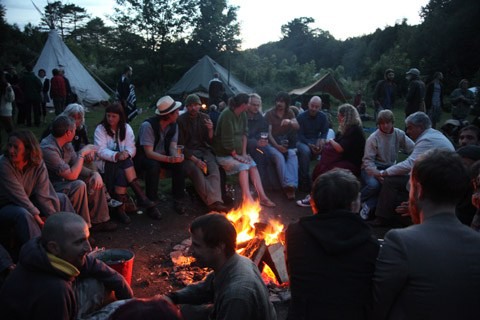
In the year or so since the Dark Mountains project began, we have done two major things – a gathering and a book. At the end of May, four hundred project participants gathered at a festival weekend for a gathering full of talks, debates, music, discussions and practical events. The book, published at the same time, contains essays, short fiction, poetry and art, including contributions from Alastair McIntosh, Jay Griffiths, Melanie Challenger and many others. We are planning another book and are also preparing more events.
If I were to summarize what Dark Mountain is or isn't at this point, I might say something a little different than I would have said six months ago, because the project evolves with the people involved, with our new ideas, and with each event. However, the basic approach remains, and it is as follows:
What we are:
The Dark Mountains Project invites people to confront the converging crises of our century as a cultural challenge—rather than just a technical or political one. We do not reject technical or political responses to our current multiple crises, even if we may question the assumptions behind them and the extent to which those assumptions are wishful thinking. We do not reject activism or campaigning, but we question action for action’s sake, and we believe we must be honest about what historical forces are at work today and what we can or cannot achieve at this moment.
But above all, we invite people to engage with certain questions. In what ways are these crises rooted in our cultural assumptions, in the stories we have told ourselves for generations, and in the ways we have seen the world? And how can we break free from these assumptions? How can we create cultural responses that undermine the poisonous myths we have inherited; myths about the centrality of humanity, about materialism, about progress, about the separation of “people” from “nature”? Where can we find new stories or old stories whose time has come? What other ways of seeing can change our understanding of our situation? And how can we help send these stories and ways of seeing out into the world?
What we are not:
The Dark Mountains project is not intended as a tool for theoretical or abstract arguments about the future or for apocalyptic fantasies. And most importantly, it is not an “activist” project: if you are looking for new ways to “save the world,” we will disappoint you—and we have disappointed some of you already. The Dark Mountains is not another well-intentioned attempt to “connect artists who care about the environment.” It is not an attempt to focus poets’ minds on “sustainability challenges” or encourage young writers to “address issues” like climate change or deforestation. It is something much more fundamental.
We want to be able to look at human predicaments coldly and hard, without necessarily having any “solutions” to offer. We make no prejudgments, nor do we offer banal “answers.” After all, a novelist is not expected to know the “solutions” to human difficulties. A poet is not expected to provide “answers” or political scenarios. But what writers should be able to do is to explore this process and our place in it, even beyond our current cultural assumptions.
There are two ways we can view the future: as an apocalypse or as progress. People seem to lean in one direction or the other, which I think explains why we can be called utopians and catastrophists in the same breath. I suspect that neither of these versions of the future will come to pass, except for what is the original meaning of the word apocalypse, which in Greek means “revelation.” Rather, we will witness the gradual decline of our civilization and the long-term lowering of our expectations.
I remember attending a European Social Forum meeting on “life after capitalism” six years ago, at the height of the economic boom. It was full of hopeful young Turks planning for revolution and the utopia that would follow. But on stage came the sobering voice of the brilliant economist Susan George, who, at seventy, had seen more of the world than most of us. I can quote what she said because I wrote it down; it seems obvious that it is worth listening to even in these idyllic days:
There is a serious possibility that this unstable global economy could actually collapse. Then we could face a Weimar-type situation. We could experience war, dictatorship, instability, and military takeovers. Remember, life after capitalism could be worse than what we have now.
I don't think many people realized it then, but it seems very prescient now. We are in a period of global narrative failure: nobody's stories have compelling plots, and none of these stories have a clear ending. Marxism, conservatism, liberalism, neoliberalism, neoconservatism, environmentalism - none of them have legs. New stories will come because new stories are needed. But in the short term, I don't know if we're going to like what these stories are going to tell us.