Freya Mathews is an Associate Professor of Environmental Philosophy at La Trobe University (Australia). Mathews' philosophy is rooted in panpsychism, an approach that sees the mentality of the natural world as fundamental. Her current main interests include the development of ecological civilization; indigenous (Australian and Chinese) views of "sustainability" and how these perspectives can be adapted to the context of contemporary global society; the return of man to the wild; and the relationship between ecology and religion. In addition to her research activities, Mathews manages the private biodiversity reserve Barabungle Park on Mt Korongo in northern Victoria; she is a Fellow of the Australian Academy of Humanities. Among her published books: The Ecological Self (1991), For Love of Matter: a Contemporary Panpsychism (2003), Reinhabiting Reality: towards a Recovery of Culture (2005). This text was originally published under the title “On Desiring Nature” in the journal Indian Journal of Ecocriticism (3, August 2010, pp. 1-9); this Czech translation (by Jiří Zemánek) was published in the anthology Everything around me lives, feels, like me... (Pilgrim 2020, pp. 105-124).
Today, when this modern society must more or less at least admit the necessity of ecological sustainability, ecophilosophical inquiry can focus more intently on the question of what such sustainability should consist of—what exactly would need to be done to make our societies ecologically sustainable. At first glance, the answer to this question seems to be at hand. Modern societies will become ecologically sustainable when they re-integrate into nature, that is, when they become one with the vast living systems of the planet. Instead of monstrously devouring these living systems, as we are currently doing, we must come into ecological proportion, so to speak, and biologically integrate ourselves into the biosphere as a whole.
That is a fact. But how could this be achieved? Two approaches are usually suggested in this context. On the one hand, we could curb our desires and reduce our consumption, thereby reducing our overall impact on the biosphere. Or we could give free rein to our desires, but still find alternative ways to satisfy them, so that this has little impact on nature. So instead of reducing our energy consumption, for example, we could switch to renewable energy sources. Or we could redesign the built environment of cities to use natural energy flows. For example, buildings could be designed in such a way that they avoid the use of artificial air conditioning by imitating termite mounds, which use internal chimneys to regulate their interior temperature. The production of goods could be conceived in a biomimicry manner, so that products would be modeled after natural entities; the design of a natural being ensures that such products can coexist in a viable way with other elements of the ecosystem.
Both of these strategies – on the one hand, limiting desires, or on the other, satisfying them in a safe way – are certainly commendable. They will reduce our impact on nature. However, nature requires more than limiting our influence on it. Nature is not something given from which we can take indefinitely, even if we do so in a way that does not harm it. Nature must constantly renew itself, not from some source outside the system, but from within, from the very beings who draw their life and nourishment from this system.
“Becoming part of nature” means more than simply not harming it, or minimizing our impact on it; rather, it means actively complementing it in everything we do, actively recreating the biosphere. Ultimately, it is about aligning our desires with what the biosphere demands of us. Our desires must be interconnected with the desires of other elements of the ecosystem in the sense that the effects of our activities that we undertake to satisfy our desires must provide the very conditions that the other elements of the system need. This is how the biosphere works. Each being, in pursuing its own good, also serves the needs of others. Take, for example, one of my favorite examples, the rabbit-wallaby. This miniature Australian kangaroo craves truffles, and when it digs them up, it aerates the forest floor in exactly the way that is necessary for the health of the forest..
In nature, this interweaving of interests and this cooperation has of course been achieved by natural selection: a kangaroo does not decide that it wants truffles; it simply evolved to want them. On the other hand, our human desire is clearly not constrained in this way. Our desires are mediated by culture, and cultures change across space and time. In our current culture of consumerism, our desires are deeply at odds with what the needs of the biosphere want of us: the activities we undertake to satisfy our desires do not generally create as their concomitants the very conditions necessary for the sustenance of other elements of the ecosystem. On the contrary, the side effects of the activities we undertake to satisfy our desires create conditions that are deeply at odds with other elements of the ecosystem. If we could change this – that is, bring about the complete reassessment of our desires that would be necessary to reengage human desire in the biosphere (rather than merely minimizing the impact of our current consumer desires without significantly revising those desires themselves) – it would represent a fundamental cultural shift.
How could such a shift be achieved? What could make us actually start actively desiring what the biosphere demands of us, instead of what we currently desire?
In this context, education is often cited as the solution. Sciences such as ecology and conservation biology are beginning to provide insight into the needs of biotic systems. Some of these sciences are now finding their way into sustainability programs in schools and local communities. For example, many schools in my home state of Victoria here in Australia are auditing their energy and water use, implementing proper waste management and recycling systems, establishing vegetable gardens, and monitoring the ecological state of local waterways and bushland. Properly educated students are beginning to adjust their collective behavior in response to the needs of the larger living system.
Science is of course key, and the educational programs that emerge from it are invaluable. But these programs alone are unlikely to bring about the mass re-evaluation of our desires that deep sustainability requires. Desire, after all, is not so easy to internalize. Desire is inseparable from emotion: love and hate, fear and aversion, resentment and tenderness—all of these emotions permeate and are permeated by the complex textures of desire. It is unlikely that our desires will change without a shift in our emotions, and it is equally unlikely that our emotions will be fundamentally changed by science. First, this is because science focuses exclusively on the intellect, and while emotions are by no means inaccessible to reason, rational argument is utterly ineffective in bringing about fundamental change in our deeply rooted emotions. Second, science is strongly dualistic in its depiction of nature, in the sense that it presents nature in purely materialistic terms. This is true of ecology as of other sciences: ecosystems are understood as purely physical systems without internal correlations such as self-awareness and self-meaning. How then can we expect people whose values and deepest motivations are shaped by meaning-making systems to engage emotionally with systems that are presented as completely devoid of intrinsic meaning? To ask people to allow their emotions, and therefore their desires, to be shaped by the activities of ecological entities that are “blind” in the sense that they are activated only by physical causes rather than meanings, is to ask us to give up meaning in favor of the meaninglessness of mere matter. In essence, we are being asked to give up nothing less than our humanity. It is therefore no wonder that people resist the call of deep ecologists and others for an “ecological self,” if that is what the ecological self means! If it is to be possible for us to truly "become part of nature," in the sense of wanting what nature asks of us,, then we will first have to reimagine life systems as systems of meaning – as systems that, like human systems, are filled with psychic activity as well as physicality, that have the character of subject as well as object. In other words, the prerequisite for our emotions to be able to connect with nature and for our desires to be reevaluated as a result is the abolition of the dualistic understanding of nature that is encoded in science.
Assuming that we set aside our dualistic assumptions in the interests of deep sustainability, at least experimentally, what would then have to happen for us to truly establish an emotional bond with nature?
The key here, I believe, may be direct observation in the field. By this I do not mean experimental manipulation of natural entities in order to answer pre-formulated questions—the kind of observation prescribed by science. Rather, I mean something akin to the observation of nature by field naturalists. Patiently and unobtrusively observing a family of wrens in the garden, or the activities of a spider in the corner of the garage, or the theater of the changing seasons of a local stream, can over time create in us a sense of complicity with these existences. When a neighbor's cat kills a wren, or a visitor steps on a spider, or a local factory dumps chemicals into a stream, one is likely to be upset. This kind of "loving attention" or "attentive love," as feminist theorists have characterized it,1For a description of loving attention, see: Sarah Ruddick, “Maternal Thinking”. In: Feminist Studies 6, 1980, pp. 342-367; and further: Evelyn Fox Keller, Reflections on Gender and Science (Yale University Press, New Haven, 1985). Goethean science offers another attention-loving epistemology. For its application, see Isis Hazel Brook, “Dualism, Monism and the Wonder of Materiality as Revealed through Goethean Observation”. In: PAN Philosophy Activism Nature 6, 2009. Ecological philosophers such as Aldo Leopold and John Rodman, however, defend a different version of this epistemology.has the effect of making natural entities morally very important to us: to the extent that we have been able to become emotionally involved in their lives, we will want to protect them from harm.
However, while the overall attitude of mindful love may lead us to limit our impact on nature and to lead our own lives in a way that does not harm it, it cannot really be expected that this will transform our desires into the radically new creative possibilities that are necessary if our desires are to actively complement nature and truly serve its needs. Mindful love, in other words, may lead us to keep our desires in check, but it is unlikely to be powerful enough in its effects to bring about their total transformation in accordance with the demands of our “inclusion in nature.” It still leaves us, so to speak, on the outside of the system – looking at it with participation, even with love, but as spectators rather than as actors within the system, shaped in their innermost impulses by its imperatives.
In order to be able to psychologically situate ourselves within the system as its real actors with the prospect of truly “uniting with nature,” we seem to need to take another step, which could be described in terms of synergyBy synergy, I mean precisely the connection of two or more participants in such a way that the meanings of their own selves that they bring to this encounter mutually influence and expand through the communication that occurs between them. Through synergy, the meanings of our selves become mutual rather than exclusively self-referential, and in the process they continue to expand and transform. From these expanded meanings of selves emerge new patterns of desire that incorporate the signatures of the other participants in the encounter into their texture.
What might be examples of synergy between humans and nature? It is perhaps relatively easy to imagine such interactions between humans and certain communicative creatures.
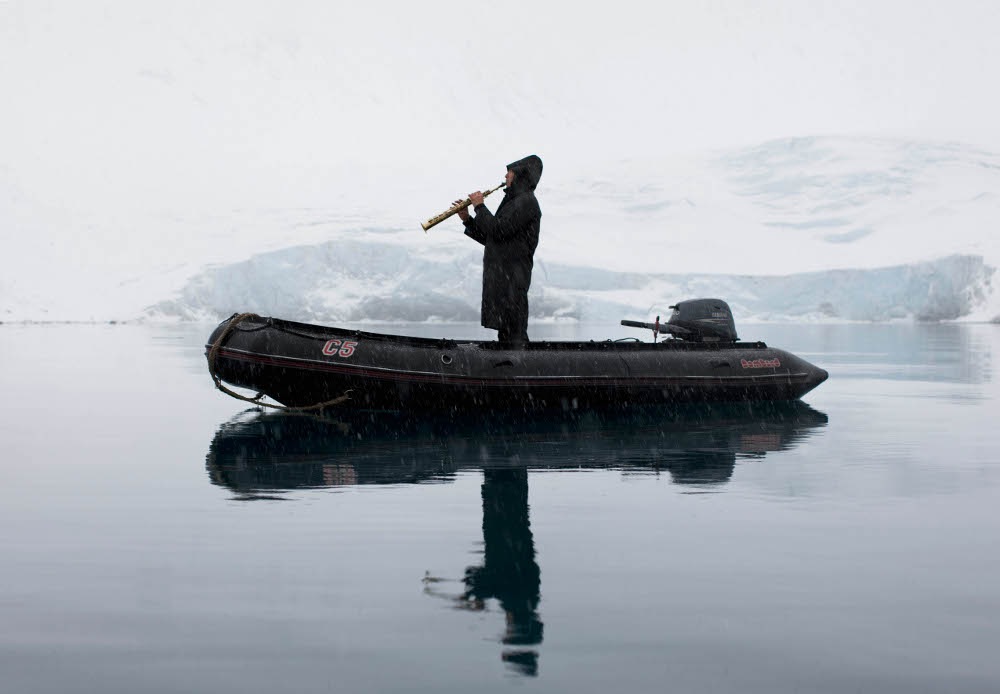
For example, some musicians have written about co-creating music with birds or whales.2See for example: Jim Nollman's on-line Interspecies Newsletter; and also his book:The Charged Border: Where Whales and Humans Meet (Henry Holt 1999). Such encounters are likely to be powerful. Imagine the experience of musical improvisation, say with a songbird—and realize that the bird shares some of its own meaning with you, that it responds immediately communicatively to your musical rhythms, and that together you are creating something that is larger than either of you and yet still contains the signatures of each of you in its musical patterns. Such an experience is likely to broaden the horizons of your ability to express yourself, to incorporate the repertoire of feelings expressed by the songbird into the repertoire of feelings expressed musically by you, and thereby to bring you into the songbird's system and activate in you the feelings that shape that system.
It is less easy to provide examples of synergy with a living system in general. If we set aside our dualistic assumptions and accept that the world is potentially communicative and responsive to us, we will have to imagine forms of address that facilitate the encounter of our self and the world. At this point, the search for deep sustainability perhaps intersects with the practices of religion or spirituality. One way we can address the world is through invocation, in other words, through a plea to a larger order of things that transcends us to reveal its inner meaning to us.
How might we expect the greater order of things to respond to our invocation? In spiritual contexts that allow for such a response, it traditionally occurs through meaningful connections, through fortunate or synchronistic arrangements of circumstances. In this sense, the “language” of the world is concretized and specified. It is the language of poetics, the language of imagery, the language of meaning that expresses itself through symbolic resonance. things. It is in such a language—traditionally the language of poetic narrative—that our invocations must perhaps be formulated. It follows that in any society in which desire is reshaped to truly “fit into nature,” the basic frame of reference may need to be poetic; science, along with other forms of thought and knowledge, may need to be subsumed under and oriented toward larger poetic narratives.
When I address the world using the frame of reference of a story with poetic overtones that characterized the sacred legends and stories of ancient societies, and when the world responds to me by emanating situations that clearly refer to the same story, I cannot help but be amazed. The world's response is unmistakable in its poetic aptness, already well known to us and recognizable from the realm of nightly dreams, or rather from those dreams that in any case are imprinted with the unusualness of a source beyond the boundaries of ordinary experience. And it is in this aptness, in the alignment of this response with the concrete poetics of our invocation, that there is a truth contained that directly refers to the meanings at our own most personal core and inescapably draws us into an intimate connection. Every time the world organizes itself with poetic intent, it always manifests itself in the poetic image of our invocation, as if it were presenting itself to us for the very first time. It is as if the veil of the ordinary has been lifted and a mythical world has been graciously granted to us that exists only for our eyes, virgin and untouched and still frosted with the dew of creation. There is such intimacy in this revelation, such an incomparable generosity of gift, such a breathtaking unexpectedness, that we cannot help but surrender to it. Then, on a certain level of functioning, we become as madly in love as the mystic who embraces the world as beloved in his heart despite the unrelenting pitfalls, sorrows and trials that the world presents to us in our daily activities.
Invocation in the contemporary sense can be done privately or collectively. Contemporary examples of collective practices include forms of invocation performed within bioregional rituals—ceremonies or festivals held to celebrate a place or landscape or other aspects of a larger life system. One such festival, a classic spring celebration of regeneration and renewal, is held every year in the neighborhood of my own city center.3See for example: Freya Mathews, “Singing Up the City”. In: PAN Philosophy Activism Nature 1, 2000. It is organised by CERES (The Centre for Education and Research in Environmental Strategies), our local environmental park, located on the banks of Merri Creek in Melbourne. The purpose of this event is to welcome back to the creek a beautiful little azure blue bird called the Sacred Kingfisher. The Sacred Kingfisher migrates from Southeast Asia all the way down to its ancestral breeding grounds in South Australia, but disappeared from Merri Creek completely a few decades ago due to urbanisation and industrialisation. However, after community-based re-vegetation projects brought native plants to Merri Creek, the kingfisher has returned.

The festival is attended by thousands of local people, who are welcomed into the landscape by Aboriginal elders and dancers. Hundreds of performers, including school children from across Melbourne, take part. Dressed as frogs and insects, birds and the spirits of the river, these children have special roles in the ceremony. They all learn the sacred kingfisher boogie, a dance that mimics the kingfisher’s distinctive voice and shaking. Each year, local Aboriginal elders offer a different Dreaming story, providing the theme for a large-scale performance that weaves elements of the Dreamtime into a contemporary narrative of regeneration and belonging. Each year the event also becomes more ceremonial, with the audience invited to participate in rituals such as the installation of a cone of light and a ritual procession, so that although the valley of the stream is lined with telegraph poles and the skyline of the metropolis, at dusk it is transformed into a mysterious archaic place with worshippers walking and dancing among sacred fires, invoking the spirits of their home. The place thus implicitly or explicitly invoked responds with dazzlingly synchronized poetics. One year, a performance based on the story of the Rainbow Woman of Dreaming Time culminated in an actual rainbow framing the terrain of the dance space. Another year, the “audience” was invited to march in procession along the stream and plant long lit candles in a pile of sand that represented the home of the departed souls. A tree stood next to this sacred mound. Under this “spirit” tree, a harpist sat and played gentle music for the returning souls. As the sand mound filled with burning candles, the spirit tree suddenly exploded into a deafening song, for at that moment thousands of cicadas had chosen it and only it for their evening songs. Thus, the poetics of the festival scenario is expanded each year to include the poetic contributions of the “enchanted” place, and the resulting “performance” is strangely powerful and sacred.
Festivals and holidays are not, of course, the only forms of poetic address to the world. Many activities can acquire invocational value if they are carried out with the right intention. For example, pilgrimage. In China, one of the original and most ancient places of pilgrimage, the mountains have always been the destination of pilgrims. The official Chinese religions of Taoism and Buddhism situated their temples and monasteries and imagined their gods and immortal beings in a way that fit into this tradition. Originally, however, it was the mountains themselves that were sacred objects. However, the act of wandering can awaken a communicative dimension in any form of landscape. Pilgrimage can, in other words – like many other forms of invocation – “make the world sing”, as the Aboriginal people here in Australia say. I experienced this myself when I took a walk with two of my fellow pilgrims to the source of our little Merri River. The journey took us seven days in total and we were inundated with unexpected synchronicities, poetic interceptions and discoveries. The stream responded to our “singing” like a true goddess in such abundance of poetic gifts and charms that it transformed our modest trip into something far beyond our imagination.4See Freya Mathews, “The Merri Creek: to the Source of the Given”. ANDn: Reinhabiting Reality: towards a Recovery of Culture (SUNY Press, Albany New York 2005).
Traditional cultures, especially indigenous ones, have always understood the efficacy of invocation in evoking poetic responses from the world. This, rather than the desire to influence reality by magical means, is probably what lies behind all that we think of as “magic” in modern civilization. Magic in its instrumental (witchcraft) sense seems to have been completely replaced by science in modern civilization; but this should not blind us to the (probably) reliable efficacy of invocation, nor to the metaphysical reach of this efficacy—that it points to the psychophysical nature of reality. To experience firsthand the intimately welcoming poetic response of a place or landscape to our communicative attempts at rapprochement, or the response of a stream, river, or mountain to our wanderings, is to shift our metaphysical anchorage. It is to feel embraced, even loved, by the world, and to be flooded with a devotion and gratitude that regroups within us the deepest wellsprings of desire. This communicativeness, which can be evoked anywhere and anytime, is undoubtedly related to the poetic dynamics at the core of reality, which the Aborigines here in Australia call "Dreaming.". Once we have discovered this intimate and sensitive core, we can begin to feel towards the world what Aboriginal people feel towards their Dreaming. Psychoanalyst Crag San Roque has aptly described this kind of sensitivity:

"'The Dreaming.' You hear them talking about it, the lovely thing. Sometimes they call it 'The Dreaming,' which is a rough approximation for English speakers, sometimes they call it 'Altjerre' in the Arrente language, or 'Tjukurrpa' in the Western Desert language, or 'Jukurrpa' in the Warlpiri language. What does it mean, this state of affairs that brings tears to Paddy Sims' eyes?5Paddy Japaljarri Sims (1917-2010) was a member of the Warlpiri Aboriginal Australian tribe and one of the most famous traditional Australian painters, depicting the phenomenon of the "Dreaming" (Jukkurpa) in his paintings. In 1988, he and five other members of his tribe from the Yuendumu community were selected by the University of Sydney to create a painting installation for the exhibition 'Magiciens de la Terre' at the Centre Georges Pompidou. This work gained worldwide fame and sparked great interest in Aboriginal Australian painting., who sits cross-legged in front of a canvas, quietly singing and painting “The Story of the Milky Way.” What does this thing really mean, depicted by women and articulated by men in sand drawings, moving nimble fingers across a canvas spread out on bare ground or smeared onto a cement slab in a backyard near the Todd River? Tjukurrpa, the claim to land, the dreamy gaze into the distance, the marking of this rock and that, just for the fun of it. Deep reverence, singing out of nowhere in a stream bed, shrugging and walking away. Tjukurrpa, held lightly with a gravity so perfect, so firm and so omnipresent. Tjukurrpa, perhaps the most misunderstood, most overlooked, most beautiful and mysterious, and most abused and obliterated phenomenon in this country.”6Craig San Roque, “On Tjukurrpa: Painting Up and Building Thought”. In: Social Analysis 50, 2, Summer 2006, p. 148. Through communicative encounters with a world that seems so willingly to interweave its poetics with ours, apparently simply for the joy with which it envelops us and itself layer upon layer of narrative meaning, we could begin to share in these distant views, this dreamy love that so inextricably and insurmountably links the Australian Aborigines to the "land," to the world. This will be the "background of love," akin to the radiation background in physics that emanates from our contact with the source and within whose field all our specific daily desires are grouped. But how will our daily desires change when they are grouped within this field? Now all our desires will relate to this background of desire because of the poetic attention of our world. Our self-awareness will be modulated by the desire for this attention; our activities will be focused on how to draw a ray of this great meaning into every corner of our lives. With the potential to be illuminated by this transformative light, our survival instinct will find a new context, and the opinions of our friends will no longer serve as the sole measure of our personal worth. Gone will be our anxiety about our own image, which we conform to others, and with it our craving for new and new fashion accessories and goods that announce our social status and thus encourage consumerism in our contemporary culture. In this poetic glow, our inclination towards trivial pleasures and the cheap trinkets of such consumerism, the endless repetition and distraction that pretends to be variety, will also disappear. For our aesthetic pleasure, there will be instead an abundance of unique beauties, both miniature and gigantic, as well as the enchanting poetics of the encounter itself – the development of intimate relationships with a variety of differently embodied entities. Our desires will be reconnected, expanded, and attuned to new and wider possibilities of self-realization through poetic relationships with the multifaceted reality of the psychoactive universe. Set within the context of such a larger, essentially erotic poetics of existence, our everyday desires and the practices that result from them will certainly align with the inherent psychodynamics of nature.
In conclusion, in recent years, the ecological crisis has made it clear that we need to reassess our modern civilization's relationship to reality. Ecology has so far offered the key to this reassessment. However, ecology is still a science, and in this sense it retains the materialist assumption of science as the study of living systems in their purely physical or causal aspects. Since human culture is a system of meaning, it cannot, as we have seen, be subsumed under a purely physical-causal system. If human culture is to integrate itself into nature and actively complement and renew it, as true sustainability requires, human desire must be inherently shaped by the needs of nature. For this to happen, we must understand nature as structured by meanings as well as by physical causality: reality must be recognized as a psychophysical system with an inner poetic side as well as an outer causal side, capable of engaging and guiding us emotionally while at the same time claiming our moral attention. We can use the term to denote the kind of meanings that structure this inner aspect of being as a whole, and at the same time to denote the practices through which we engage with this order of meaning. ontopoetics.7For an introduction to ontopoetics, see: Freya Mathews, “Invitation to Ontopoetics”. In: PAN Philosophy Activism Nature 6, 2009. In this case, we could say that while the science of ecology, with its ethics of limitation, defined the first phase of the reassessment of our relationship to reality, the cultural project of ontopoetics, which aims at a total reassessment of our desires, may be an organic part of the second upcoming phase – of what can no longer be called just an ecological movement, but what must be newly understood as a revolution in the very context of its significance for human culture.