
Summer seminar of the Traveling University of Nature
Indigenity or How to Become Indigenous Again
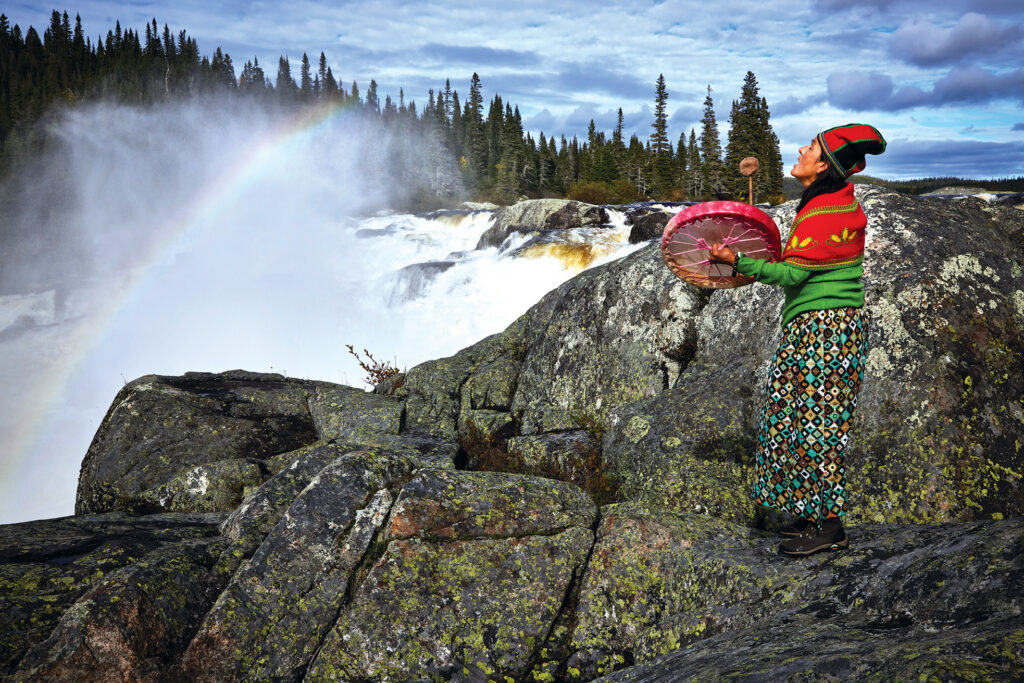
On the importance of indigenous values for our survival and healing our relationship with the Earth and decolonization
"The dominant mythologies of civilization are more fiction than myth. … It is very important to reshape the myth
modernity to also include the important and enduring contributions of indigenous peoples. Transforming dominant myths
of the modern world towards the values of indigenous peoples will move us all towards a different way of
relating to the world and its appreciation."
Philip P. Arnold, religious scholar and professor of indigenous studies at Syracuse University in New York
August 4 to 10, 2025
Brumov-Bylnice Game Reserve in the White Carpathians (Vlarska 313)
The source of the current cultural pathology that is destroying our natural world is our inability to live well. The celebrated technological and material progress that was supposed to open the way for us to solve all our problems has paradoxically led us into a deep civilizational and ecological crisis and today to the very threshold of survival. We have to ask ourselves unpleasant questions: Are we even worthy of inhabiting this beautiful planet if we do not know how to live on it? Isn't our civilization rather "transient illness", as the poet Robinson Jeffers put it, from which we need to wake up?
The indigenous peoples, whom we Europeans began to colonize five hundred years ago, were the first to warn us about the self-destructive tendencies of our civilization, and they still warn us today. The process of colonization gave birth to the imperial mentality of today's colonial-corporate capitalist culture, which has led us to the exploitation and total commodification of the entire biosphere - to the destruction of entire ecosystems (ecocide) and entire cultures (genocide). It seems that the indigenous peoples, whom our Western world has always tended to ignore, oppress or exterminate, knew and still do know about how on Earth live well, something fundamentally important that has been lost from our own cultural memory. In this year's seminar, we will try to search for these things.
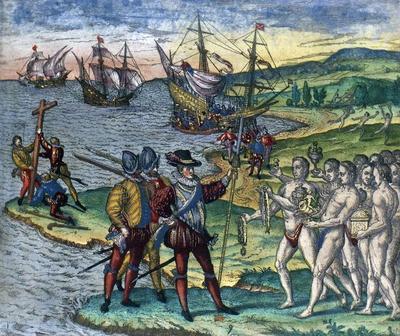
"Indigenous cultures represent the only hope for me in this impoverished world."
Freya Mathews, Australian ecophilosopher, professor at La Trobe University in Melbourne
In order to truly ground our self-centered civilization, we must first ""we all crawl back through colonialism and together rethink what it means to be human" (Charles H.Long). We have forgotten how to live as partners with the Earth, we are forgetting our wildness. We need to remember our own indigeneity – that is, on our ability to connect with the being of the world. As David Abram reminds us:"We are human only in contact and companionship with that which is non-human." To open ourselves to such an intimate relationship with the living world around us and to begin to create a new regenerative future based on true reciprocity between ourselves and the Earth, we need to begin to familiarize ourselves with the worldviews and values of indigenous peoples today. Cosmologist Thomas Berry once wrote that it is time for us to learn from indigenous peoples; and philosopher Freya Mathews has asked whether, in a sense, we should become indigenous again. Their words now become a challenge for us to transform our civilization.
In this spirit, we will conceive of our summer seminar INDIGENITY in the White Carpathians as a kind of school of indigenous education, as a search for inspiration that we can draw from indigenous people so that we can live on Earth to live wellHere is a brief overview of the lecturers and seminar topics:
You will have the opportunity to meet two South American indigenous teachers – healer Augustín Grefa, a member of the Quichua tribe, and Temoke Zinn, a dancer and artist from the Mexican Aztec-Chichimeca lineage – who will share with us some of the wisdom of their own spiritual traditions. Two leading Australian researchers – ecophilosopher Freya Mathews and cultural geographer Sandra Wooltorton – who have studied indigenous Aboriginal cultures for many years, will introduce us to the practice of “resettlement”, how our modern societies could, following the example of indigenous cultures, “nest” in the landscape and newly understand the role of “habitat”. Ondřej Bahník and coach Monika Michaelová will talk about their spiritual therapeutic practice, inspired by their rich experiences, which they draw from the indigenous tribes of the Colombian Amazon. Elsa Šebková, in her efforts to regenerate the landscape, tries to connect practical experiences with syntropic agriculture with spiritual experiences with indigenous cultures. Ethnologist Jana Jetmarová will introduce us to what it means to be an indigenous Bolivian and the South American indigenous concept of “buen vivir”, the concept of a good life in harmony with Mother Earth as an alternative to capitalism. Jiří Zemánek will talk about the doctrine of discovery, indigenous values and decolonization using the example of the North American indigenous confederation Haudenosaunee (Iroquois League); and will also introduce the Haudenosaunee (Iroquois) The Great Law of Peace and remarkable A basic call to awareness (1977). Educator Luboš Slovák will introduce us to the work of the prominent Native American botanist from the Potawatomi tribe, Robin Wall Kimmerer. The prominent German biologist Andreas Weber will recall how the land itself raised him in his childhood garden. In his lecture, Luděk Čertík will introduce the key figures and works of Native American cinema, starting with the independent feature film Exiles (1961). Director Hana Nováková will present her new auteur film Amoosed!, whose story brought her to the indigenous tribe of the North American Mikmaq. Guide and excellent dance meditation instructor Eliška Jandová will introduce us to the rich Indian subculture in the Czech Republic, its ways of life and deeper value motivations. On the last day of the seminar, we will screen the film "Where the Olive Trees Weep" (Zaya and Maurizio Bennaz), the first in a twelve-part series of films dedicated to the global intergenerational trauma of the colonization of indigenous peoples, which brings to light the background of the current occupation and genocide in Palestine; its screening will be complemented by commentary by political scientist Zora Hesová. Cultural sociologist Andrea Průchová Hrůzová will introduce us to the nature of the current Czech debate on decolonization. And at the very end of the seminar, we will immerse ourselves in singing together the melodic texts of indigenous "Earth Songs" from around the world with yogi, traveler and poet Sebastian Prax.
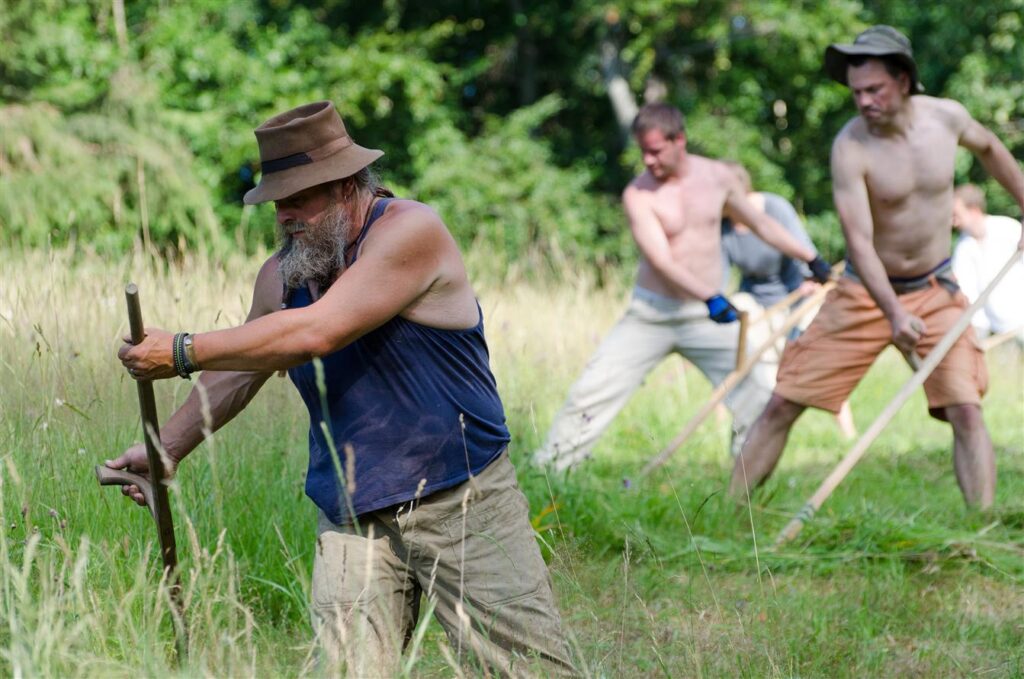
"I am part of the miracle of life on earth."
Miroslav Janík, ecologist, nature conservationist and chairman of the Wallachian association Kosenka
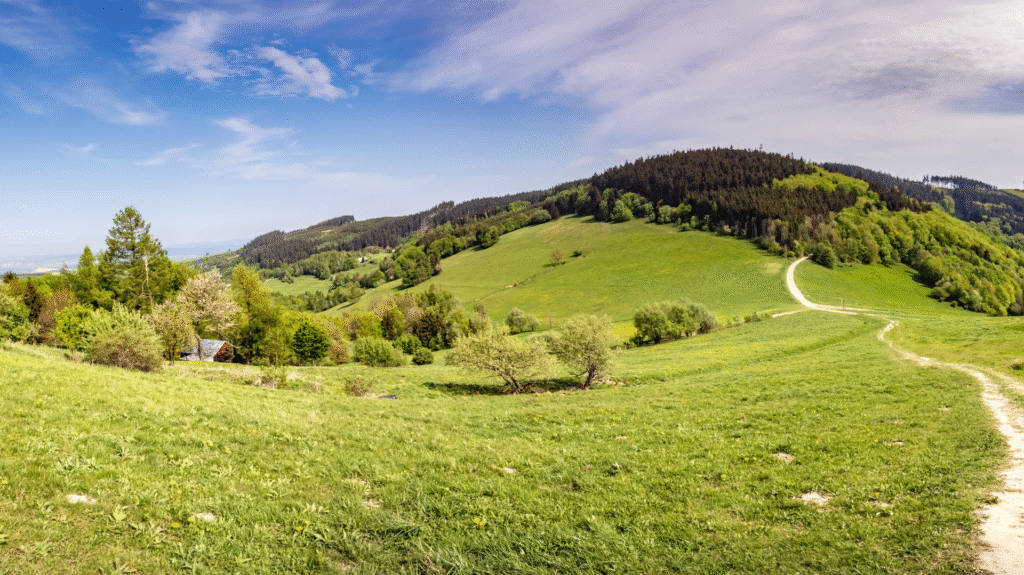
Our seminar will take place in the beautiful landscape of the White Carpathians on the border of Moravia and Slovakia, or rather in the northern Wallachian part of the White Carpathians Protected Area. We will stay at the Hájenka cottage in Brumov-Bylnice in the valley of the Vlára River under the Javorník hill (783 m), from where we will take a total of five trips to the surrounding area. After the seminar, we will set off on a hundred-kilometer, five-day journey across the White Carpathians from Brumov-Bylnice to Velká nad Veličkou (August 10-14). The guide who will introduce us to the natural and cultural wealth of the White Carpathians will be, above all, Mr. Mgr. Miroslav Janík - ecologist, nature conservationist and long-time chairman of the basic organization ČSOP Kosenka in Valašské kloboky, founder of the Ščurnica primeval forest, organizer of the care of the rare White Carpathian orchid meadows and the preservation of the cultural and traditional values of the White Carpathians. And also Mrs. Mgr. Renata Vaculíková, director of the Information Center for the Development of Moravské Kopanice.
The White Carpathians, which were declared a European UNESCO Biosphere Reserve in 1996, are characterized by extraordinary natural diversity. This cultural landscape, cultivated by people for centuries, represents a unique proof of the harmonious coexistence of man and nature. Its most valuable natural values include, above all, remarkable communities of meadows and pastures with a rich occurrence of orchids, which belong to the most valuable meadow biotopes in Europe; and no less valuable, especially in the northern and central parts of the White Carpathians, are also extensive forest complexes with unusually high biodiversity. The White Carpathians are also famous for organic farming, which is most widespread here in the entire Czech Republic. And last but not least, this area is also extraordinary for the extent of preserved traditions, folk folklore, historical monuments and architecture. The prominent Czech novelist, columnist and publicist Ludvík Vaculík (1926-2015), author of the famous novel, was born in Brumov-Bylnice and is buried in the cemetery here. Ax and the call Two thousand words and founding member of Charter 77.
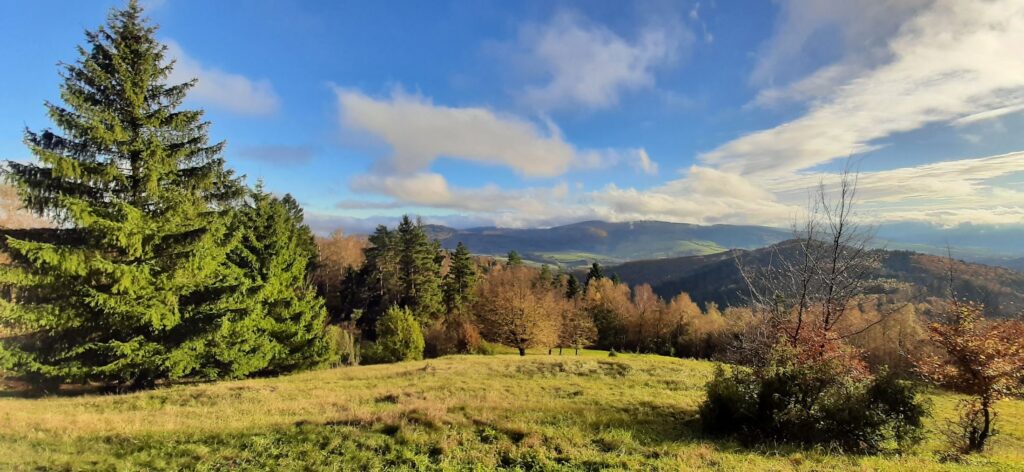
"When we learn 'about' nature, nature becomes the object of study, which leads to its exploitation. But when we learn 'from' nature, we establish a close relationship with it, which presupposes humility and respect for the mystery of natural processes."
Satish Kumar
Seminar registration
The total price of the seminar is 8 950 CZK, for people with lower incomes 7950 CZKThe price includes accommodation (1800 CZK), vegetarian food for the entire duration of the seminar (2150 CZK) and a contribution to the organizational costs of the seminar of 5000 CZK (or 4000 CZK for people with lower incomes).
Registration is valid after submitting the registration form below and paying the deposit. 1 500,-CZK to the account number at Fio banka, as.: 2901522796/2010. Please include your name in the comment. The remaining amount can be paid on site in cash or by transfer using the QR code.
The seminar capacity is limited to 35 participants. Priority will be given to those who register for the entire seminar.If you register for only part of the seminar, we will inform you of your confirmation of participation by July 5th.
Applications are closed, thank you for your interest.
Contacts
- Jiří Zemanek, email: sarvanga1@seznam.cz, mobile: 777 117 466
- Tomas Hruza, email: tomashruza@gmail.com, mobile: 775 052 607
- Alena Malikova, email: jadernicka@gmail.com, mobile: 604 905 611
Continuing journey
After the INDIGENITY seminar, we will go on Sunday, August 10th Hiking across the White Carpathians from Brumova Bylnice to Strážnice (Sunday, August 10 – Thursday, August 14, 2025).
Brumov-Bylnice – Vršatské Podhradie – Sidonie – Vlárský Pass – Javorník – Žitková – Velký Lopení – Velká Javořina – Velká nad Veličkou – Strážnice (approx. 112 km)