
Summer seminar of the Traveling University of Nature
Let's start with the forest

On the future of forests and human society in the time of climate crisis
dedicated to Rudolf Janda, the first photographer-ecologist in our country, the Mionšie and Beskydy national nature reserve
July 16 — July 21, 2018
Dolní Lomná in the Moravian-Silesian Beskydy Mountains
“Trees in the forest always form a community. The great forest system is maintained and cultivated together and in a coordinated manner… Our development should also be directed towards collective, group intelligence. A holistic perspective is more necessary today than ever. Anyone who understands and perceives Mother Earth as a complex organism, where everything is connected to everything, will begin to act consistently for the well-being and benefit of the whole. The Forest University offers us excellent learning spaces for this and is there for each of us completely free of charge. Trees will always accompany us – we need them and they need us.”
Erwin THOMA, German forester

The collapse of commercial forests that we are currently witnessing is one of the warning signs of the crisis of the current story of separation – our separation from nature, from the whole. The practice of planting monocultures for the purpose of generating profit as quickly as possible, which dominates forestry today, has transformed commercial forests into boring plantations of fast-growing, even-aged stands that have nothing to do with the declared “care of forests”. As a result, we increasingly view the forest as an artificial, useful consumer artifact rather than as a living natural organism and a complex ecosystem, and we easily overlook its other important values and functions (ecological, climatic, hydrological, etc.), including those non-material aesthetic and psychological qualities that a naturally growing forest can offer us and which are fundamentally important for our mental life, for our emotional and spiritual maturity.
Rather than imposing simplified formulas of our economic thinking on forests and trees, we should learn to observe them carefully, to get to know them intimately, to be able to listen to them. Trees are not biological wood-cutting machines, but, as the latest scientific research shows, they are sensitive, intelligent social beings that feel pain and communicate with each other and care for their offspring. A forest is a large social community of living entities that do not fight among themselves to the extent that the strongest survive, but together strive for the survival of the whole forest, which creates the most suitable conditions for them to live. A forest is an intelligent, complex system with an incredible capacity for regeneration.
In our seminar, which will take place in one of the most beautiful valleys of the Moravian-Silesian Beskydy Mountains in Dolní Lomná near Jablunkova, we want to focus on this holistic understanding of the forest as a community. During trips to the local relatively undisturbed forests, whose original primeval forest remnants can still be encountered here today, we will try to experientially open up the perception of complex relationships within the forest. Our guide in this imaginative discovery of the forest as a soulful organism, as a "higher natural whole" (or metaphorically a temple), in which the whole and the parts, the trees and the forest, are inseparably linked, will be the forgotten great discoverer of the Beskydy primeval forests and the first photographer-ecologist in our country, Rudolf Janda, about whom biologist Vladimír Úlehla declared that he "managed to hear the own voice of that living being that we call the Primeval Forest."
We must address the current forest crisis “from the forest up”. Without understanding the whole, without generating healthy natural forests, neither our commercial forests can prosper, nor can we respond effectively to the climate crisis. As German forester Peter Wohlleben says, “each tree can only be as good as the forest that surrounds it.” Natural forests can truly become holistic universities for us: they can help us break free from our current isolation, deepen our participation with nature, and open the way for us to understand the deeper truth of interpenetration and wholeness, and thus create a healthier world worth living in.

… I felt the bark with my fingers and palms and felt it move, sinking deep into the earth with an immense, superhuman movement.”
Rudolf JANDA
PROGRAM
Day 1, Monday, July 16
getting acquainted with the location and program of the seminar
"The Beskydy primeval forest is fir trees climbing out of the beech forest like towers... Almost every larger mountain in the Beskydy has a remnant of the primeval forest, and usually several remnants, mutually disconnected. There are over twenty of them in total.... The individual primeval forests differ greatly from each other. The most beautiful is the reservation in the back mountains, the pearl of the Beskydy [Mionšie], because it includes all the features of the Beskydy primeval forest in an unusually delicious form. Each individual primeval forest also consists of several parts that are quite different, thus being a replica of the entire Beskydy, whose main feature and charm is diversity."
Rudolf JANDA, Primeval Forest in the Beskydy Mountains, 1943
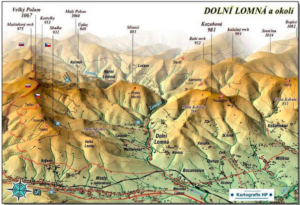
In the afternoon, the seminar participants will be transported to Dolní Lomná and accommodation in Hotel pod Akáty No. 71. You can get here by train or bus via Jablunkov; a bus runs from Jablunkov every hour on weekdays (see also CONNECTIONS at the end of the invitation). Dolní Lomná is a well-known tourist, recreational and cultural center (folklore festival Silesian Days, ecological Center Ursus). It is located in the easternmost part of the Moravian-Silesian Beskydy Mountains near the border with Slovakia, where the main European watershed runs.
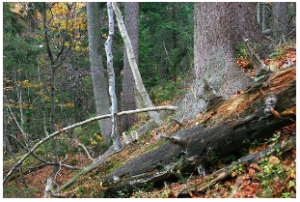
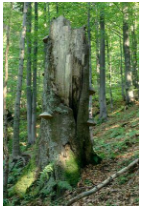
The Dolní Lomná Valley is one of the most beautiful mountain valleys in the Beskydy Mountains with extensive and relatively intact forests. In the immediate vicinity of the village there are three nature reserves: Velký Polom, Uplaz and the most important Mionší. This largest Carpathian beech-fir forest of primeval type in our country is often ranked among the most valuable natural forests in Europe. Its charm, along with the charm of other disappearing old Beskydy forests, was discovered in the 1930s and 1940s by photographer Rudolf Janda (1907-2000), who celebrated these forests in his book Primeval forest in the Beskydy Mountains (1943).
After a joint dinner (from 6 pm), from 7 pm we will introduce you to the content and program of this year's seminar. This evening will be dedicated to photographer Rudolf Janda, a native of Frenštát pod Radhoštěm, who more than half a century ago foresaw the possible impacts of the ecological crisis. We will screen a cross-section of photographic cycles from all periods of Janda's work, with a specific focus on primeval forests. PhDr. Jarmila Jandová and Jiří Janda, Rudolf Janda's daughter and son will introduce us to photographic cycles from all periods of Janda's work and also to his exhibition dedicated to photographs of the Mionší primeval forest, which they installed in the Lomňany Museum. You will be accompanied by Alena Malíková and Jiří Zemánek throughout the evening.
Day 2, Tuesday, July 17
trip to Velký Polom and Uplaz (17 km), evening: lecture by Rudolf Janda and the story of Mionší
"A chain is only as strong as its weakest link - this wisdom of ancient craftsmen could easily have been invented by trees, who intuitively know this and therefore help each other unconditionally."
Peter WOHLLEBEN, German forester

After breakfast (from 8 am) at 9 am we will go on a trip to the nature reserves The Big Crash and the Crawl, which are located on the border mountain ridge with Slovakia. We will follow the blue trail and reach the Churches (953 m above sea level) and then to the lookout tower Capercailliewhere it will be waiting for us Mgr. Tomáš Myslikovjan from the Beskydy Protected Landscape Area, who will guide us through both reservations. The most valuable parts of the reservation Big Polom are fragments of natural forest stands aged 220 to 250 years, close in composition to the original forests; they are among the oldest preserved stands in the entire Moravian-Silesian Beskydy. Here we will cross challenging terrain through springs and clearings, which will compensate us for the unique experience of an old forest with beautiful mountain spruces and firs and newly emerging wilderness. Below the peak Great Polom (1067 m above sea level) we will go to the nature reserve Crawlwhich reservation Big Polom connects with the Mionší National Nature Reserve. This created the largest continuously protected area in the Beskydy Protected Landscape Area (416 ha), which creates good conditions for the life of the critically endangered capercaillie. From Uplaz, we descend through the village of Dolínky through the valley of the Jestřábí stream back to Dolní Lomná.
After dinner (from 6 pm) we will continue with the lecture from 7 pm "Rudolf Janda: from unanimism to the perception of the forest" (J. Zemánek). Let's read excerpts from Janda's reflections on the Beskydy primeval forests from his book Primeval forest in the Beskydy Mountains. We will recall his understanding of the natural forest as an organism (community), as a unique, productive living being with a great capacity for regeneration. This concept is becoming very important today in our considerations of how to sustainably manage our forests and how to live sustainably as a human society. We will also recall the rich history of photographic depictions of the Mionší primeval forest, which, thanks to Rudolf Janda and his friend, photographer Petr Helbich, attracted the attention of the great Czech photographer Josef Sudek and later other outstanding Czech and Moravian photographers Herbert Thiel, Jan Byrtus, Roman Burda and Vladimír Bichler. Finally, we will screen movie about Mionša and legendary film Our forests (1956), whose creation was assisted by Rudolf Janda.
day, Wednesday, July 18
lecture by Mgr. Tomáš Myslikovjan about forests in the Beskydy Protected Landscape Area, trip to Mionší (15 km), lecture by Jaromír Bláha from the RAINBOW Movement
"The forest is a work and part of the order of nature and thus somehow participates in the infinite and the absolute and does not depend on the order that man has created ... it lasts like this for a thousand years, very old and at the same time eternally young, it kills itself and again and again, like a phoenix bird, it arises from itself, the same and diverse, unchanging and dynamic ... This feeling is complex, but it elevates and purifies. The feeling of freedom and bondage, of greatness and smallness. However, since man is connected to the order of nature with very powerful feelings and has a deep nostalgia for this order, of which he has long been a part, the forest is for him, only a little sensitive and receptive, a greeting from the other shore. And we experience it as a true "search for lost time" (lost home?)."
Rudolf JANDA, Primeval Forest in the Beskydy Mountains, 1943

After breakfast (from 8 am) we will listen to a lecture from 9 to 10:30 am Mgr. Tomáš Myslikovjan about forests in the Beskydy Protected Landscape Area with a specific focus on fir and the most important local primeval forest reserves, led by the Mionší National Nature Reserve (perhaps one of his zoologists or botanists will also join Myslikovjan's lecture). Then we will visit the local Ursus ecological experience center and get acquainted with the interesting interactive exhibition The Story of the Origin of the Beskydy Mountains.
After lunch (from 12 noon) at 1 pm we will set off with Tomáš Myslikovjan to the Mionší National Nature Reserve. We will walk along the path to the Mionší stream and from there along the old nature trail to a highland meadow with old trees. We will visit the hunting lodge of Archduke Frederick, where photographer Rudolf Janda spent the night during his visits to Mionší, and we will walk along the Velka Polana (893 m above sea level) and Smaller hill and we'll go all the way to the bottom of the mountain Crawl (949 m above sea level). The Mionší National Park, which was declared a non-intervention area last year, is the largest Carpathian fir-beech forest of primeval forest character in our country; both in terms of plants and animals (birds, beasts) it is one of the most valuable forest communities in Europe. On a trip to Mionší, we will also go with ecologist and expert of the RAINBOW Movement for the protection of forests and wildlife Jaromír BláhaAfter dinner, he will give us a lecture from 7 pm. "Why do we need wilderness?" will introduce the work of the DUHA Movement on the protection of wilderness in our country, the Czech Wilderness project, their experiences in the protection of the Šumava National Park and the Bialowieszký Forest, and why and how we should start restoring wilderness zones today.
day, Thursday, July 19
lecture by Jaromír Bláha, trip to Kozubová and Slavíč (21km), lecture by J. Zemánek and Lenka Dolanová
"Trees are the foundation of a forest, but there is much more to a forest than meets the eye. Beneath the surface lies another world, a world of endless biological pathways that connect individual trees and allow them to communicate with each other."
Suzanne SIMARD, Canadian biologist

Morning after breakfast (from 8 am) from 9 am lecture Jaromír Bláha "On the current forest crisis not only in northern Moravia". How should unsustainable forestry methods of economic use of forests, which degrade them into mere factories for the rapid production of wood, be changed? How to combine the economic usability of forests with respect for their natural character and other important functions: ecological, hydrological, climatic, psychological, etc.? Both of the author's lectures will be accompanied by films.
After the lecture, we will set off on a trip to another beautiful Beskydy ridge to the Kozubová and Slavíč area. We will follow the blue trail to saddle under Mala Kykula and from there follow the green trail to the chalet and chapel below Fireplace (981 m above sea level), from where there is a beautiful view of the Silesian Beskydy Mountains. We will continue descending along the yellow Stony, from here we ascend to Babí vrch (952 m above sea level) and continue along the red trail to the mountain hut Nightingale with a view of the beautiful mountain of the same name. Then we head along the ridge to Lačnov and from there, along the yellow and then the cycling trail, we descend into the valley of the Lomná River and along the road we reach Dolní Lomná.
After dinner, we will continue with the lecture from 7 p.m. "Forest as a social system: Peter Wohlleben's Forest Academy" (J. Zemánek). According to German forester Peter Wohlleben, trees are not mechanically functioning systems, but sensitive social beings that communicate with each other, warn each other and care for their young and weak individuals, and strive for the survival of the forest as a whole. This social network allows the trees to jointly create a specific climate suitable for their life; without this network, the trees suffer and die prematurely. Wohlleben argues that: “Trees do not want to grow quickly. Above all, trees want to have species and live in a social group.” On this basis, Peter Wohlleben created a model of sustainable forestry in a natural beech forest near the village of Hümmel, which has proven to be very effective. Let’s reflect on this short documentary film, including a recording of a lecture by a Canadian biologist Suzanne Simard "How Trees Talk to Each Other."After the lecture and screening, there will be a presentation by the curators. Lenka Dolanová and Michal Kindernaywho will introduce us to the current exhibition at OGV Jihlava “How forests think”, inspired by contemporary scientific approaches that work with the idea of the forest as an interconnected and thinking organism.

day, Friday, July 20
Lecture by Alena Malíková, trip to the Horní Lomná valley and to the ridge between Malý and Velký Polom (26 km), lecture by J. Zemánek.
The older the trees, the faster they grow… The old in the tree kingdom are much more productive than the “young shoots.” So if we want to count on forests as an important factor in the fight against climate change, we need to let them age.”
Peter WOHLLEBEN

In the morning after breakfast we will continue the lecture from 9 am. Alena Malíková's "Mushrooms - the forest internet". One of the important elements in forming the network of the forest community is the mycelium, which forms an extensive and dense underground network that allows trees to better supply themselves with water and nutrients and, above all, to communicate with each other. According to mycologist Paul Stamets represent fungi that co-create soil, regeneration and rejuvenation and are a challenge for us to understand the language of nature; we will listen to his lecture Six ways mushrooms can save the world.
After the lecture, we will set off on our last trip. We will set off along the road along the Lomná River to the Horní Lomná Valley, which is one of the most beautiful in the Beskydy Mountains. From there, we will continue along the blue trail around the natural monuments and peat meadows of Kyčmol to the ridge, at the crossroads below. By Little Polom (1061 m above sea level); here on the Slovak side there is a national nature reserve. We continue along the ridge following the red mark to Burka's Hill (1032 m above sea level) and Muřinkový hill (975 m above sea level) up to Big Polom (1067 m above sea level) and from there over Churches back to Dolní Lomná.
After dinner from 7 pm lecture "Forests and the climate crisis" (J.Zemánek). On the work of American artists of Helena and Newton Harrison We will show how, as the climate crisis progresses, the need to quickly plant new, resilient and long-lived forests will increase as reservoirs of clean water for agriculture and carbon dioxide storage. We will imagine the Harrisons' "Peninsula Europe" project, in which they propose planting a trans-European forest from Spain to the Carpathians.

day, Saturday, July 21
After breakfast (from 8 am) from 9 am we will screen a film about Gregory Bateson Ecology of the mind. Saying goodbye to people and the place and leaving for home.

"Every tree, even a dead one, hides a struggle and contains the drama of life. I have always seen living beings in them."
Rudolf JAND
Lecturers
- Jaromír Bláha / veterinarian and ecologist, expert of the DUHA Movement for the protection of forests and wilderness
- Alena Malíková / eco-advisor, administrator of the Moravian Gate regional center in Příbor
- Mgr Tomáš Myslikovjan / expert on forests in the Beskydy Protected Landscape Area
- Jiří Zemánek / art historian, publicist, founder of the Pilgrim-Wandering University of Nature association
Guests
- Jarmila Jandová, daughter of Rudolf Janda
- Jiří Janda, photographer and son of Rudolf Janda
- Lenka Dolanová, curator of the Regional Gallery of the Highlands in Jihlava
- Michal Kindernay, curator and audiovisual artist
Thanks
We thank Jarmila and Jiří Janda, Jaromír Bláh, Tomáš Myslikovjan and Barbora Kinkalová for their help in preparing the seminar. And the National Film Archive in Prague for kindly lending us a copy of the film Our Primeval Forests (1956) for screening at our seminar.

A/ SEMINAR VENUE / ACCOMMODATION AND MEALS
Hotel pod Akaty, Dolní Lomná No. 71. You can get here by train or bus to Jablunkov and from there by bus, which leaves from the bus station in Jablunkov every hour (see also CONNECTIONS at the end of the invitation).
Accommodation is provided in double rooms. The price for accommodation and meals is 2,555 CZK in total. For half board for the entire seminar 2,250 CZK (accommodation + breakfast and dinner) + 305 CZK for lunches and snacks. The meals will be vegetarian according to our instructions.
B/ SEMINAR
The payment for the seminar itself is 350 CZK per day (4 full days) for one person and 100 CZK for the first day of arrival and the last day of departure; i.e. a total of 1,600 CZK for the entire seminar. For students, the payment for one person is 300 CZK per day (4 full days) and 100 CZK for the first day of arrival and for the last day of departure; i.e. a total of 1,400 CZK for the entire seminar. Total payment for the seminar for an ordinary person is 2,555 CZK + 1,600 CZK = 4,155 CZK. Total payment for the seminar for students is 2,555 CZK + 1,400 CZK = 3,955 CZK If you are interested in participating in the seminar, please let us know first by email or by phone (see CONTACTS below). Once we have confirmed your participation, please let us know. Pay a deposit of CZK 1,000 by June 29, 2018 to the account: 2901013262/2010. Instead of the variable symbol, write "LES-Dolní Lomná" + your first and last name in the message for the recipient. You will pay the rest of the payment to us on site.
If you live in the location where the seminar will take place and will not be staying with us at the Pod akáty Inn, you can also participate in individual parts of the seminar – morning or evening lectures, film screenings or trips. In that case, we would agree on a proportional payment on site.

CONNECTIONS TO THE LOWER LONMÁ and BACK
ARRIVAL: Monday, July 16 / Prague – Jablunkov / train: Prague, hl. n. dep. 9:48 – Ostrava (Svinov), ar. 12:59 / Ostrava (Svinov), dep. 13:20 – Návsí, ar. 14:36Návsí, dep. 14:43 – Jablunkov, ar. 14:50 Jablunkov – Dolní Lomná / bus: Jablunkov, dep. 15:05 – Dolní Lomná, hotel Pod akáty, ar. 15:15
DEPARTURE: Saturday, July 21 / Dolní Lomná – Jablunkov / bus: Dolní Lomná, hotel Pod akáty, departure 9:42 – Jablunkov, bus station, arrival 9:55 Jablunkov – Prague: / bus, train:Jablunkov – bus station, departure 10:32 – Třinec–Lyžbice, nám. TGMasaryka, arrival 10:53 Třinec–Lyžbice, nám. TGMasaryka, departure 11:18 – Prague, hl.n., arrival 15:36

"When we learn 'about' nature, nature becomes the object of study, which leads to its exploitation. But when we learn 'from' nature, we establish a close relationship with it, which presupposes humility and respect for the mystery of natural processes."
Satish Kumar
The Wandering University of Nature (PUP): Nature for us is not primarily a collection of objects or a reservoir of usable raw materials, but a community of soulful subjects, a meaningful world that shapes, inspires, and nourishes us and with which we feel connected. We share Gregory Bateson's conviction that nature holds the secret to revitalizing our human systems, to growing the health of human communities, and to healing our relationships. Today, we must expand our intellectual knowledge "about" nature by learning directly "from" nature itself, by experiences and experiences that allow us to connect intimately with its processes. In this sense, we understand nature as our teacher.
CONTACTS for further information
- Jiri Zemanek, sarvanga@centrum.cz, 777 117 466
- Alena Malikova, alena.malikova@bioinstitut.cz, 604 905 611
- Tomas Hruza, tomashruza@gmail.com, 775 052 607