
Hiking across the White Carpathians from Brumov-Bylnice to Velká nad Veličkou
dedicated to the writer and folk singer Ludvík Vaculík
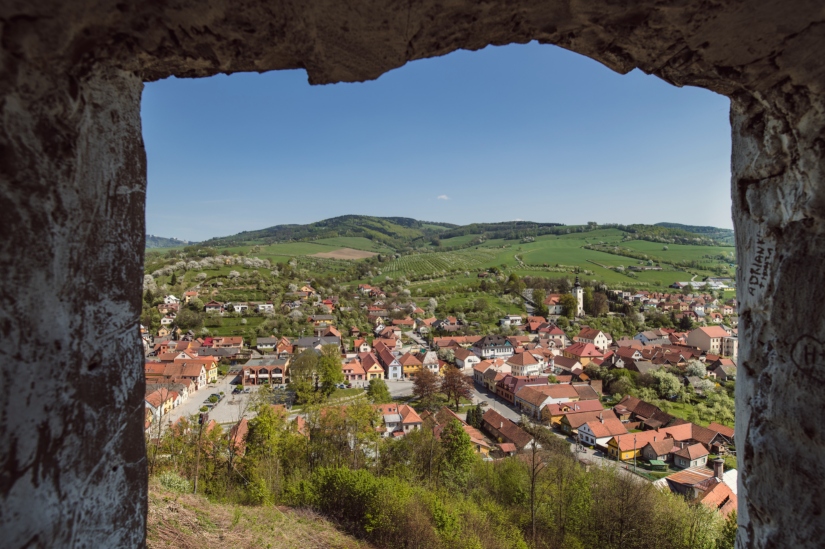
View of Brumov-Bylnice from the Romanesque Brumov Castle – Průklesy on the horizon
Brumov-Bylnice – Průklesy – Vršatské podhradie – Vlárský pass – Javorník – Žítková – Velký Lopeník – Velká Javořina – Megova bouda – Filipovské údolí – Velká nad Veličkou (approx. 100 km)
Sunday, August 10 – Thursday, August 14, 2025
"Far beyond the village, we set out on a journey a quarter of a century ago. It is more of a tangle of paths, torn apart by spring waters and then smoothed again by the shoed wheels of braked beggars. ... The whitish path stretched hard towards the mighty hill, over which the sun would rise tomorrow."
Ludvík Vaculík, The Axe
After the INDIGENITY seminar, we will set off on Sunday morning, August 10th, from the train station in Brumov on a journey across the White Carpathians. We will walk from the northeast to the southwest along the state border with the Slovak Republic, or rather with several overlaps beyond it. Our journey will connect several interesting places, which we will mainly focus on: at the beginning of the journey, it will be the native land of the writer Ludvík Vaculík between Brumov, Tarandová and Slovakia, where the plot of his famous novel takes place Ax, which we will remember. On the Slovak side, it will be primarily a remarkable geological and paleontological locality, Vršatská bradla. We will also visit the Vlár Pass and the Javorník range; the legendary Moravian Kopanice with the villages of Žítková and Starý Hrozenkov, known for their beautiful landscape and specific dialect and folklore, as well as the story of the Žítková goddesses; the mountain range of Velké and Malé Lopeník and Velké Javořina with extensive primeval forests, which is the highest part of the White Carpathians. And finally, we will walk through the famous Filipovské Valley in the Horňácko area below Velké Javořina to Velké nad Veličkou.
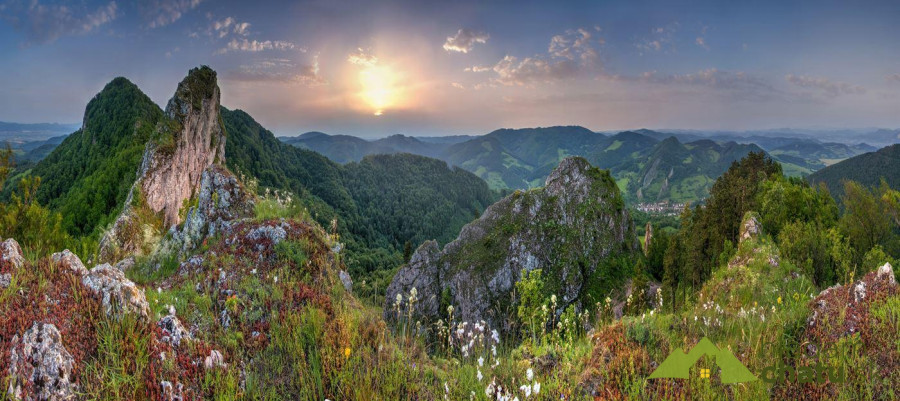
"The curved ridge of the hill slowly slipped under our feet, on the right an ever wider view opened up to the Slovak border not far away across the bay of the airy lake, and behind the graceful, generous line of the nearer horizon a new cosmic space could be glimpsed..."
Ludvík Vaculík, The Axe
First day, Sunday, August 10
Brumov-Tarandová-Průklesy-Pod Okršliskem- Brezová-Vršatské hradné bralo-Chmelová - PR Vršatská bradlá-Vršatské Podhradie (17 km)
In the morning after breakfast we will set off from Hájenka in Bylnice on foot to the train station in Bylnice and from there at 10:01 by train to Brumov train station (not Brumov střed) with arrival at 10:07. Here we will meet other pilgrims and together at 10:15 we will set off on a journey, the initial part of which we will dedicate to the memory of the writer Ludvík Vaculík (1926-2015), a native of Brumov. The plot of Vaculík's autobiographical novel Ax, which draws its theme from the fate of the writer's father – and which is considered one of the most important Czech novels of the 20th century – takes place mainly in the Wallachian countryside between Brumov, Tarandová and Slovakia. From Brumov we will go to the settlement Tarandová, where we will read excerpts from this novel, which testifies to the profound social transformation of the 1950s and to Vaculík's search for personal responsibility, a new life balance, and inner strength in returning to the archetypal ancestral and natural values of the local landscape; Ludvík Vaculík himself called this novel an Indian epic.
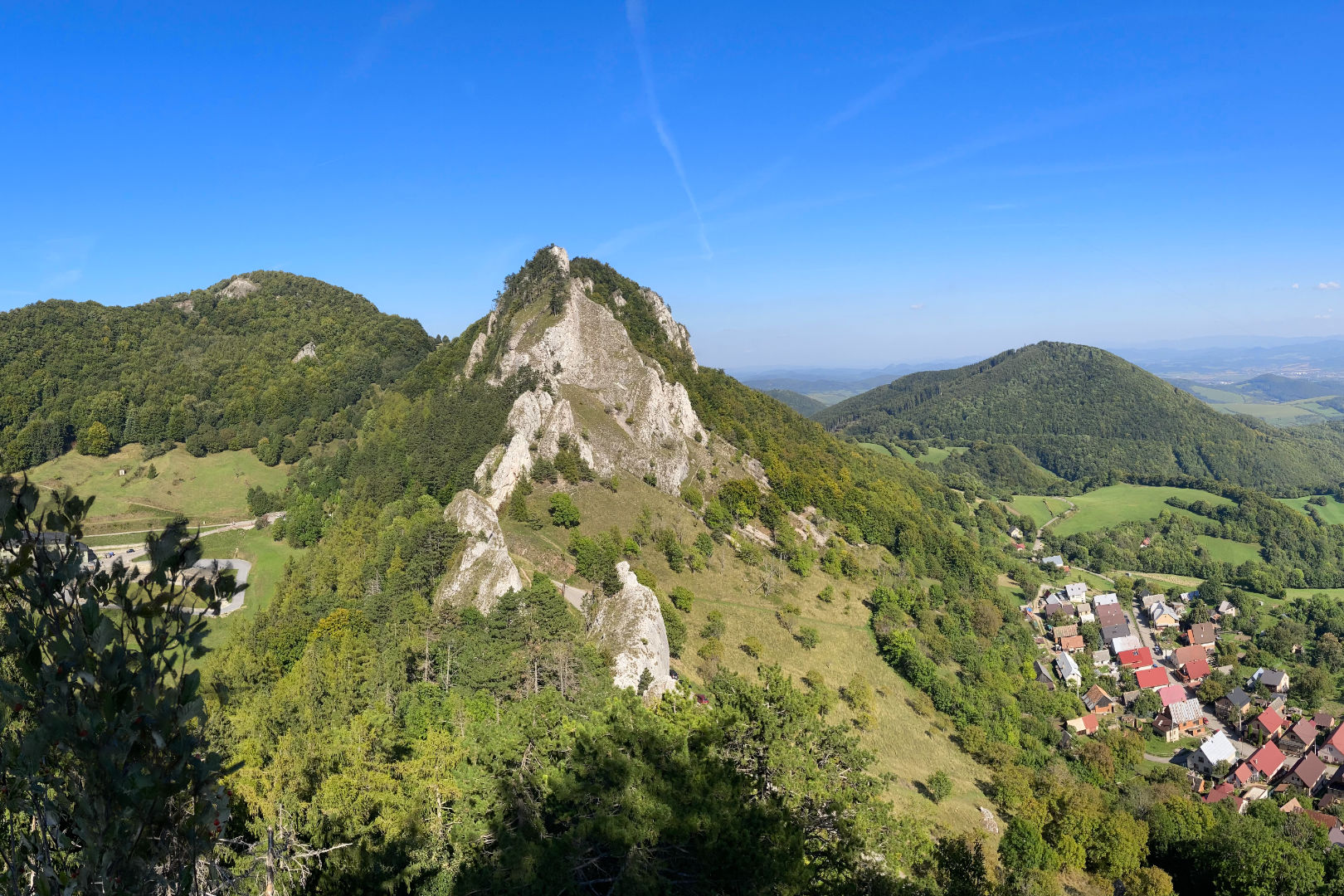
From Tarandová we follow the yellow trail to Bare hill (830 m) and to the top Slumps (837 m), one of the highest peaks of the northern part of the White Carpathians. We will cross the state border at the crossing Under Oškrliskem and across the crossroads Birch tree with the nearby chapel of Our Lady the Queen we will reach the cottage Vršatec and to the Nature Reserve Vršat castle rampartWe will walk the entire unique sharp Vršatec-Javorník ridge, including the peak Chmelová (925 m), which is the second highest peak of the White Carpathians. Vršatská bradla is an important geological and paleontological site with a large number of shallow sea fossil finds. We will have dinner in a pub in Vršatsky podhradie and we spend the night under the open sky in the meadow below the Vršatec cottage.
The next day, Monday, August 11th
Vršatské podhradie-Krivoklátské luky-Drácia studňa-Vlárský pass – Javorník (22 km)
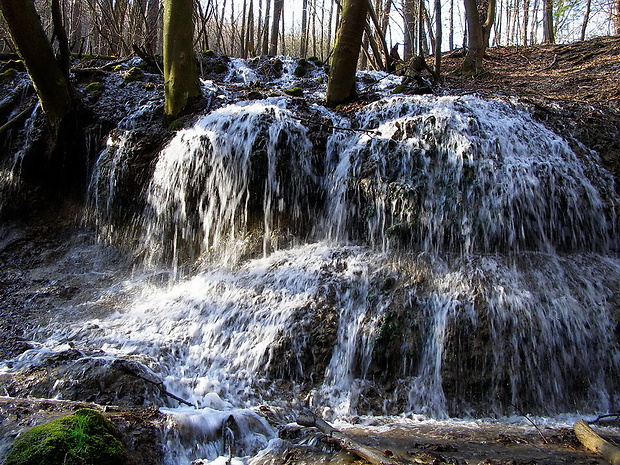
In the morning we will head from the Vršatec chalet to the Pod Lysou turnoff and from there on the way to Valleys and between Mániová hora and Ostrý vrch to the nature reserve Krivoklat meadowsFrom there we will go down to Krivoklát lookout tower, at a crossroads Cartilage and further to the natural monument Dragon's Well. Dračia studňa, located in the Bolešovská Valley, is the most massive foam rock formation in the White Carpathians, which stands out for its beautiful waterfalls. From here we will continue under Trtálka to Vlár Pass, which is a breakthrough valley of the Vlára River in the White Carpathians. It also represents an important transport link between Moravia and Považí. Here we will follow the red-marked tourist route from Sidonia to Mount Javorník. We will follow it to Cold hill (742 m) and further to Maple tree (783 m), where we spend the night in the forest.
Day Three, Tuesday, August 12
Javorník-Čerešienky-Bašta-Žítková-Starý Hrozenkov-meadows below Starý Hrozenkov (21 km)
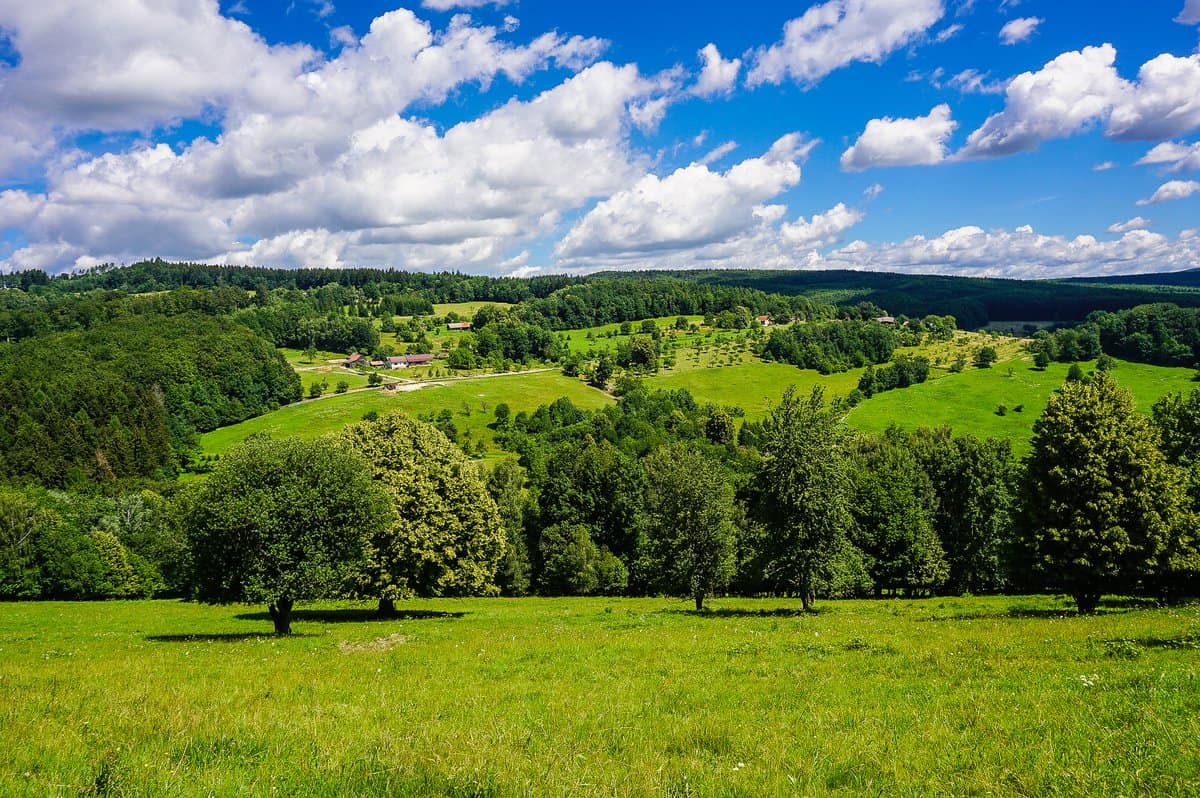
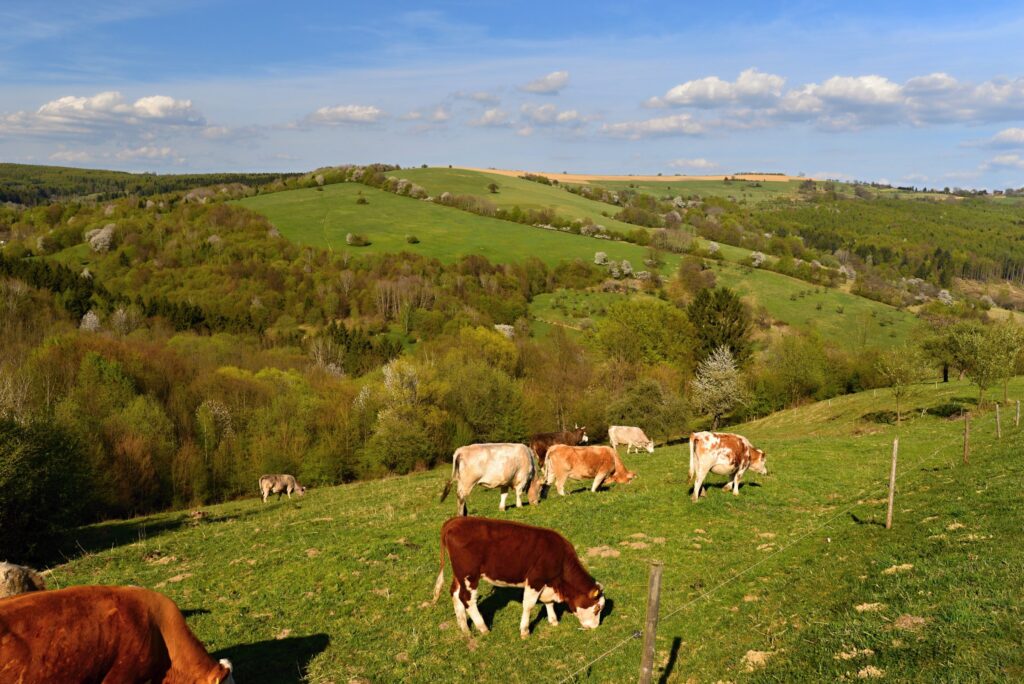
In the morning we will set off from Javorník to Cherry trees (758 m) and further on Basta crossroads, from where we will continue on the yellow road to the village Žítková. Žítková is a legendary village in Moravian Kopanice, the center of which is the village of Starý Hrozenkov. It is a specific remote ethnographic area, which is located directly on the Moravian-Slovak border and in which tradition has significantly established itself. It also includes the villages of Vápenice and Vyškovec - all villages are united by a beautiful folk costume and a special Kopanice dialect, which is close to Slovak. Mrs. Renata Vaculíková will tell us about the history and folklore of this region in the Information Center for the Development of Moravian Kopanice, which we will visit.
Žítková is famous for the story of women endowed with exceptional abilities, who were called goddesses, who could heal, advise people in trouble and tell fortunes, and who drew their strength from the magical landscape of Kopanice. We will look at the cottage of the last of these Žítková goddesses, Irma Gabrhelová, in which a museum was recently established. Our guide to this tradition will be the writer Kateřina Bětka Kohoutová, who lived in Žítková for thirteen years and who draws inspiration from this landscape in her work. We will visit her retreat center Thaia and then set off from Starý Hrozenkov to Mikulčina Hill (799 m) and we will spend the night somewhere in its vicinity.
"I walked the Earth
Kateřina Bětka Kohoutová, Touches
she touched her with her feet
...and the Earth permeated my body
made my being tremble
and made my soul glad"
"I do not agree that the Earth and everything on it should be treated in law only as a living environment for humans. The Earth with all it has is a unique being, part of the universal being, a being older, bigger and stronger than us."
Ludvík Vaculík
Day Four, Wednesday, August 13
Meadows under Starý Hrozenkov-Mikulčin vrch-Velký Lopeník-Květná-Velká Javořina (22 km)
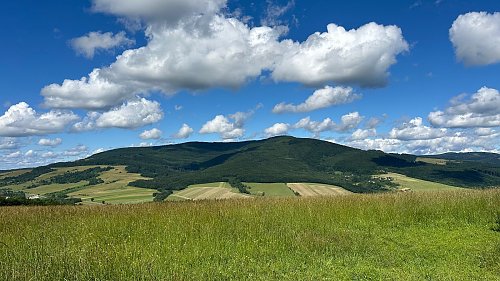
In the morning we will set off along the yellow tourist trail (Via Czechia-south) to Tomek's Hill (794 m) and on Mikulčin Hill (799 m) and from there continue along the yellow line to Lopenický saddle (which is a prominent landmark in the landscape), on Little Lopeník (881 m) up to The Great Lopeník (911 m). At the top of Velký Lopeník there is a wooden 22-meter high lookout tower and a hundred meters from it is the Velký Lopeník spring. When viewed from Uherský Brod, the Velký Lopeník ridge with Velká Javořina forms a distinctive dominant feature of the local landscape. We will continue along the green to the village Flower except for Velka Javořina (970 m), the highest peak of the White Carpathians.
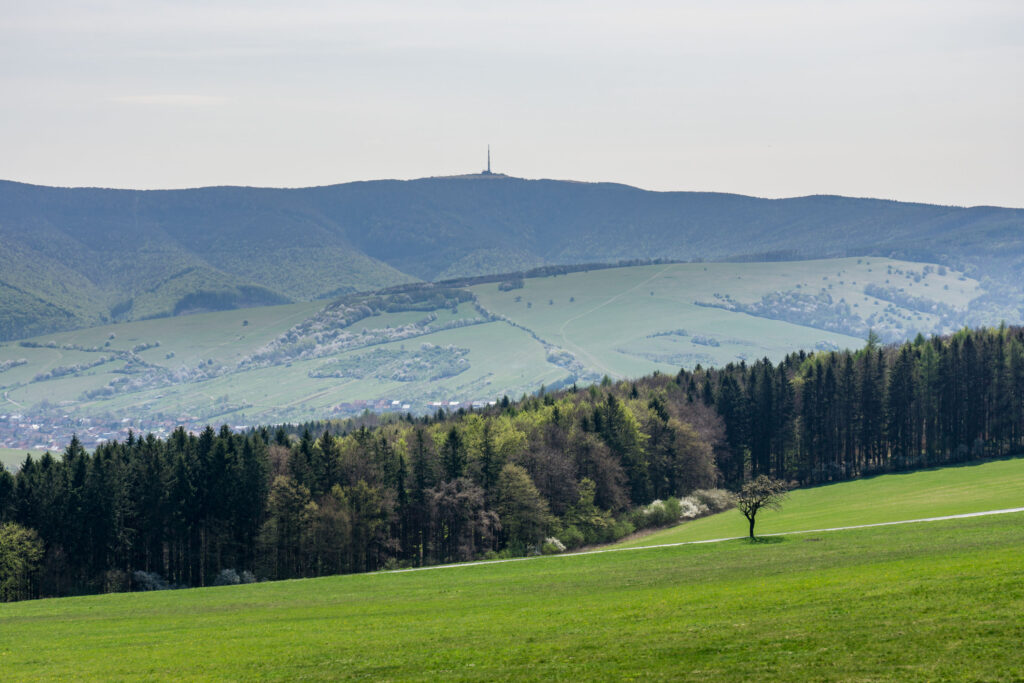
"We walked on, all four of us, and all five, six, and seven of us... And then suddenly the forest stepped aside, staggered, and fell into the valley. From left to right, from west to east, an empty space opened up before us, long and distant as the most sonorous echo, swaying under the weight of the light from space and shaking the cowbell very loudly."
Ludvík Vaculík, The Axe
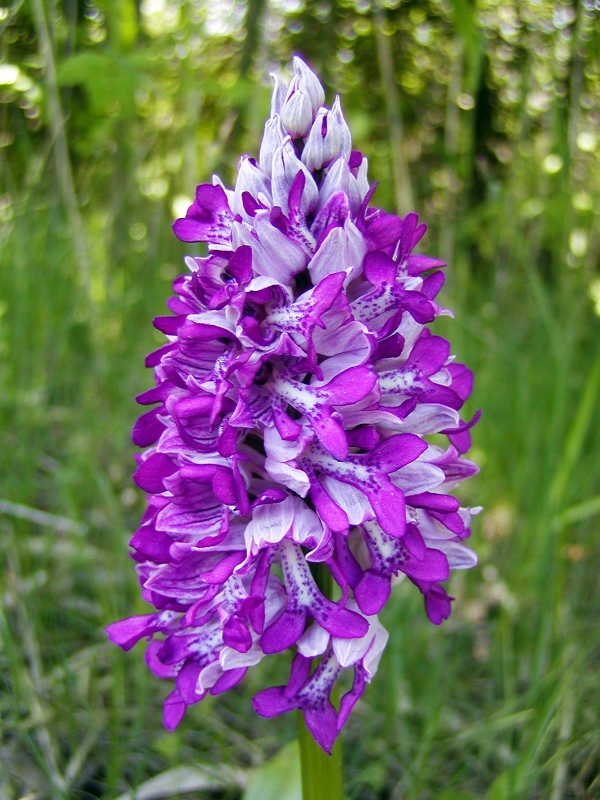
On the top of Velká Javořina there is the only mountain meadow in the White Carpathians and also a television transmitter. On their northern and partly southern slopes (on the Slovak side) there is the Javořina National Nature Reserve (166 ha) with original forest stands of maple, sycamore, beech, ash, which, thanks to a two-hundred-year-old non-intervention regime, have a primeval forest character; several species of orchids are also abundant here. The local rich primeval forest, diverse in age and species, creates ideal living conditions for a large number of other species of plants, animals and fungi. In the eastern part of the reserve, on the Jelenec hill (925 m) there is a military tower, which today serves as a lookout tower. We will have dinner at the Hoľuby cottage and spend the night under the open sky by the forest.
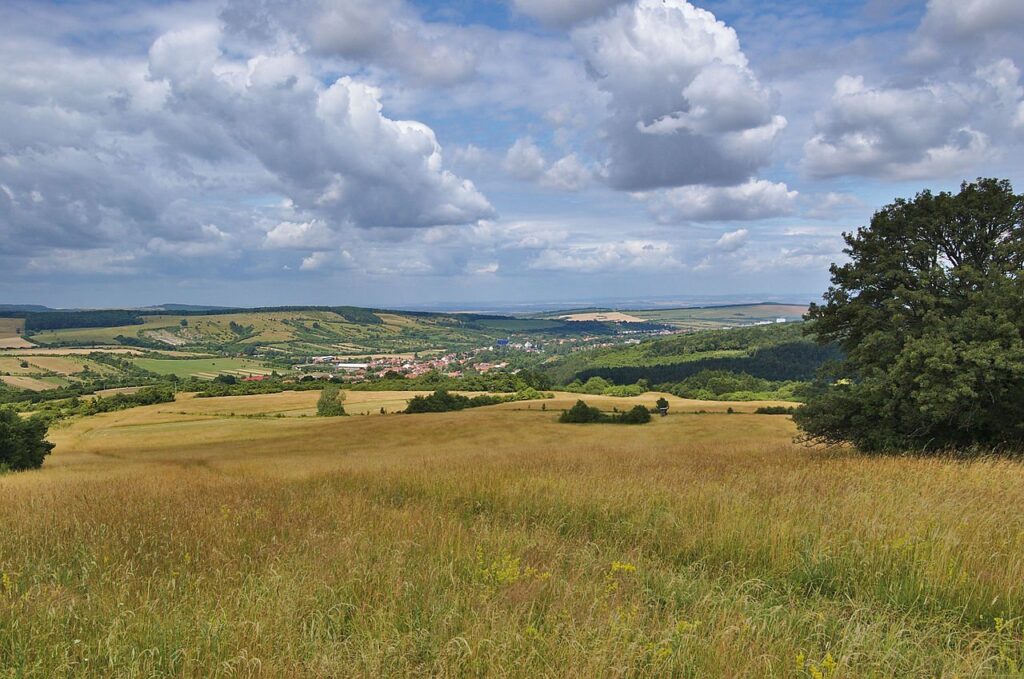
"East Moravia is the 'capital of music'."
Ludvík Vaculík
Day Five, Thursday, August 14
Velká Javořina-Kubíkův vrch-Megova bouda-Filipovské údolí-Javorník-Velká nad Veličkou (18 km)
In the morning we will set off from Velká Javořina on the red trail to Durdu (842 m), Kašpariskův vrch (778 m) up to Kubík's Hill (684 m) and from there we will descend to the famous Meg's hut, where in the basin Hruby brook begins Philippov Valley. It is a charming two-storey stone building that originally served as a hunting and excursion residence for Filip Magnis, the owner of the Strážnice estate. In the second half of the 19th century, he organized Filipovský Valley (which starts right below the cottage) evangelical priest Dr. Jozef Hurban from Brezová pilgrimages and trips. The aim of these trips was to bring together "Hungarian and Moravian Slovaks", i.e. people living on both sides of the White Carpathians; their participants also included Leoš Janáček, the Úprkové brothers, František Bartoš, Jan Herben, Dušan Jurkovič and the Mrštíci brothers. These meetings are considered the beginning of regular meetings of Czechs and Slovaks.
We will proceed through the deeply cut Filipovský Valley under the mountain Hillfort (636 m) to Fox hut. The valley is dominated by a centuries-old spruce tree and is home to many species of plants and animals, and occasionally a bear visits from Slovakia; during World War II, the Filipovské Valley was an important smuggling route. We will descend through it to Javorník and to Velke nad Veličkou, the famous place of the famous Horňák Festival, from where we will return to Prague by train.
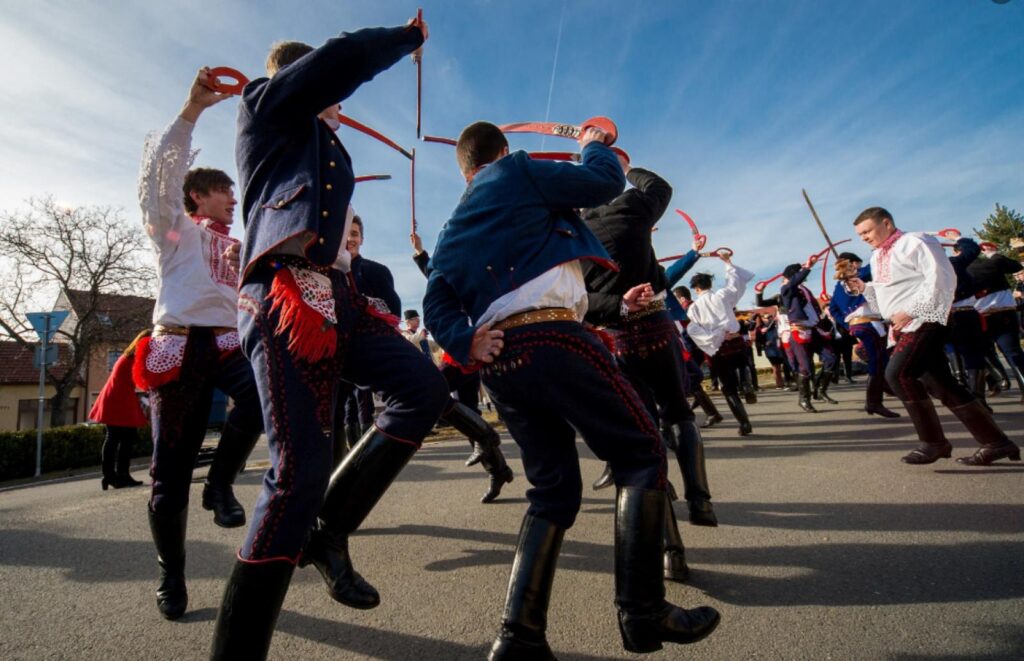
"When, for example, musicians just come to the carnival, they play and sing, is it a game for a better life, or is it him?"
Ludvík Vaculík
A maximum of twenty pilgrims can participate in the pilgrimage, who must register in advance with one of the contacts listed below: Jiří Zemánek, Tomáš Hrůza, Barbora Kinkalová.
We do not charge any fees for the pilgrimage, however, you can support our Pilgrim association with a monetary donation, which you can send to our account number at Fio banka as: 2901522796/ 2010. Thank you in advance for this.
"I believe that a lot of good would come from a change in attitude if tourists became pilgrims again."
Rupert Sheldrake
Contacts
- Jiří Zemanek, email: sarvanga1@seznam.cz, mobile: 777 117 466
- Tomas Hruza, email: tomashruza@gmail.com, mobile: 775 052 607
- Barbora Kinkalova, email: b.kinkalova@seznam.cz, 776 123 969
Return flights on Thursday, August 14
Velka nad Velikou – Prague
TRAIN: Velká nad Veličkou 14:39 – Veselí nad Moravou 14:57 – Veselí nad Moravou 15:00 – Staré Město u Uherského Hradiště 15:26 – Staré Město u Uherského Hradiště 15:41 – Prague Main Station 19:06
TRAIN from Velká nad Veličkou at 15:35 via Brno – further from Brno BUS at 18:00 – arrival in Prague at 20:25