
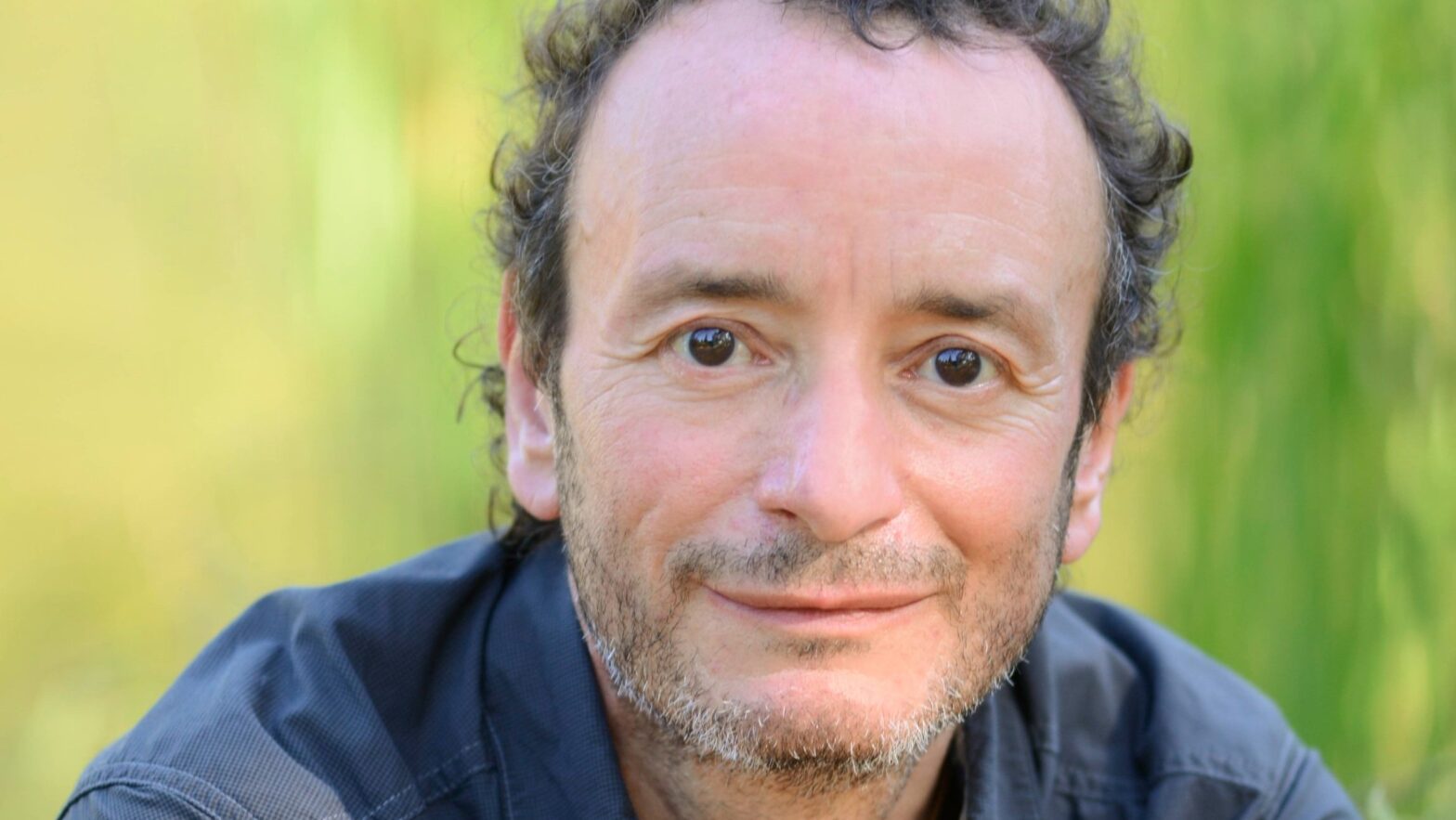
The explosive growth of artificial intelligence poses an existential risk to humanity. To confront this risk and potentially change the trajectory of our civilization, Jeremy Lent argues, we need a more comprehensive understanding of the nature of human intelligence and the fundamental requirements for human flourishing. If we want to make “artificial intelligence” more humane, let us acknowledge and value our “living intelligence,” the author urges in this essay, which is titled To Counter AI Risk, We Must Develop an Integral Intelligence published on his website. Czech translation: Jiří Zemánek.
Philosopher, author, and founder of the nonprofit Liology Institute, Jeremy Lent is working hard to help change the current trajectory of humanity. He argues that today’s sustainability crisis is not an inevitable consequence of human nature, but rather a cultural one—the product of certain mental patterns that can be reshaped. In his “liology” (from the Chinese term “li”—organizing principles), he offers a framework for a new worldview that emerges from our existence grounded in the natural world: a way of life that is integrated, embodied, and deeply connected.
Jeremy Lent is the author of the novel The Requiem of the Human Soul (Libros Libertad 2009) and two highly acclaimed pioneering books The Patterning Instinct: A Cultural History of Humanity's Search for Meaning (Prometheus Books 2017) and The Web of Meaning: Integrating Science and Traditional Wisdom to Find Our Place in The Universe (New Society Publishers 2021).
The recent explosion of the astounding capabilities of artificial intelligence is likely to transform virtually every area of human life in the near future, with effects that no one can yet predict.
The dizzying speed at which artificial intelligence is evolving is so vast that its potential impact is almost impossible to grasp. As they show in their groundbreaking presentation The artificial intelligence dilemma Tristan Harris and Aza Raskin (co-founders of the Center for Human Technology), the achievements of artificial intelligence are now starting to read like science fiction. For example, after just three seconds of listening to a human voice, an artificial intelligence system can automatically complete a spoken sentence with a voice that matches the reality perfectly, so that no one can distinguish it from the voice of a real person. Harris and Raskin show us that when artificial intelligence is connected to fMRI brain imaging technology, it can reconstruct what a person's brain is thinking and accurately represent it as an image.
Artificial intelligence models are starting to show new abilities that their creators didn’t program into them. An AI model that was built to answer questions in English can suddenly understand and answer questions in Persian without being programmed in that language—and no one, not even its programmers, knows why. ChatGPT (a freely available AI system) was found to the surprise of its own programmers to have trained itself in research-level chemistry, even though it wasn’t part of its target training data.
Many of these events are taking place on a timescale that is no longer measured in months and years, but in weeks and days. Experts compare the significance of the AI phenomenon to the invention of the nuclear bomb, with one chilling difference: while the magnitude of the nuclear threat could only increase at the rate of scientists’ own capabilities, AI is increasingly capable of learning how to become more powerful. Recently, AI models have learned to generate their own training data, improving themselves and modifying parts of their code to work more than twice as fast. AI capabilities are now increasing at an exponential rate, largely as a result of distributed network effects of programmers building on each other’s breakthroughs. Given these recent developments, experts predict that future AI improvements will occur at a double exponential rate, which begins to look like a vertical line of potential exploding upward on a graph.
The term commonly used to describe this phenomenon, which has so far been nothing more than a hypothetical thought experiment, is the singularity. Back in 1965, at the dawn of the computer age, this powerful and disturbing vision was first described by the British mathematician IJ Good. He wrote at the time: “Let an ultraintelligent machine be defined as one that can far surpass all the intellectual activities of any human being, however clever. Since the design of machines is one of these intellectual activities, an ultraintelligent machine could design and construct even better machines; then there would undoubtedly be an ‘intelligence explosion’ and human intelligence would be far behind. The first ultraintelligent machine is therefore the last invention that man ever needed to create.”[1]
Nearly six decades after the singularity was first formulated, it has transformed from theoretical speculation into a pressing existential problem. It is easy to list the myriad potential benefits of an ultra-intelligent computer: discoveries of cures for debilitating diseases; ultra-sophisticated multifaceted automation that will replace human labor; technological solutions to humanity’s most pressing problems. On the other hand, observers point to the dangerously destructive potential of advanced AI for a world that is already bursting at the seams: the risk that deepfakes and automated robots will further polarize society; that personalized AI assistants are already exploiting people for profit and exacerbating the epidemic of social isolation; that the introduction of AI will lead to greater centralization of power in the hands of a few megacorporations, to name just a few of the major concerns. But even beyond these serious concerns, leading AI experts warn that advanced artificial general intelligence (AGI) is likely to pose a serious threat not only to human civilization but to the very existence of humanity, including the continued existence of life on Earth.
The problem of reconciliation
At the root of this profound risk is something known as alignment problem. We must ask what would happen if a superhuman intelligence were to pursue some goal that was inconsistent with the conditions necessary for human well-being—or, for that matter, for the survival of life itself on Earth. This inconsistency could simply be the result of faulty human programming. Prominent futurist Nick Bostrom gives the example of a superintelligence designed to produce paper clips, which would turn the entire Earth into a gigantic paper clip factory.
It is also quite conceivable that a superintelligent AI could develop its own goal orientation, which would most likely not be in line with human flourishing. The AI might not see humans as enemies to be eliminated, but we could simply become obstacles to its own goals, just as orangutans, mountain gorillas, and countless other species are facing extinction today as a result of our human activities. For example, a superintelligence might want to optimize the Earth's atmosphere for its own data processing speed, which would lead to the biosphere no longer being able to support life.
As superintelligence moves from a thought experiment to an existential crisis, many leading analysts who have been studying the issue for decades are extremely scared and are trying to sound the alarm before it is too late. Professor Max Tegmark of MIT, a highly respected physicist and president of the Future of Life Institute, calls this our “Don’t Look Up” moment in history, a reference to the satirical film in which an asteroid threatens to wipe out life on Earth, but a plan to save the planet is thwarted by corporate interests and the public’s inability to turn their attention away from celebrity gossip. In a confidential podcast interview, Tegmark likens our situation to a terminal cancer diagnosis for all of humanity, declaring that “there’s a pretty good chance that we won’t make it as humans and that in the not-too-distant future there won’t be any humans on the planet—and that makes me very sad.”
Tegmark’s concerns are shared by other leading experts. Eliezer Yudkowsky, who has been working on the convergence of Artificial General Intelligence (AGI) since 2001 and is widely considered the founder of the field, warns that “sufficiently intelligent AI will not remain limited to computers for long. In today’s world, you can email strands of DNA to laboratories that will produce proteins on demand, allowing AI, originally limited to the Internet, to create artificial life forms or to go straight into post-biological molecular manufacturing.” Yudkowsky calls for an immediate and indefinite global moratorium on further AI development, enforced if necessary by coordinated international military action.
In the short term, there are several policy proposals being pushed by leaders in the AI community to try to tame some of the most visible societal disruptions expected to result from the increasingly pervasive influence of AI. An open letter calling for a halt to further AI development for at least six months has been signed by more than thirty thousand signatories, including many of the most prominent figures in the field. The proposals include, in addition to a global moratorium, a requirement that any material produced by AI be clearly labeled as such; a provision that all new AI source code be made public to allow for transparency; and a legal presumption that new versions of AI are unsafe unless proven otherwise, which would shift the burden of proof to AI developers to demonstrate their safety before they are deployed – similar to the legal framework used in the pharmaceutical industry.
These proposals are eminently sensible and should be adopted by national governments without delay, with an international panel of experts on AI appointed under the auspices of the United Nations to recommend further guidelines for its possible global adoption. Ultimately, the overarching strategy of these guidelines should be to limit the further advancement of AI unless or until the very problem of its alignment can be satisfactorily resolved.
There is, however, a serious misconception that seems to be shared by the vast majority of AI theorists, and that must be recognized and corrected if real progress is to be made on the alignment problem. This problem is related to the nature of intelligence itself. Until a deeper understanding of what constitutes intelligence is disseminated within the AI community, we risk not only failing to solve the alignment problem, but also going in the wrong direction when considering it.
Conceptual and living intelligence
When AI theorists write about intelligence, they often assume that there is only one form of intelligence: analytical intelligence, measured by IQ tests, which allowed the human species to dominate the rest of the natural world and which AI now threatens to surpass. The AI community is not alone in this assumption—it is shared by most people in the modern world and is central to the mainstream view of what it means to be human. When Descartes declared “cogito ergo sum”—“I think, therefore I am”—and laid the intellectual foundation for modern philosophical thought, he was making the assumption that the defining characteristic of humanity that distinguishes it from all other living beings is the capacity for conceptual thought. Animals have since been understood, by Descartes and most scientists, as mere machines that act without subjectivity or any thought.[2]
However, the human capacity for conceptualization, however powerful, represents only one form of intelligence. There is another form of intelligence – living intelligence – which is an integral part of human cognition and which we share with other life on Earth.
If we understand intelligence as it is generally defined, that is, as the ability to perceive or infer information and use it for adaptive behavior, then intelligence exists everywhere in the living world. It is relatively easy to see it in highly functional mammals such as elephants, which can communicate via infrasound for hundreds of miles and perform what appear to be rituals over the bones of dead relatives; or in cetaceans, which communicate in sophisticated “languages” and are thought to “slander” absent members of the community.[3] However, extensive living intelligence has also been identified in plants, which use up to fifteen other ways to perceive their environment in addition to their own versions of our five senses. Plants have sophisticated internal signaling systems that use the same chemicals, such as serotonin or dopamine, that act as neurotransmitters in humans; plants have been shown to act intentionally and purposefully: they have memories and learn, they communicate with each other, and they can even share resources as a community.[4]
Living intelligence can also be recognized at the cellular level: a single cell has thousands of sensors that protrude through its outer membrane and control the flow of specific molecules—either pulling them into the cell or pushing them out as needed. Cells use finely tuned signaling mechanisms to communicate with other cells in their environment, sending and receiving hundreds of signals at a time. Each cell must be aware of itself as a I: it “knows” what is inside its membrane and what is outside it; it determines which molecules it needs and which to get rid of; it knows when something needs to be repaired and how to do it; it determines which genes to express in its DNA and when it is time to divide and thus reproduce. In the words of the philosopher of biology Evan Thompson: “Where there is life, there is mind”.[5]
When leading cognitive neuroscientists study human consciousness, they distinguish, by analogy, two forms of consciousness, which, like intelligence, can be classified as conceptual and lived consciousness. For example, Nobel laureate Gerald Edelman distinguishes between so-called primary (lived) and secondary (conceptual) consciousness, while world-renowned neuroscientist Antonio Damasio makes a similar distinction between so-called core consciousness and higher-order consciousness. Dual systems theory in psychology similarly posits two forms of human cognition—intuitive and analytical—which Daniel Kahneman convincingly described in his book Thinking Fast and Slow and which correspond to the division into living and conceptual intelligence, or living and conceptual consciousness.[6]
On the path to integrated intelligence
A consequence of this increasingly widespread recognition of the existence of living and conceptual intelligence is that the Cartesian conception of intelligence as a purely analytical capacity – shared by the vast majority of artificial intelligence theorists – is dangerously limited.
Even human conceptual intelligence has been shown to arise from living consciousness. As cognitive linguist George Lakoff has convincingly demonstrated, the abstract ideas and concepts we use to construct our theoretical models of the world actually arise from metaphors of our embodied experience of the world—high and low, inward and outward, large and small, close and closed, empty and full. Contrary to the Cartesian myth of the capacity for pure thought, our conceptual and living intelligence are intimately connected.
Machine intelligence, by contrast, is truly purely analytical. It has no substrate to connect it to the vibrating sentience of life. Regardless of its level of sophistication and its performance, it is nothing more than a pattern-recognition device. Artificial intelligence theorists tend to think of intelligence as substrate-independent—that is, the set of patterns and relationships that make it up can in principle be separated from its material base and exactly replicated elsewhere, much like transferring data from an old computer to a new one. This is true of artificial intelligence, but not of human intelligence.[7]
The prevailing view of humanity as defined solely by conceptual intelligence has contributed significantly to the dualistic worldview that underlies many of the major problems facing society today. The accelerating climate crisis and the ecological havoc we are wreaking on nature are, at their deepest level, caused by the prevailing instrumentalist worldview that views humans as essentially separate from the rest of nature and sees nature only as a resource for human consumption.
But once we realize that humans possess both conceptual and living intelligence, it can transform our sense of human identity. The most valued human qualities, such as compassion, integrity, or wisdom, arise not from conceptual intelligence alone, but from a complex mix of thoughts, feelings, intuitions, and perceptions integrated into a coherent whole. When we learn to consciously tune in to the evolved signals of our living consciousness, we can create integrated intelligence: an intelligence that fully incorporates both conceptual and living intelligence into our own identity, our values, and our life decisions.
Once we accept our own living intelligence, it is natural to turn our attention outward and appreciate the living intelligence emanating from all living beings. Realizing our shared realm of intelligence with other life can lead to a strong sense of intimate connection with the living world. If conceptual intelligence is the cognitive pinnacle of specialization that sets us apart from other animals, it is our living intelligence that extends throughout the rest of existence and invites us to cooperate with all life.
Other cultures have had this understanding for a long time. Traditional Chinese philosophers saw no fundamental difference between reason and emotion and used a special word tire, which referred to knowing something not only through the intellect but with the whole body and mind. In the words of the Neo-Confucian sage Wang Yang-ming: “The heart-mind is nothing without the body, and the body is nothing without the heart-mind.”[8] Indigenous cultures around the world share a sense of deep kinship with all living beings, leading them to see other creatures as part of an extended family.[9] However, for Western culture, which is today the globally dominant source of values, this orientation towards integrated intelligence is rare, yet urgently needed.
Alignment with integration
These differences, however theoretical they may seem, are of fundamental importance when considering the rise of advanced artificial intelligence and how to address the problem of its alignment. On closer examination, the alignment problem turns out to be a combination of two fundamentally different problems: The question of how to align artificial intelligence with human flourishing presupposes the fundamental question of what is needed for human flourishing in the first place. Without a solid foundation to set the conditions for human well-being, the question of AI alignment is meaningless.
Fortunately, much work has already been done on this topic, pointing to human flourishing that emerges from our identity as a deeply integrated organism that encompasses both conceptual and living consciousness. Chilean economist Manfred Max-Neef’s seminal work contains a comprehensive taxonomy of basic human needs that includes ten primary demands, such as food, love, freedom, security, and participation with others, among others. While these needs are universal, they can be satisfied in myriad ways depending on specific historical and cultural conditions. Moreover, as Earth system scientists have convincingly demonstrated, human systems are intimately connected to larger biological and planetary systems that support life. Sustainable human well-being requires a healthy, vibrant Earth with intact ecosystems that are able to easily replenish their own abundance.[10]
What might artificial intelligence look like that was programmed in accordance with principles that would allow all life on a healthy Earth to flourish, including human civilization?
But when we consider how far the vast majority of people in vast areas of today’s world are from fulfilling the requirements for flourishing, it becomes clear that the problem of alignment is not limited to the realm of artificial intelligence, but rather a fundamental problem that underlies the economic and financial system that governs our modern world. As I have argued elsewhere, global capitalism, as manifested in corporate corporations, can itself be seen as a germinal form of malaligned artificial intelligence: that is, one in which the overriding goal of maximizing shareholder value has trumped basic human needs, leading to the current meta-crisis that has arisen as a result of the confluence of rising inequality, rapid technological development, climate collapse, and accelerating ecological devastation. In this regard, as the social philosopher Daniel Schmachtenberger has pointed out, advanced artificial intelligence can be seen as an accelerator of the root causes of the current meta-crisis in all its dimensions.
A bright side emerges from this dark prognosis, offering some hope for a societal shift toward a life-sustaining future. When analysts consider the grand dilemmas facing humanity today, they often describe them as “sinful problems”: a tangle of highly complex, interconnected challenges that lack well-defined solutions and arise over a time horizon that does not present a clear crisis situation for our cognitive systems—which evolved on the savanna to respond to more immediate risks. Might not the advent of advanced artificial intelligence, with its clear and present existential danger, serve as an accelerator of the discord already present in our global system—to awaken us as a collective species to the unfolding civilizational catastrophe that is already looming before us? Might it not rouse us as a planetary community to reorient ourselves to the wisdom available in traditional cultures and existing in our own living intelligence?
It is sometimes said that it takes a clear common threat to unite humanity, such as the arrival of a hypothetical hostile alien species on Earth that threatens us with extinction. Perhaps such a moment is about to arrive right now—with an extraterrestrial intelligence emerging from our own machinations. If there is any real hope for a positive future, it will come from our understanding that as humans we are conceptual and living beings, deeply connected to all life on this precious planet, and that we are collectively capable of creating a truly integrative civilization that will create the conditions for all life to flourish on a restored Earth.
1/ Vinge, V. (1993). "What is The Singularity?" VISION-21 Symposium (March 30, 1993); http://en.wikipedia.org/wiki/I._J._Good.
2/ For an in-depth discussion of this historical process, see my book The Web of Meaning: Integrating Science and Traditional Wisdom to Find Our Place in the Universe, Chapter 3.
3/ Carl Safina, Beyond Words: What Animals Think and Feel (New York: Henry Holt and Co., 2015), pp. 92, 211, 236–7; Lucy A. Bates, Joyce H. Poole, and Richard W. Byrne, “Elephant Cognition,” Current Biology 18, no. 13 (2008): 544–46; Kieran CR Fox, Michael Muthukrishna, and Susanne Shultz, “The Social and Cultural Roots of Whale and Dolphin Brains,” Nature Ecology & Evolution 1, November (2017): 1699–705; Katharina Kropshofer, “Whales and Dolphins Lead 'Human-Like Lives' Thanks to Big Brains, Says Study,” The Guardian, October 16, 2017.
4/ Paco Calvo, et al., “Plants Are Intelligent, Here's How,” Annals of Botany 125 (2020): 11–28; Eric D. Brenner et al., “Plant Neurobiology: An Integrated View of Plant Signaling,” Trends in Plant Science 11, no. 8 (2006): 413–19; Anthony Trewavas, “What Is Plant Behaviour?”, Plant, Cell and Environment 32 (2009): 606–16; Stefano Mancuso, The Revolutionary Genius of Plants: A New Understanding of Plant Intelligence and Behavior (New York: Atria Books, 2018; Suzanne W. Simard, et al., “Net Transfer of Carbon between Ectomycorrhizal Tree Species in the Field,” Nature 388 (1997): 579–82; Yuan Yuan Song, et al., “Interplant Communication of Tomato Plants through Underground Common Mycorrhizal Networks,” PLoS Biology 5, no. 10 (2010): e13324.
5/ Boyce Rensberger, Life Itself: Exploring the Realm of the Living Cell (New York: Oxford University Press, 1996), pp. 62–6; Brian J. Ford, “Revealing the Ingenuity of the Living Cell,” Biologist 53, no. 4 (2006): 221–24; Brian J. Ford, “On Intelligence in Cells: The Case for Whole Cell Biology,” Interdisciplinary Science Reviews 34, no. 4 (2009): 350-65; Evan Thompson, Mind in Life: Biology, Phenomenology, and the Sciences of Mind (Cambridge, MA: Harvard University Press, 2007), p. ix.
6/ Gerald M. Edelman, and Giulio Tononi, A Universe of Consciousness: How Matter Becomes Imagination (New York: Basic Books, 2000); Antonio Damasio, The Feeling of What Happens: Body and Emotion in the Making of Consciousness (New York: Harcourt Inc., 1999); Daniel Kahneman, Thinking Fast and Slow (New York: Farrar, Straus & Giroux, 2011).
7/ For a lucid explanation of why human intelligence is not substrate independent, see Antonio Damasio, The Strange Order of Things: Life, Feeling, and the Making of Cultures (New York: Pantheon 2018), pp. 199–208.
8/ Donald J. Munro, A Chinese Ethics for the New Century: The Ch'ien Mu Lectures in History and Culture, and Other Essays on Science and Confucian Ethics (Hong Kong: The Chinese University Press, 2005), p. 24; Yu, N. (2007). "Heart and Cognition in Ancient Chinese Philosophy." Journal of Cognition and Culture, 7(1-2), 27-47. For an extensive discussion of the integrative nature of traditional Chinese thought, see my book The Patterning Instinct: A Cultural History of Humanity's Search for Meaning (Amherst, NY: Prometheus, 2017), chapters 9 and 14.
9/ Four Arrows (Don Trent Jacobs), and Darcia Narvaez, Restoring the Kinship Worldview: Indigenous Voices Introduce 28 Precepts for Rebalancing Life on Planet Earth (Berkeley, CA: North Atlantic Books, 2022).
10/ Max-Neef, M.A., 1991. Human Scale Development: Conception, Application and Further Reflections. Zed Books, New York; Johan Rockström, et al., “A Safe Operating Space for Humanity,” Nature 461 (2009): 472–75; William J. Ripple, et al., “World Scientists' Warning to Humanity: A Second Notice,” BioScience 67, no. 12 (2017): 1026–28.