
May Máchov hiking tour through the Central Bohemian Mountains and the Děčín Highlands
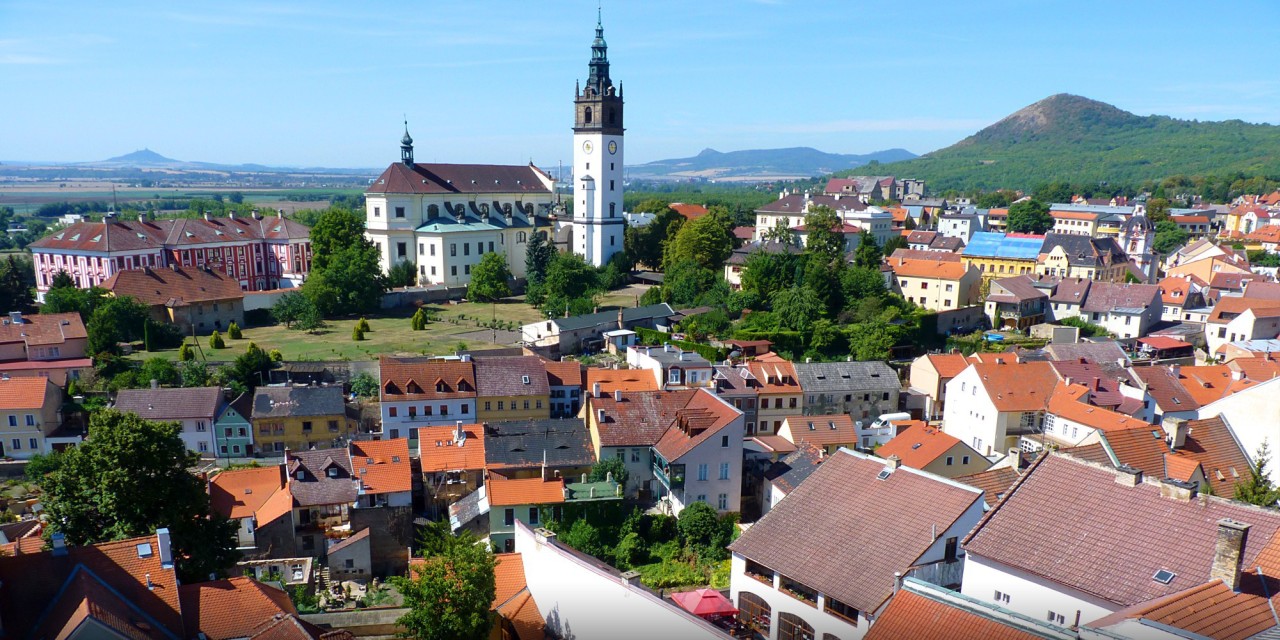
Litoměřice – Cathedral Hill, St. Stephen's Cathedral with a bell tower, Radobýl hill in the background (reprophoto).
From Teplice to Doubravská hora, Lbín, Ohníč, Kostomlaty, Černčice, Milešovka, Kletečná, Chotiměř, Opárno, Lovoš, Malé Žernoseky, Kalvária, Kamýk, Litoměřice (67 km).
dedicated to the German naturalist and traveler Alexander von Humboldt
Saturday, May 7 – Monday, May 9, 2022
"Days of beauty, so early / are you entering the land? Will you give me a clear / sun, a hill, a grove?" Johann Wolfgang Goethe
This year too, we will celebrate the arrival of the spring season of love on the May Máchov pilgrimage, which we will set out on as we did last year from Litoměřice. It will take us to the eastern part of the Central Bohemian Mountains north of Litoměřice and to the Děčín Highlands. This time, we will go through the Bílé stráně to Varhošť and from there to Buková hora, to the Humboldt Lookout. We will continue on the right side of the Elbe over the Vrabinec hill to Děčín, from where on the last day we will set off to the highest table mountain in this entire area, Děčínský Sněžník (703 m above sea level) and to the Tiské stěny. We will return to Prague from Libouchec. — This year's pilgrimage is dedicated to the great German naturalist and traveler Alexander von Humboldt (1769-1859), a friend and follower of Johann Wolfgang Goethe, whose adventurous travels and some far-reaching scientific discoveries we will remember, including his visits to the Central Bohemian Mountains. During the journey, poems by our friend Luďek Čertík from his first poetry collection, Many Rivers, which we publish in Pilgrim, will also be heard.
Saturday 8. 5.: Prague – Litoměřice, Bílé stráně, Hradiště, Varhošť, Čeřeniště, Pláň (23 km)
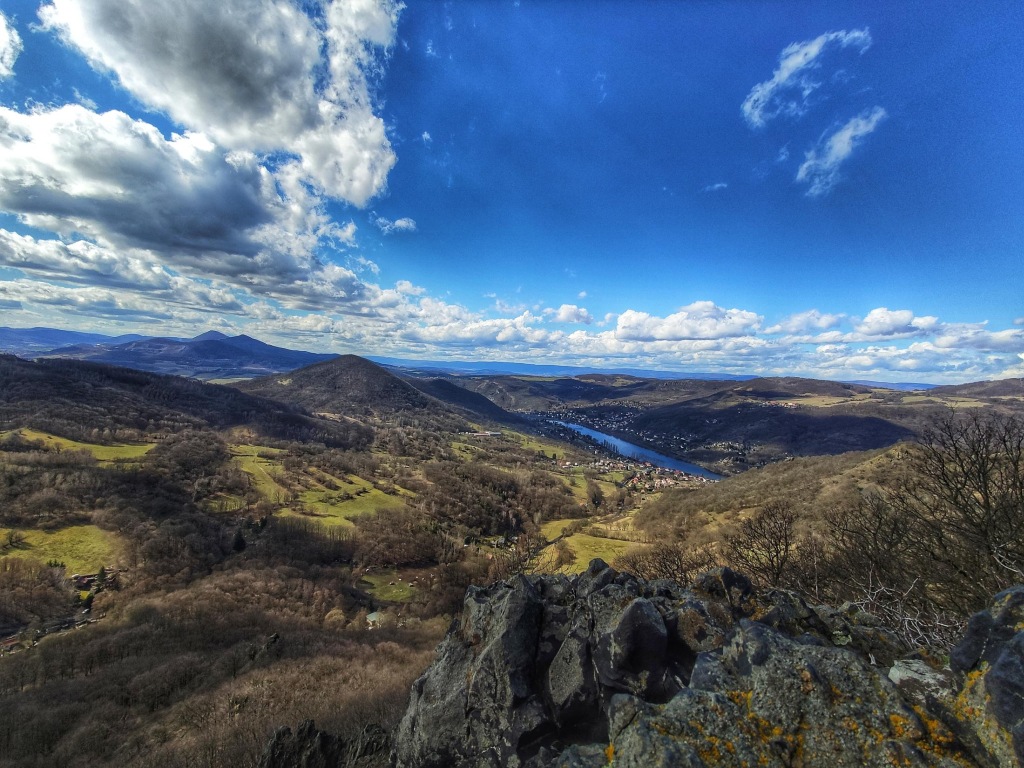
We will meet in Prague at the main train station at 7 am and at 7:22 we will leave Prague by train via Všetaty to Litoměřice. At 9 am we will head north from Litoměřice following the red trail, first to the national natural monument White slopes in a beautiful place near Pokratic Brook. There are many rare and endangered species of thermophilic and xerophilic plants and animals here, such as the purple orchid, the insectivorous torticollis, the slipper orchid, the forest anemone and many others. We will continue to the natural monument on the slopes of the hill Hradiste (545 m above sea level), from where there is a beautiful view of the landscape. There are plant and animal communities of dry grasslands and rocky steppes, scree and rocks, for example protected steppe flora, protected species such as the golden-headed lily, etc. From Hradiště we will go along the green to Raven Halls (445 m above sea level), from where there is a beautiful view of the Elbe River canyon, and we will continue to the neovolcanic hill.

White slopes (reprophoto) 
Shoemaker's slipper (Bílé stráně, reprophoto)
"He who sees into the secret inner life of a plant, into the exciting realms of its faculties, and who watches the plant gradually unfold, sees matter with quite different eyes - he knows what he sees."
Johann Wolfgang Goethe
Varhošt (639 m above sea level) with a lookout tower from which there is a distant view of the Bohemian Central Mountains, the Ore Mountains, the Lusatian Mountains and the Jizera Mountains. Here we will read and listen to poems by Luďek Čertík from his collection Many rivers. From Varhoště we will continue to the natural monument Babinské meadows (remains of the so-called orchid meadows) and further to the crossroads Cherry Hill and from there to the yellow and red over Provostov and Homoli u Panny until the crossroads on the hill Plan (596 m above sea level). From here we will descend a short distance along the red trail and spend the night in the forest above Zubrnice with a view of Beech Mountain.
“It is much more difficult to observe correctly than most people imagine… It is very regrettable that habits of accurate observation are not cultivated in our schools. From this deficiency can be traced many of the erroneous reasonings of the erroneous philosophy which prevails today.”
Alexander von Humboldt

"What speaks to our soul is beyond our measurement."
Alexander von Humboldt
Sunday 9.5.: Plan, Buková hora – Humboldt's lookout, Vrabinec, Velký chlum (22 km)
In the morning we will follow the red trail to the village Zubrnice, which is an open-air museum with a unique collection of folk architecture objects; there is the originally Gothic church of St. Mary Magdalene, rebuilt in the Baroque by the Italian architect Octavio Broggio. From here we will continue along the red path to Beech Mountain (683 m above sea level) with Humboldt's viewpoint. Alexander von Humboldt visited Buková hora in 1837. We will talk about the life of this founder of scientific geography, his adventurous travels and scientific discoveries, as well as his relationship to the Bohemian Central Mountains. From Buková hora we will continue along Pink Ridge to the top Silver horn (516 m above sea level), which is part of the natural monument of the same name, protecting beautiful old beech trees; and further to Těchlovice on the right bank of the Elbe and from there we climb to a prominent volcanic peak Sparrow (395 m above sea level), a dominant feature of the local landscape, which is part of the nature reserve of the same name. From Vrabinec we will continue along the red trail through the village Forest except for Big tuft (507 m above sea level) above Děčín with a stone lookout tower, located on the ridge that separates the Elbe basin from the Ploučnice basin. We will spend the night at Velký chlum.

“Man knows himself only to the extent that he knows the world. … he is aware of himself only within the world and perceives the world only within himself. Every well-observed object opens up a new organ of perception in us.”
Johann Wolfgang Goethe
Alexander von Humboldt

Friedrich Heinrich Alexander, Free Lord von Humboldt (1769-1859) was a Prussian naturalist and geologist, traveler and the last great polymath and romantic scientist, who is today considered the father of ecology. He was one of the most famous and influential figures of his time; he was as famous as Goethe or Darwin. He received a universal education at German universities, but in his view of nature he was most influenced by Goethe's science. His holistic understanding of nature as a complex interconnected system was shaped by his remarkable adventurous journey to South America (1799-1804), especially his journey through the Andes with the legendary climb to the Chimborazo volcano in Ecuador, where Humboldt's phytogeography was born in a dialogue with Goethe. He was convinced that without an emotional experience of nature, it is impossible to reach a correct understanding of it. In his research, he combined extensive exact scientific measurements with poetic and aesthetic descriptions of the beauties of tropical wild nature, which influenced Charles Darwin and John Muir; Humboldt had a similarly strong influence on Henry David Thoreau. Like Goethe and the painter CD Friedrich, Humboldt was a great admirer of the landscape of northwestern Bohemia (the Central Bohemian Mountains, the Elbe canyon, the surroundings of Teplice and the Ore Mountains), which he visited several times (1791, 1819, 1837).
"The most dangerous worldview is that of those who have never seen the world."
Alexander von Humboldt

"In the Amazonian forests, as on the peaks of the Andes, I felt that the same life permeated the stones, the plants, and the animals, as well as the heaving chest of humanity, as if animated by a single spirit from pole to pole."
Alexander von Humboldt

“In considering the study of physical phenomena, not merely as they relate to the material necessities of life, but as they bear upon the intellectual progress of mankind, we find as its most noble and important result a knowledge of the chain of connections by which all the forces of nature are connected and mutually dependent. And it is the perception of these relations which elevates our views and heightens our pleasure.”
Alexander von Humboldt
"Our imagination is only impressed by what is great; but the lover of natural philosophy should reflect equally on small things."
Alexander von Humboldt

White slopes (reprophoto) 
Shoemaker's slipper (Bílé stráně, reprophoto)
"A person sees in the world what he carries in his heart."
Johann Wolfgang Goethe
Monday 10.5.: Velký Chlum, Děčín, Děčínský Sněžník, Tiské stěny, Libouchec (24 km)
In the morning we will set off from Velký Chlum on the red trail to Děčín, which is located in a beautiful meander of the Elbe River at the confluence with the Ploučnice, at the junction of three mountain ranges – the Elbe Sandstones, the Děčín Walls and the Bohemian Central Mountains. We will cross the Elbe over the Tyršův Bridge and set off on the red trail through Shepherd's wall, one of the dominants of Děčín, and further below Sandy hill up to the vast summit plateau Děčínsky Sněžník (724 m above sea level), a large sandstone table mountain, the highest peak of the Děčín Walls. From the stone lookout tower from the 19th century there are beautiful views of Bohemian-Saxon Switzerland and the Lusatian Mountains and from the so-called Dresden Lookout to Dresden. At the foot of the mountain there are pseudokarst caves, where fluorite was mined in the 20th century. We will continue along the path through the forest to the sandstone Tisza walls. This "a miniature labyrinth of rocks, beautiful like a rock puppet theater" (Miloslav Nevrlý) was formed in the Mesozoic era 85 to 100 million years ago. We will walk through its main formations and places (Janusova hlava, Hřib, Želva, etc.) and then we will go down to the village of Libouchec, from where we will return by bus (change in Ústí nad Labem) to Prague.
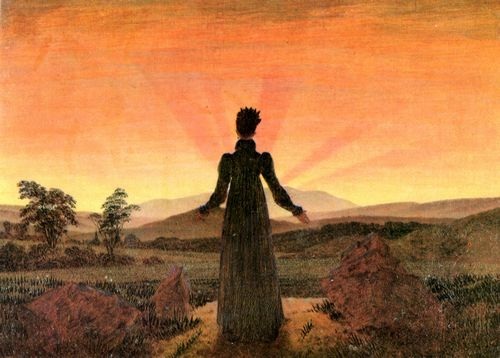
"Come with me, sun, gild my steps, come with me, sun, hear the songs of my journeys... free my soul from the dust of everyday life, let me walk joyfully and lightly"
Luděk Čertík, "Pilgrim's Prayer"

"I am increasingly convinced that our happiness or unhappiness depends more on the way we meet the events of life than on the nature of those events themselves."
Alexander von Humboldt
Connections
Prague – Litoměřice / Saturday May 8: TRAIN / BUS
- TRAIN: departs from Prague main station.: 6:47 – TRANSFER: Bohušovice nad Ohří / arrival 7:50, BUS: departure 7:59–arrival in Litoměřice at 8:12
- TRAIN: departs from Prague main station.: 7:22 – TRANSFER: Všetaty / arrival 8:03, departure 8:07– arrival in Litoměřice 8:44
Libouchec – Prague / Monday 10th May: BUS / TRAIN
- BUS: departs from Libouchec: 16:26 – TRANSFER: Ústí nad Labem / arrival 16:52, BUS: departure 17:22 – arrival Prague hl.n.18:36
- BUS: departs from Libouchec: 16:56 – TRANSFER: Ústí nad Labem / arrival 17:25, BUS: departure 17:39 – arrival Prague hl.n. 19:11
- BUS: departs from Libouchec: 17:26 – TRANSFER: Ústí nad Labem / arrival 17:52, BUS: departure 18:22 – arrival Prague hl.n. 19:36
Contacts
Jiří Zemanek, email: sarvanga@centrum.cz, mobile: 777 117 466
Tomas Hruza, email: tomashruza@gmail.com, mobile: 775 052 607
Karel Čtveracek, email: ctv@seznam.cz, mobile: 603 355 072
Brbora Kinkalova, email: b.kinkalova@seznam.cz, 776 123 969
"I believe that a lot of good would come from a change in attitude if tourists became pilgrims again."
Rupert Sheldrake