
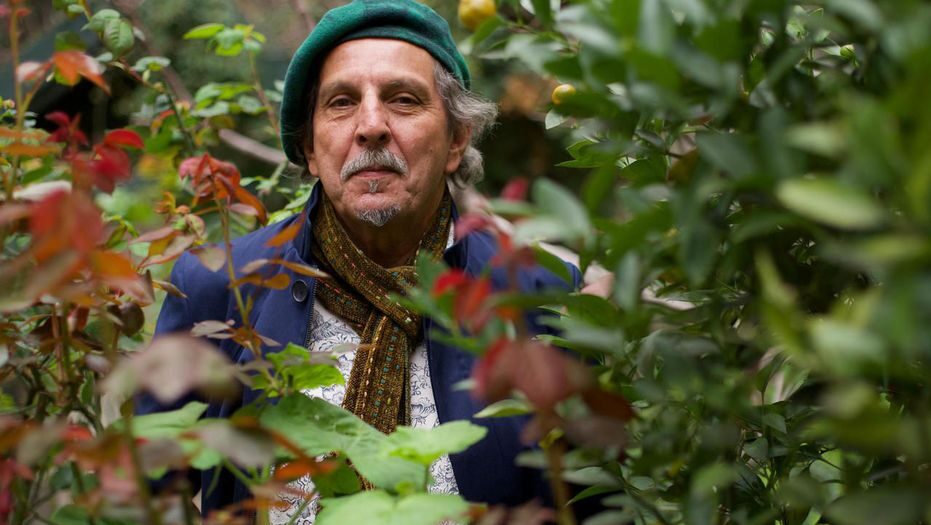
Glenn Albrecht (born 1953) is an Australian environmental philosopher who became famous as an author of neologisms solastalgia and symbiocene. He is theoretically and practically concerned with the relationship between the ecosystem and human health. He is a pioneer in the field of research into “psychoterratic” or Earth-related mental health conditions – with the concept of “solastaglia”. He characterizes solastalgia as a form of emotional or existential anxiety caused by environmental change; as a negatively perceived change in the environment in which we live and which is close to us. He also publishes in the field of animal ethics, including the ethics of migration of endangered species in relation to the pressures of climate change. Glenn Albrecht’s most recent publication is the book Earth Emotions: New Words for a New World (Emotions of the Earth: New Words for a New World), published in 2019. According to Albrecht, we need to create a hopeful vocabulary of positive emotions in order to break free from our current ecological abandonment and reignite our millennia-old biophilia for our home planet. To this end, he proposes a dramatic shift from the current human-dominated era of the Anthropocene to one that is materially, ethically, politically, and spiritually grounded in the revolution in thinking brought about by contemporary symbiotic science. Albrecht calls this period the Symbiocene. This 2017 text by the author (Sumbiocracy) is published on the website humansandnature.orgTranslated by Jiří Zemánek.
As we build a symbiocene, we will also build a new political system—a sumbiocracy (from the Greek sumbiosis; sumbioun, to live together; sumbios, to live together). I define a sumbiocracy as a government determined by the type and sum of mutually beneficial or mutually beneficial relationships in a given sociobiological system at all levels (mutualism). If the processes that nourish ecosystems and biomes are identified, protected, and maintained, species will flourish in such healthy ecosystems. We do not need to further democratize a failing “biased” democracy, such as the “council of all beings” approach of deep ecology, where the interests of species are “represented” in decision-making structures by well-intentioned people. Rather, we need to elect to government people who understand and affirm the organic forms, processes, and relationships that support life, so that they can carefully consider all creative proposals that come from humans.
For example, if some aspect of human development is known to have long-term toxic effects on a basic life process such as metabolism, then it simply must not be permitted, or if it is already underway, it must be urgently terminated (e.g., lead in gasoline, asbestos in building materials, phthalates in plastics). Unlike democracy, which is by definition anthropocentric and capable of only partial answers to our humanly biased questions, sumbiocracy requires those who govern (sumbiocrats) to have a thorough understanding of the complex of ecosystems and the symbiotic interrelationships that enable them to function. In order for humans to “live together,” they must use their intelligence and power to achieve overall harmony in a community of broad interests. Under sumbiocracy, the rulers of the Earth must consider what kind of development is permissible within mutually beneficial relationships to enable coexistence by answering the following questions:
- Is there full recyclability of all inputs and outputs?
- Are we using safe and socially just forms of renewable energy?
- Is there full and harmonious integration with biogeochemical systems at all levels?
- Have we achieved the elimination of toxic waste in all aspects of this business?
- Are the interests of all species, large and small, taken into account?
- Have we achieved harmony or balance of interests (homeostasis)?
Governance by scientifically and traditionally educated people (including citizen scientists) at all places and levels determines the interconnections between elements of complex systems before they take action that affects the health of the system. We must remember that place is crucial to effective sumbiocracy, because only those who have close and intimate ties to specific places are able to know their place and decide about its health and vitality.
Sumbiocracy is a form of government in which humans govern all relationships on Earth at all scales from local to global. In this new form of government, there is an organic form (all biodiversity including humans) and an organic process (Earth systems). Sumbiocracy is a government for the Earth – by the Earth, so that we can all live together. Today we have a very sophisticated understanding of how the natural world works, and because it was here and worked before humans evolved as Homo sapiens, it is we who must adapt to its processes and how it works. Understanding the conditions of life, but deliberately destroying them with a pile of toxic waste, changing the climate for the worse, making previously healthy ecosystems uninhabitable, destroying them and wiping out species (the sixth great extinction), all of this proves that we are not only Homo non-sapiens, but that we are also a kind of pathological plague to all species on this Earth. In reality, we are better than that.