
Summer seminar of the Traveling University of Nature
From the Anthropocene to the Symbiocene, or the path to a civilization that supports life
About the Anthropocene, the Symbiocene and sumbiocracy — about living intelligence and the vision of fractal flourishing — on the regenerative paradigm and the reconfiguration of economic practice according to biosynergy — on non-growth and unconditional income— on urban agriculture and the commons — about architecture in symbiosis with natural systems — on the ecological transformation of large cities — and new "green projects" for Prague
Main guest: Australian ecophilosopher Freya Mathews
August 12 to 18, 2024
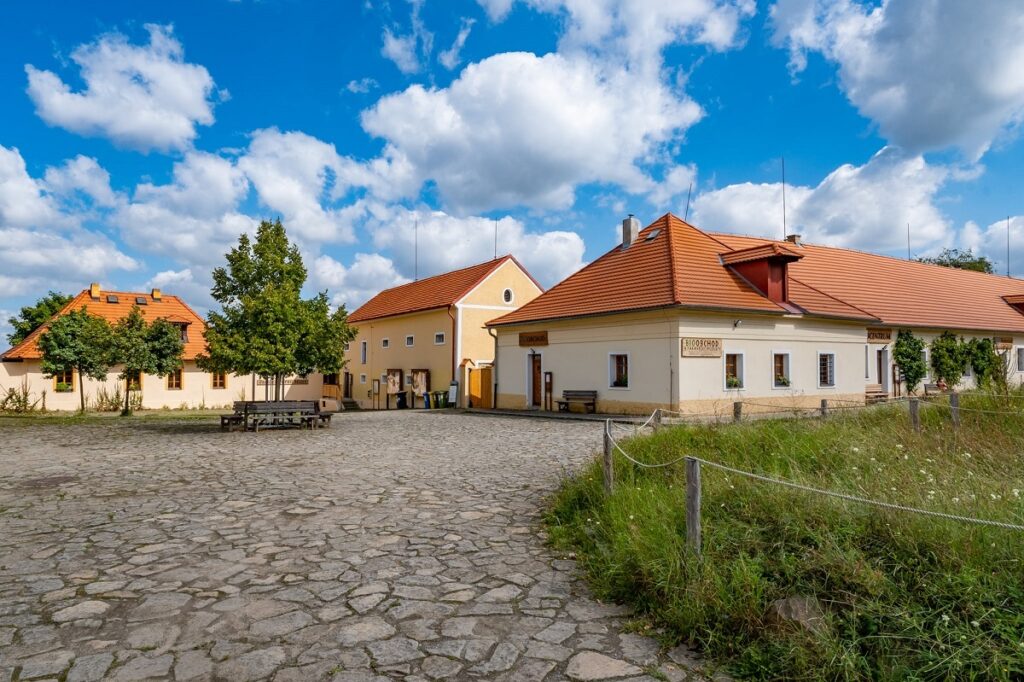
Toulcův dvůr, ecological education center
“An ecological civilization would be based primarily on an all-encompassing symbiosis between human society and nature. Human activity would not be organized solely to prevent damage to the living Earth, but to actively restore and maintain its health. As such, an ecological civilization could guide humanity and nonhuman nature toward an infinitely long period of flourishing—the symbiocene.”
Jeremy LENT
We live in the Anthropocene, a time of unpredictability, confusion and a very uncertain future – flooded with new and new reports about the rapidly advancing climate crisis and the unprecedented ecological degradation of the Earth – and also in the midst of a chaotic geopolitical situation, combined with a deep crisis of democracy. Yet our politics and economics ignore the warnings of scientists and continue to inertially pursue the idea of “progress” at the expense of the planet – the unlimited economic growth of human society, based on extreme consumption. The threat of civilizational collapse and the destruction of life, which we face as a result of such short-sighted practices, suggests that to solve this crisis, it is not enough to simply adapt the existing system externally – we urgently need to transform its basic patterns and values, to “rewrite its operating system”.
A number of leading thinkers are therefore exploring the possibilities of transforming the current unsustainable civilization, or rather proposing to create a new civilization that would grow out of the complex coexistence of humans with the natural world and which, in the words of the current leading environmental philosopher Freya Mathews, the main lecturer of our seminar, "served and supported the biosphere at all levels"These visionaries develop the idea of an ecological society, founded "to live together for mutual benefit" (Glenn Albrecht); they propose how to replace the current dysfunctional and destructive mythology of progress, based on the idea of exploiting the world and endless accumulation of wealth, with a new regenerative mythology of symbiosis - the co-evolutionary cooperation of humans with a more than human world.
At the seminar, we will learn about the perspectives of such a transformation, as described by the aforementioned Freya Mathews, who presented the most elaborate idea of an ecological civilization to date, the American philosopher Jeremy Lent, the Australian philosopher Glenn Albrecht, the British educator and cultural activist Christian Wahl, the British architect Michael Pawlyn, the Australian landscape architect Julie Watson, and the outstanding British economist Kate Raworth. All of the aforementioned authors agree that we need to move from the concept of sustainability, which aims to merely mitigate the negative, to a new regenerative paradigm, built on a clear optimization of the positive, where everything we do will have a net positive impact on the life of all living things around us. In short, we need to start a development that will support the flourishing of all life.
"The key to ecological civilization from the perspective of the living cosmos is not so much the "small is beautiful" or "minimal is best" approach of earlier sustainability philosophies, but synergy in a fully psychophysical sense. The goal is not to keep the practice as simple as possible, but to make it a means of cosmic renewal."
Freya MATHEWS
We are in a situation where we have all the solutions necessary for such a transformation at our disposal, we just need to mobilize our collective will to put them into practice. There are many creative groups around the world today that are creating the foundations for almost all components of a new, life-sustaining civilization. Within our domestic context, we will focus primarily on the activities of the brilliantly developing movement non-growth (Eva Fraňková and Martin Čech), which shows that we can replace the current destructive economic system based on profit with a new economic system that enables a good life within planetary limits. We will also introduce local activities of regenerative agriculture, which is also spreading to a large extent in the urban context: we will get acquainted with agroecological urbanism (Lucie Sovová), with syntropic agriculture, which strives to return humans to natural ecosystems (Elsa Šebková), and with the broad movement of Community Supported Agriculture (Jana Kožnarová).
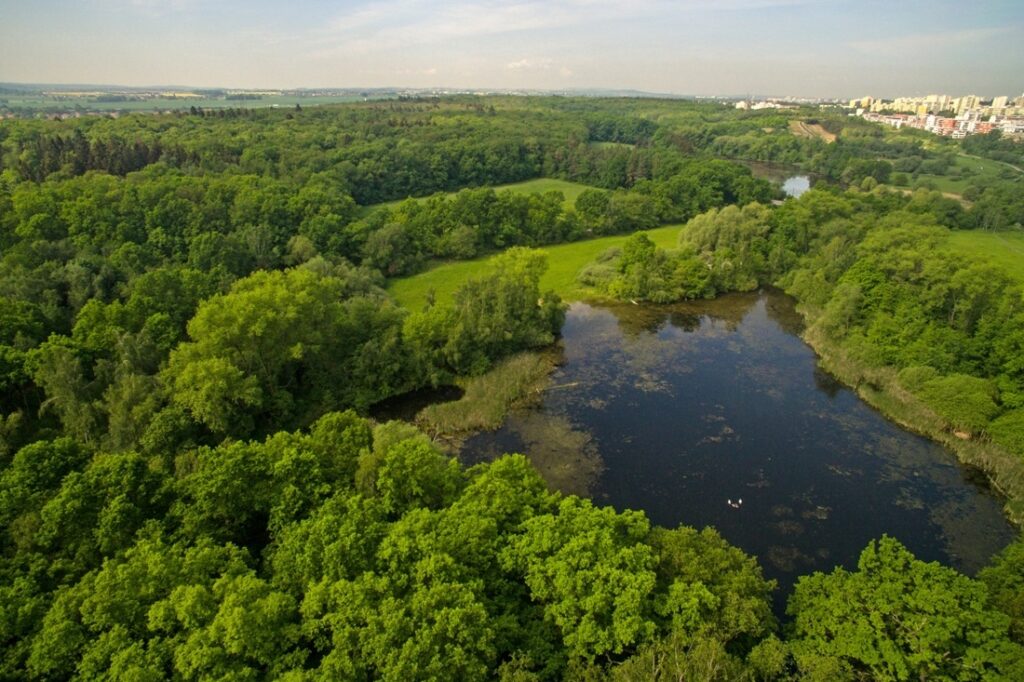
The regenerative paradigm has recently begun to gain traction in construction practice, architecture and urbanism, as well as in the broader context of design. We will take a closer look at some pioneering activities in this field, as represented, for example, by the aforementioned British architect Michael Pawlyn, a representative of biomimetic architecture, and landscape architect Julie Watson with her concept of technologies LO-TEK. These and some other examples indicate how it is possible to develop the concept of regenerative healthy cities, whose infrastructure is integrated with natural systems, which consume a fraction of resources, and in which it is a pleasure to work and live. Some landscape urban designs by architect Michal Fišer and his team can also be included in this context. threearchitects, for example, the project to revitalize the Ohře bank in Kadaň and, above all, the current winning competition proposal for the development of Rohanský and Libeňský islands, the purpose of which is to re-present the Vltava River in the Holešovice meander, which arch. Fišer will introduce us to in his lecture at the seminar and as part of the trip. Architectural theorist Jana Tichá will introduce us to Martin Rajniš's "natural architecture" and Miloš Vojtěchovský will talk about how to avoid sound pollution and how to strive for a "harmonious and fair acoustic landscape of the city". On several other trips, on which our guides will be fellow therapists and artists - Adam Táborský, Luděk Čertík, Jana Kožnarová, Tereza Stehlíková - we will tune in to some unique natural and cultural locations of Prague, such as the Botiče meanders and Hamerský pond, the Milíčovský forest and ponds natural monument, the Prokopská farm in the Prokopské valley, or the Vyšehrad area and the Vltava embankments.
Each of us today needs to find our participatory role within the larger community of changemakers, within the network of pro-life groups that are now shaping what George Monbiot has called “the new politics of belonging.” I believe that our seminar will certainly offer a unique opportunity for this. And in this context, I would like to conclude with the following quote: “… every day of our lives we can live the future we want for ourselves and for others. … With every decision we make, every word we speak, every action we take, we help to slow down or catalyze the great transformation our society needs if we are to bequeath a prosperous world to future generations.” (Jeremy Lent)
George Zemanek
Seminar program
from 17:45 to 18:30 — dinner
from 19:00 to 21:30 — start:
About the seminar program, history and educational activities of Toulc's Court - "natural area", presentation of Enviro's activities and the local KPZ –, about the landscape between Záběhlice, Hostivař and Chodov: Hostivař-Záběhlice Nature Park, Botič-Milíčov Nature Park.
from 8:00 to 9:00 — breakfast
from 9:00 to 11:30 — morning program:
What pits us against nature • Freya Mathews
1st lecture from the series: The Deep Law at the Core of Being: The Key to Ecological Civilization?
The fundamental reason why contemporary industrial civilization dismantles and destroys terrestrial systems is the current dualistic worldview on which it relies, which separates mind from matter and attributes it exclusively to humans. But even more than the content of our knowledge, the theoretical ways in which we know, characteristic of our Western tradition, set us against nature.
Anthropocene: the epoch we live in • Tomáš Daněk
So we are in a different world again – this time in one that is more of our own making than ever before. What is the Anthropocene? How did we find ourselves in it and how do we recognize it? What is so radically new about it that we need to declare it a new geological epoch? How is the place of man in nature changing in it, what paradoxes arise in it, what does it threaten us with and what does it offer us? Let us imagine different ways in which we can talk about the Anthropocene and in the end (hopefully) discover that the future is no longer what it used to be.
from 12:00 to 13:00 — lunch
from 1:00 PM to 5:30 PM — trip:
We will get acquainted with the educational activities of Toulcov dvor and its natural area, which represents a diverse landscape mosaic of habitats, which is ideal for ecological education. Then we will set off along the beautiful meanders of the Botič stream to the Záběhlický weir and further to the Hamerský pond, from where we will return to Toulcov dvor (7 km) through the meadows and wild orchards of Trojmezí.
A lecture will be given at Hamerský Pond Adam Táborský's Therapy Among the Trees: The concrete jungles we inhabit often distance us from the natural rhythms that once guided our ancestors. Yet, even in the midst of urban landscapes, the call of the wild persists, compelling us to rediscover our innate connection to the land. We will show you how we can experience support in nature without harming it; how nature can enrich us and what we can do for it in terms of mental and physical health. There are many ways to flourish in nature.
from 17:45 to 18:30 — dinner
from 19:00 to 21:30 — evening program:
Beyond the Anthropocene to the Symbiocene: Glenn Albrecht and Jeremy Lent • Jiří Zemánek
Glenn Albrecht, Jeremy Lent and others argue that we need to move beyond the Anthropocene, which has exposed the unprecedented destructive impact of humans on planetary ecosystems. To avoid its negative trends, we need visions and memes of a different future. Glenn Albrecht suggests that we call this new era the Symbiocene and makes the case for the development of a symbiotic and cooperative model of society, a sumbiocracy, in which people act for the benefit of each other on Earth at all scales. An analogous model of civilization, based on the recognition that health and well-being are fractal in nature, and that the well-being of each person is fractally connected to the health of the whole world, is translated by Jeremy Lent. We will examine both of these models of society and get acquainted with some chapters of Jeremy Lent's book The Web of Meaning .
We will screen video recording of Lent's lecture "How to change our minds to change the world?" (31 minutes).
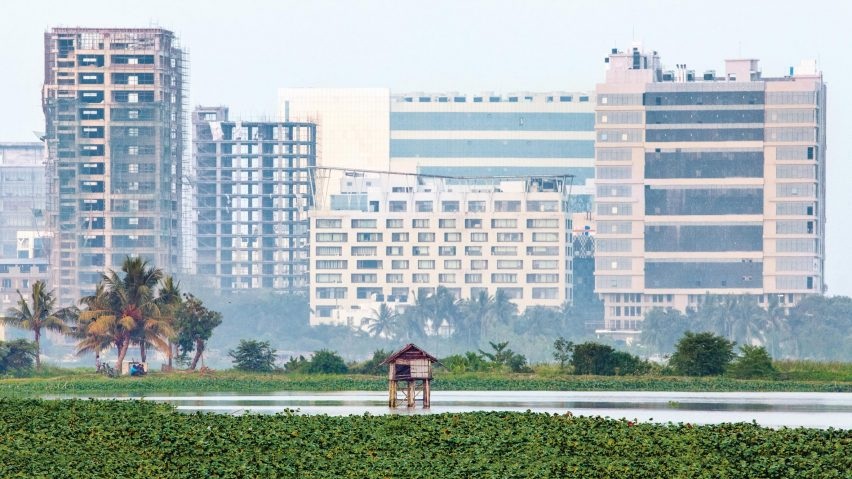
"The current economy requires growth regardless of whether it contributes to meeting our needs. But we need an economy that meets our needs, regardless of whether it grows or not."
Kate Raworth
from 8:00 to 9:00 — breakfast
from 9:00 to 11:30 — morning program:
Theoretical and Strategic Ways of Knowing • Freya Mathews
2nd lecture from the series: The Deep Law at the Core of Being: The Key to Ecological Civilization?
Theoretical ways of knowing (characteristic of the Western tradition) lead us to the emergence of dualistic and analytical views of reality that separate us from it. In contrast, strategic ways of knowing (characteristic of pre-agrarian indigenous societies), which are embodied and participatory, lead us to a holistic grasp of reality. Strategic ways of knowing reveal to us on an internal level that at the core of what is there is a duty, a normativity, which the author characterizes as a deep Law, from which, according to her, it is clear that the role of man and all other beings is to contribute to the continuous development of the living cosmos.
About Liology Jeremy Lenta • Pavel Janšta
The term liology is derived from the Chinese word “li” (organizing principles) and the word “ology” (Greek for “study”) and means the study of organizing principles. Liology was developed by philosopher and visionary Jeremy Lent as a framework for a new worldview that integrates all aspects of life and would allow people to prosper harmoniously and sustainably on Earth. Pavel Janšta introduces us to some of the basic concepts of Neo-Confucian philosophy – such as “li”, “ren” or “gewu” – that inspired Jeremy Lent to create this concept.
from 12:00 to 13:00 — lunch
from 1:00 PM to 5:30 PM — trip:
We will head to the Milíčovský Forest and Ponds Natural Monument, which protects valuable forest stands and wetland habitats for a number of rare invertebrates, amphibians and reptiles, as well as nesting grounds for many species of water birds; part of this area is a European significant site designated for the protection of the giant grebe (trip length 10 km). With Ludek Čertík we graduate here "listening walk": we listen to the voices of local birds and insects, including the sounds below the surface of ponds. On that occasion, we will also talk about how wild animals are doing in Prague and what makes Prague unique in the world from a natural science perspective.
from 17:45 to 18:30 — dinner
from 19:00 to 21:30 — evening program:
Sustainable non-growth – questions, answers, and more questions • Eva Fraňková
Humanity is currently exceeding most planetary boundaries, and “green growth” is not capable of reversing this trend, according to available empirical data. If we want to avoid the tragic ecological and social consequences of this development, we need to actively eliminate the growth dependency of our economies, but also eliminate patterns of dominance and exploitation in mutual relations. The no-growth movement tries to think through and promote the possibilities of socio-ecological transformation towards greater sustainability and justice. What are its basic theses and political proposals? The seminar will provide an opportunity to get acquainted with them and discuss them together.
Daniel Wahl – Design of regenerative cultures • Vlado Lobotka (Gaia Institute)
Every structure and institution around us needs innovation, redesign, and transformation. Our worldview and our value system also need transformation. Only then will we be able to create a new civilizational narrative that encourages us to be inventive, creative, and collaborative in creating a regenerative human presence on Earth.
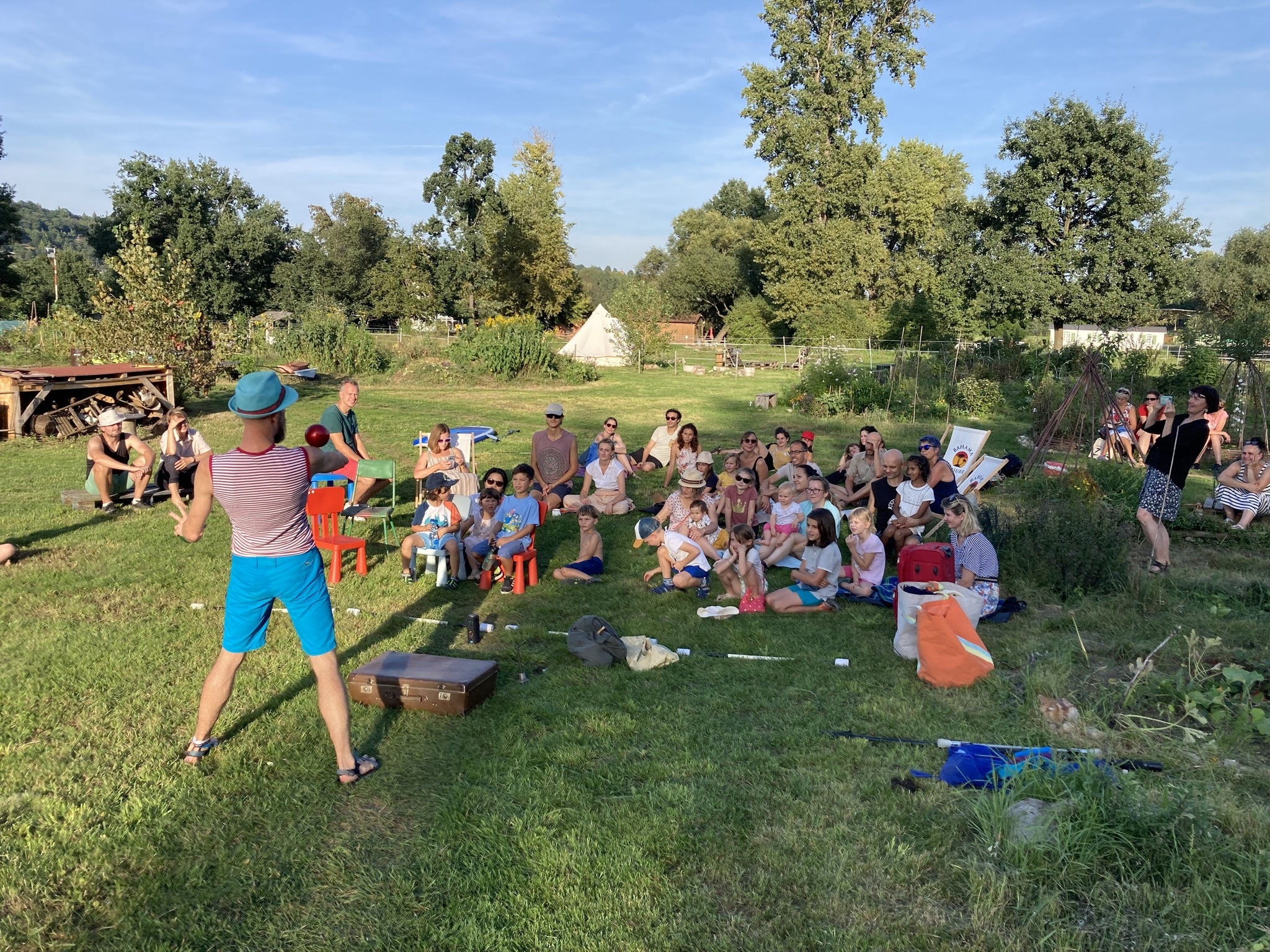
“At its core, sustainable urban agriculture creates positive change not only within the environment, but also within communities.”
Nazeem Harvey
from 8:00 to 9:00 — breakfast
from 9:00 to 11:30 — morning program:
Synergistic Forms of Economic Practice and the Profound Law • Freya Mathews
3. lecture from the series: The Deep Law at the Core of Being: The Key to Ecological Civilization?
In this concluding lecture, the author will present arguments that modern societies still have the tools at their disposal to renew strategic types of embodied participatory knowledge in the form of new ecologically grounded, nature-based, synergistic forms of economic practice, which she will present using selected examples. She argues that based on this approach, our human needs could be met by natural systems, so to speak, for free.
Unconditional basic income: where does the path to the right to a dignified life for all lead? • Martin Čech
A decent life for all is becoming increasingly unattainable as inequalities grow. An unconditional basic income promises a material basis and, with it, a great deal of freedom for all without distinction, but its compatibility with ecological sustainability is questionable. Yet its moral appeal for equality for all born into an unequal world remains strong. For a freer and more just society that thrives within the limits of one planet, we may need a more detailed plan. Unconditional basic services, guaranteed green jobs or local currencies can play a key role in a society that is autonomous, caring and knows its limits.
from 12:00 to 13:00 — lunch
from 1:00 PM to 5:30 PM — trip:
Visit to the permaculture Prokopská farm of Lucie and Brett Gallagher, who are pioneers of urban agriculture in Prague; we will visit three of their production plots: a garden with chickens at Prokopské údolí, a plot at Dalejské brook and an orchard in the area of Dívčí hrady (trip length 5 km). It will be heard here lecture by Jana Kožnarová 15 years of KPZ in the Czech Republic or a new wave of farmers not only from the Farm School. Community Supported Agriculture (CPA) celebrates its 15th anniversary this year. We look back at the beginning, how, when and why these special “islands of positive deviation” began to emerge, how they were transformed and where they are today. We also look among the students of the Farm School and get to know the new wave of young farmers who have decided to farm organically.
from 17:45 to 18:30 — dinner
from 19:00 to 21:30 — evening program:
Insatiable urban metabolism and agroecological urbanism • Lucie Sovová
The lecture will introduce the concept of social metabolism as a way to think about the interaction between humans and non-human nature. We will discuss why cities are “insatiable” and dependent on external resources, and how this metabolic imbalance is reflected at the societal and individual levels. Finally, we will mention agroecological urbanism as a vision of how to close nutrient cycles and promote a connection with the soil in cities.
Syntropic agriculture • Elsa Šebková
Syntropic agriculture is agriculture that learns from planet Earth, a macroorganism with its own intelligence. It draws inspiration from natural processes to deliver highly productive, nature-friendly agroecosystems that support biodiversity, accelerate soil formation, manage drought and flood, and mitigate climate change by sequestering vast amounts of carbon in the soil. Finally, syntropic agriculture seeks to shift the social paradigm from competition and separation to cooperation and harmony, returning humans to their rightful place within the ecosystem.
(+ 2 short videos)
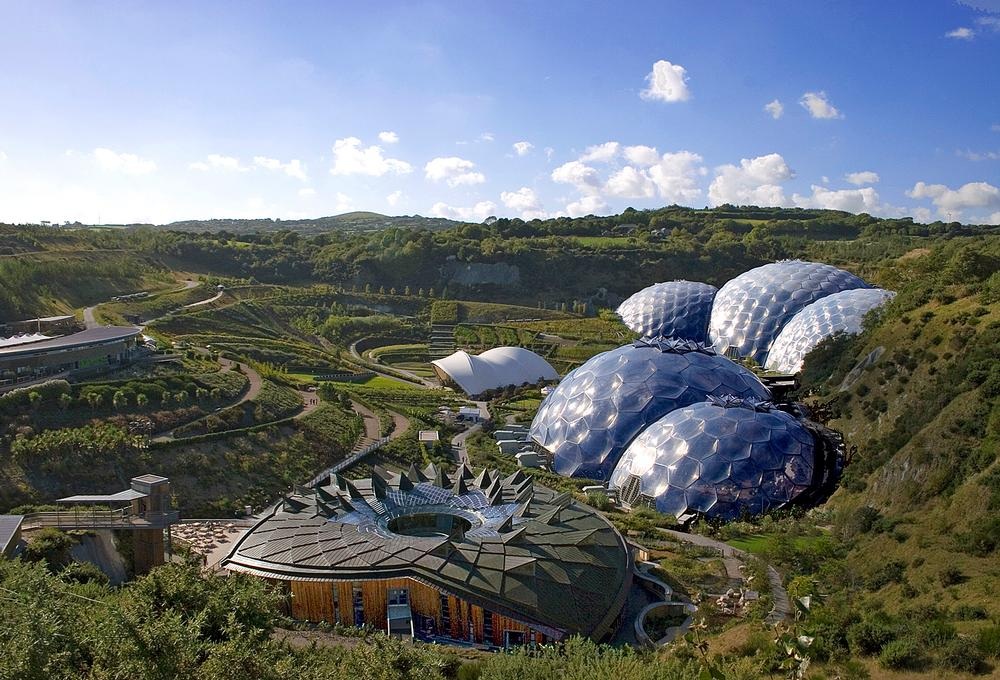
"All of my work is motivated by frustration with the word 'sustainable.' The word suggests something that is merely adequate, but we should be looking for truly regenerative solutions. We have moved from controlling nature to learning from its elements, but today we should be looking for complete reconciliation with the natural world."
Michael Pawlyn
from 8:00 to 9:00 — breakfast
from 9:00 to 11:30 — morning program:
Architecture and urbanism in symbiosis with natural systems • Jiří Zemánek
Architects and designers are discovering that it is critically important for us to learn from nature. The distinguished British architect Michael Pawlyn develops the concept of biomimicry, a type of ecological design inspired by the functional problem-solving methods of biology, which he believes will enable us to solve many of our current unsustainable dilemmas and move humanity from the industrial to the ecological age. We will also learn about indigenous technologies based on nature, which architect and environmentalist Julie Watson has called Lo-TEK; according to her, they could give rise to a new symbiotic vision of design that could make our cities resilient. Finally, we will talk about the baubiology of Munich architect Ferdinand Ludwig and the new urban forests.
Martin Rajniš and his Natural Architecture • Jana Tichá
You don't have to be an environmental activist to agree with the motto "Nature doesn't need people, people need nature." Martin Rajniš is certainly not an environmental activist and vehemently refuses to be categorized as an ecological or green architect, yet he has done more than anyone else in the last twenty years to green Czech architecture in the sense of returning to nature and simplicity.
from 12:00 to 13:00 — lunch
from 1:00 PM to 5:30 PM — trip:
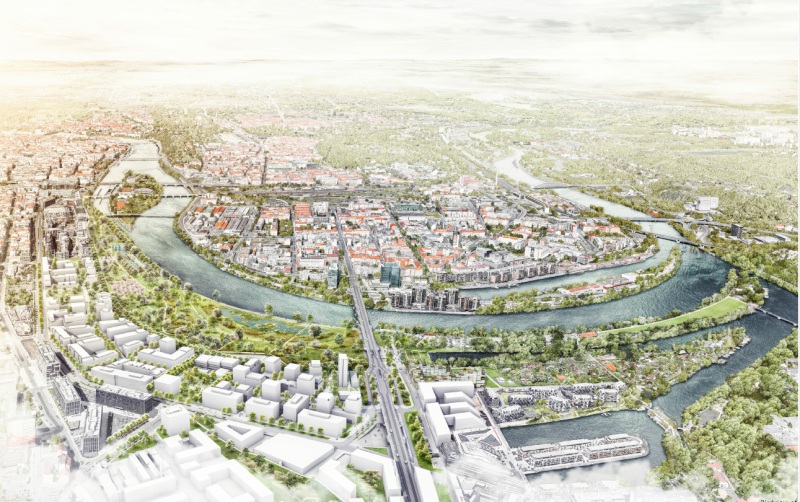
Visit to Rohan Island with architect Michal Fišer (three architects); trip length 5 km. The Holešovice meander is a unique natural phenomenon within the Prague Basin and the whole of Bohemia. We cannot find a similar generously shaped natural space along the entire long course of the Vltava River, which contrasts with the deeply constricted canyons to the south and north of Prague. The power of the original landscape image, fundamentally transformed in the 1920s and 1930s by regulating the Vltava riverbed, has persisted to this day more in higher visual horizons, but the immediate perception and physical contact with the river surface remained almost excluded in most areas and the river gradually disappeared from the mental map. By walking around Rohanský ostrov, we will create a direct experience of this area and a closer understanding of the assumptions and possibilities of its transformation, which we will present in the following evening lecture.
from 17:45 to 18:30 — dinner
from 19:00 to 21:30 — evening program:
About the winning competition design for the territory of Rohanský and Libeňský islands • arch. Michal Fišer (třiarchitekti)
The reappearance of the Vltava in the Holešovice meander is one of the main leitmotifs of the winning competition project for the nature park for Maniny and Rohanský and Libeňský ostrov, which will be introduced to us by one of its main authors, arch. Michal Fišer (Tři architekti). The project seeks to re-examine the quality of low-lying views into the distance by remodeling part of the terrain and recomposing the middle and upper layers of vegetation. In the resulting nature park, Rohanský and Libeňský ostrov will offer a very diverse mosaic of atmospheres thanks to its unique location in the river landscape and traces of history. A logically different hybrid natural space will be created, which will enrich the typological scale of traditional Karlín parks, the transformed Štvanice and Trojská kotlina. The park territory will create a logical operational intermediate link between the future Povltavská promenade and the historical center of Prague.
What did cities sound like yesterday, what do we listen to today, and what will they likely sound like tomorrow? • Miloš Vojtěchovský
In which sound environment do people – and other living beings – feel good and in which one lives worse, or even badly? Should the appearance of our cities be shaped in such a way as to achieve a “positive” sound and other environment? How should we think about the organization of urban spaces in order to avoid excessive sound pollution? Should we protect the variety and diversity not only in the appearance of cities, but also in their “musical composition”, the harmonies and melodies that they sound like? I am convinced that striving for a harmonious and fair acoustic landscape of the city is just as important as taking care of functionality, cleanliness, or good appearance.
"If I am not mistaken, then leaving the Anthropocene and entering the Symbiocene will be a deeply satisfying experience for most people. When the politics of sumbiocracy unfolds and we live in all our technologies and environments according to symbiomimicry, the Earth will breathe a huge sigh of relief."
Glenn Albrecht
from 8:00 to 9:00 — breakfast
from 9:00 to 11:30 — morning program:
Let's be edible or what does it mean to become a gift to the world? • Andreas Weber
The activity of our body consists in giving life to itself through the flow of matter in the world. By transforming the matter of the world into itself and passing it on to its own substance - that is, making it edible - it also gives life to other beings. The subjective experience of each organism is the perspective that the material continuum of reality has on itself in terms of its desire to give life.
Not Seeing the Other: Imagining Solidarity in Times of Crisis • Andrea Průchová Hrůzová
Images circulate through our physical, digital, collectively shared and private spaces and fundamentally participate in how we see ourselves and others. They do not only create our concrete bodily and media-enhanced social reality, but also fundamentally shape the collective memory, norms and values with which we navigate the political and cultural maps of the world. The lecture will focus on the importance of visual communication as a means of creation, reproduction, but also transformation of social prejudices, with special attention to the depiction of ethnicity and religion. It will specifically introduce various concepts of empathy and compassion through images, counter-visuality and breaking stereotypes within the framework of contemporary political issues and crises.
from 12:00 to 13:00 — lunch
from 1:00 PM to 5:30 PM — trip:
Infra-ordinary walk Tereza Stehlikova from Vyšehrad to the Vltava River (4 km walk) with a focus on connecting internal and external topography through the involvement of the whole body, various sensory perceptions and also imagination. The aim is to tune in to the changing landscape of the city, which contains various historical, urban, but also perceptual contrasts and layers. The aim is to challenge participants to a deeper emotional connection with specific places, including imaginative reflections focused on symbiotic links between diverse elements of the urban environment.
from 3:30 p.m. to 4:30 p.m. visit to the exhibition "Planet Prague" at the Center for Architecture and Urban Planning, "which tells us about nature differently than we are used to". He will guide us through the exhibition Pavel Borecky, professional worker Camp Prague, who will introduce us to his activities.
from 17:45 to 18:30 — dinner
from 19:00 to 21:30 — evening program:
Film screenings, dancing and singing
On Sunday, August 18th, breakfast and departure from 7:30 am.
More about Freya Mathews and her program at the seminar on this page.
Invitation to a follow-up journey
Biographies of seminar lecturers
Freya Mathews
is Emeritus Professor of Environmental Philosophy at La Trobe University in Melbourne, Australia. Her philosophy is rooted in panpsychism, an approach that sees the mentality of the natural world as fundamental. Her main interests include the development of ecological civilization; indigenous (Australian and Chinese) views on "sustainability" and how these perspectives can be adapted to the context of today's global society and the pursuit of a return to the wild. In addition to her research activities, she manages the private biodiversity reserve Barabungle Park on Mt Korongo in northern Victoria. She is a Fellow of the Australian Academy of Humanities. Among her published books: The Ecological Self (1991), For Love of Matter: a Contemporary Panpsychism (2003), Reinhabiting Reality: towards a Recovery of Culture (2005) and The Dao of Civilization / A Letter to China (2023). Her texts were published in Czech in the anthology Everything around me lives, feels, like me... (Pilgrim 2019) and in the magazine Sedmá generace (Seventh Generation).
Tomas Danek
is a cultural ecologist, environmentalist and naturalist. He studied Environmental Protection and Creation at the Faculty of Philosophy of the University of Prague in Olomouc and Humanities Environmental Studies at the Faculty of Philosophy of the University of Prague in Brno. He received his doctorate at the same institution under the supervision of Zdeněk Neubauer, into whose world of thought he was allowed to make trips for half his life, and who fundamentally influenced him. He focuses on the emergence of knowledge in personal dialogue with people and the more-than-human world, which is why he devotes most of his time to students, friends and living nature. In his teaching practice, he tries to convey ideas and experiences that affirm the spontaneity and authenticity of the living world. This effort also brought him to Pilgrim. He currently works at the Faculty of Philosophy of the University of Prague in Olomouc and the Faculty of Humanities of Charles University in Prague, where he lectures on topics at the interface of environmentalism, natural sciences and philosophy.
George Zemanek
Art historian, cultural activist and translator; as an art historian he worked in several state galleries, most recently in the collection of modern and contemporary art of the NG Prague. Co-founder of the Pilgrim association (with Tomáš Hrůza in 2009). The association was inspired by the exhibition “From the earth over the hill to the sky … About walking, pilgrimage and sacred landscape” (SČG Litoměřice 2005), dedicated to KHMách and CDFriedrich. In 2014, he founded the Itinerant University of Nature (PUP) in Pilgrim with Alena Malíková. He deals with the practice of pilgrimage and organizes the annual May and August PUP pilgrimages and seminars, including other educational walks (Deep Time Walk) and activities. He deals with the connections between ecology, cosmology and spirituality and the ecological transformation of contemporary culture. As a translator, he introduces the ideas of philosophers David Abram, Thomas Berry and Freya Mathews to the Czech environment.
Adam Taborsky
He studied psychology, sociology, political science and public policy. He works as a psychologist and psychotherapist at the Crisis Intervention Center at the Bohnice Psychiatric Hospital, the Tulsia Psychosomatic Clinic and Therapy Between Trees, where he organizes training in ecopsychotherapy. He regularly contributes to the magazine Psychologie dnes. He published a book with the Portál publishing house Therapy among the trees about nature and mental health.
Pavel Jansta
Cultural mover, writer and wanderer from Vodňany in South Bohemia. He studied Political Science and International Relations (FSV UK, Dresden, Munich). He traveled across Europe and Asia. In 2010, he founded the Vodňany žijou association and has been organizing Pecha Kucha Nights since 2015. He worked in municipal politics in his hometown (2010-22). Together with his wife, they organize creative meetings with poetry (haiku) and sound painting, hold exhibitions and publish author's books - mainly within the framework of the HiP Publishing House and the Pupalku association. In 2021-23, he lectured at Utsunomiya University (Japan). He has been studying and practicing classical Chinese medicine for a long time; he participated in the book To the roots of Chinese medicine (2023). Since 2019, he has been cooperating with the PILGRIM association.
Vlado Lobotka
He studied history at Comenius University in Bratislava and philosophy with a focus on cosmology and consciousness at the California Institute of Integral Studies in San Francisco. He is interested in integral philosophy, transpersonal and depth psychology, paradigm shifts, and theories of history focused on the dynamics of the rise and fall of civilizations. He wrote a book The path to a unified cosmos and founded the Gaia Institute, within which he coordinates the 1-year educational program New Story and organizes discussion meetings Between Worlds. In his free time, he translates books (e.g. Richard Tarnas, The Passion of the Western Mind; Christian Wahl, Design of regenerative cultures etc.) and designing and implementing regenerative projects. He is currently working on his doctorate in Nitra and Vienna and also teaches courses on cultural history and the evolution of consciousness.
Eva Frankova
works as an assistant professor at the Department of Environmental Studies, Faculty of Social Studies, Masaryk University in Brno. She originally studied biology in České Budějovice (B.Sc.) and subsequently environmental humanities in Brno (Mgr. and PhD.). She is dedicated to the field of ecological economics and has long been interested in alternative economic practices - eco-social entrepreneurship and other forms of solidarity economies. She has conducted research on social metabolism (material, energy and cash flows) at the level of local food systems. She has also long been interested in the concept of sustainable non-growth and other variants of social-ecological transformation.
Martin Cech
A graduate of environmental studies and media studies and journalism at Masaryk University in Brno, where he also spent a semester at the Universitat Autònoma de Barcelona in Barcelona. He is a member of the organization NaZemi and is generally dedicated to the topic of non-growth, focusing, among other things, on public policy issues (unconditional basic income and services, job security, reduction of working hours), the issue of work (post-work and anti-work perspectives) and ways of legitimizing moral values in the economic system (concepts of justice, freedom and power).
Ludek Certik
South Bohemian poet, essayist and musician, founding member of the audiovisual project Mess of Iguanas. He graduated in Film Studies at the Faculty of Arts, Charles University and Environmental Studies at the Faculty of Social Sciences, MU. He has published in the magazines Film a Doba, Sedmá generace, Host, Tvar, Milk & Honey. His first work of poetry was published under the wings of Pilgrim Many rivers (2021) and last year his second book of poems was published by Malvern Publishing House, entitled The last wild embrace (2023). He is currently preparing a collection of essays for publication Together, Untamed: Essays from the Living World (2024, published by Seventh Generation). He also focuses on sound ecology and bioacoustics, especially bird calls.
Tereza Stehlikova
is a Czech-British artist and researcher. Her multidisciplinary artistic practice focuses on the role of sensory perception – embodiment and perception of place – in the context of audio-visual and participatory performance. She is the editor of the interdisciplinary journal Tangible Territories, and also teaches art research at FAMU, AMU, and UMPRUM. Website: cinestheticfeasts.com
Lucie Sovová
She studied Environmental Studies, Aesthetics and Combined Art Studies at Masaryk University in Brno (2015). After an internship at the Dutch RUAF Foundation (Resource Centre for Urban Agriculture and Food Security), she came to appreciate the Czech tradition of self-sufficient gardening. In her dissertation, she examined how Brno's urban gardens function as food sources and alternative economic spaces. She defended her thesis entitled "Grow, share or buy? Understanding diverse economies of urban gardeners" (2020) at the Department of Environmental Studies at Masaryk University and at the Rural Sociology Group at Wageningen University in the Netherlands. At the latter school, she currently works as an assistant professor: she is dedicated to education and research within the framework of economic alternatives in the field of food and agriculture, especially in Central and Eastern Europe.
Elsa Sebkova
designer of edible forest gardens, a student at the Farm School specializing in organic vegetable growing and, since January 2023, also a student of syntropic agriculture (Ernst Gotsch, Brazil; Ecotop Foundation, Bolivia; Juan León, Colombia). The encounter with syntropic agriculture, which combines deeply thought-out cultivation techniques based on scientific knowledge with the vision of planet Earth as a living macroorganism with its own intelligence and fascinating self-regenerative mechanisms, was of fundamental importance to her. She wants to bring the knowledge of this agriculture closer to the people of our country. She is convinced that man can live in harmony with nature, that the essence of all life is to jointly care for the flourishing of other life. She says: "If we can connect with the intelligence within us, we can make the deserts green again".
Jana Koznarova
Jana's activities range from singing and dancing to ecology, education and traveling. She enjoys connecting environmental and social issues with art and is open to new projects with a desire to constantly educate herself. That is why in 2018 she joined the filming of the documentary Happy Farmers. Her work activities and projects focus on the topics of organic farming, food, connecting farmers and consumers and environmental education. She is actively involved with the organizations Association of Local Food Initiatives, Lovime.bio, Social Enterprise Envira, Pilgrim, Forest Academy of Mentaurs and Tyfloturistický squad. She is currently studying at the Farmer's College and lives in Litoměřice near the vineyard where she works.
Michal Fischer
Graduate of the Faculty of Architecture of the Czech Technical University in Prague and the Academy of Fine Arts in Prague, School of Architecture of Prof. Emil Přikryl, authorized architect of the Czech Academy of Sciences. In 2002, he co-founded his own platform tříarchitekti. He is the author of a number of projects for private clients and public clients in the field of urban planning, building construction and landscape design of various scales from strategic plans to details of urban furniture. Projects of open public and non-public spaces are frequent assignments. He works in multidisciplinary teams together with landscape architects, traffic engineers, water managers, and often collaborates with artists, historians, and gardeners. He is the co-author of the project to revitalize the Ohře riverbank in Kadaň (Nábřeží Maxips Fík), nominated for the Mies van der Rohe Award 2011. He participates in architectural competitions as a competitor or as a juror.
Jana Ticha
Theoretician and critic of architecture, she deals with modern and contemporary architectural work, especially in relation to nature and landscape. She lectures on the theory of architecture and the theory of landscape architecture at the Faculty of Architecture, Czech Technical University. Author of many articles in professional and popular magazines, editor, translator. Among her most important books are Space and Place. Architectural Work in the Czech Republic 1989-2014, an anthology Architecture and landscape (2017) or Euro-American architectural thought (2018, with R. Švácha and M. Sršňová). Co-author of the first monograph by Martin Rajniš Natural architecture (2009), participated as an author in the exhibition Natural Architecture at the Venice Architecture Biennale 2012 (together with M. Rajniš and I. Fialová) and in the book The architecture factory Martin Rajniš / Architecture Guild (2022).
Milos Vojtechovsky
is a theorist, critic, teacher, publisher, curator and initiator of a number of cultural projects. He studied aesthetics and art history at the Faculty of Arts of Charles University in Prague in 1980 and has been working in Amsterdam since the mid-1980s, where he founded, for example, the OKO gallery. In 1991, he and Tjebbe van Tijen founded the media archaeological project and the installation Orbis Pictus Revised for the Mediamuseum exhibition at the ZKM Center for Media Arts in Karlsruhe; in 1992, he participated in the establishment of the Hermit Foundation and the Plasy Metamedia Center in the former monastery in Plasy (1992-2000). He worked as a curator, for example, at the NG Collection of Modern and Contemporary Art in Prague (1995-2000); He also worked at the MediaLABoratorium at the Center for Contemporary Art Prague (2000-2003), at the Školská 28 gallery and as a teacher at the Faculty of Fine Arts, Brno University of Technology (1997-2004) and at the Center for Audiovisual Studies at the Film and Television Faculty of the Academy of Performing Arts in Prague (2004-2021). In 2007, he was instrumental in founding the Institute of Intermedia at the Czech Technical University. In 2008, he and Peter Cusack founded an online platform and community project for research into the soundscape and psychogeography of Prague. Sonicity.cz. He is a founding member of the Central European Network for Sonic Ecology CENSE (2018).
Andreas Weber
is a German biologist, philosopher, biosemiotician and writer who lives in Berlin. He studied marine biology and collaborated with the prominent theoretical biologist Francisco Varela in Paris; after 2000 he also worked at the Faculty of Science of the Charles University in Prague. Weber focuses on reevaluating our understanding of life, asks the question of what life is and what role we play in it, and develops the idea of a new culture and politics of aliveness. According to Weber, being alive and participating in aliveness is at its core an erotic process by which our self is constantly transformed and developed through contacts and relationships with others. From the author's books: Alles fühlt: Mensch, Natur and die Revolution der Lebenwissenschaften (2007) – in Czech: He feels, therefore he is (Malvern 2022); and Matter and Desire. An Erotic Ecology (2017) – in Czech: Matter and Desire: Erotic Ecology (Malvern 2023). On April 12, 2013, Andreas Weber participated (together with D. Abram et al.) in the seminar "Poetics of the Living World" at the Kampa Theatre in Prague, organized by the Pilgrim Association with thinkOya. Last year, he was the main lecturer at the Pilgrim Association seminar Anima Animalia and the Law of Nature in Horní Maršov.
Andrea Průchová Hrůzová
is a cultural sociologist specializing in visual sociology. She works as a researcher at the Institute of Contemporary History of the Academy of Sciences of the Czech Republic and teaches at the Department of Sociology of the Faculty of Social Sciences. She founded and led the Platform for the Study of Visual Culture Fresh Eye for twelve years. She publishes at home and abroad. A collection of their essays is currently being published Captive to Images. Visual Politics of the 21st Century (Akropolis, 2024) and collective monograph Enemies and Colonies, Patriots and Riots: Public Narratives of Decolonization and Racial (In)Justice in Central and Southeast Europe (Palgrave Macmillan, 2025). He is dedicated to translating books in the field of Anglo-American visual theory and to artistic research projects.
Accommodation and total payment
The seminar will take place at the Toulcův dvůr ecological education center in Prague Hostivař (Kubatova 32/1), where we will also live and eat. The maximum accommodation capacity in the hostel in the Toulcův dvůr area is 37 people (mostly triple rooms); the hostel has an equipped kitchenette. The price for one night of accommodation is 310 CZK; the total price for accommodation for the entire stay: 1860 CZK. The price for one day of meals in the Toulcův dvůr Healthy Dining Room: 365 CZK; for the entire seminar: 2170 CZK.
Total price for accommodation and meals for one seminar participant: 4030 CZK. Seminar fee: 5000 CZK (for people with lower income: 4000 CZK). Total: 9030,-CZK (8030 CZK).
Please send us your application to one of the email addresses or phone numbers listed below. The condition for participation is sending advance payment of 1,500 CZK to account number at Fio banka, as.: 2901522796/ 2010
Contacts
- Jiří Zemanek, email: sarvanga1@seznam.cz, mobile: 777 117 466
- Tomas Hruza, email: tomashruza@gmail.com, mobile: 775 052 607
- Alena Malikova, email: jadernicka@gmail.com, mobile: 604 905 611
"When we learn 'about' nature, nature becomes the object of study, which leads to its exploitation. But when we learn 'from' nature, we establish a close relationship with it, which presupposes humility and respect for the mystery of natural processes."
Satish Kumar