Lenka Kubelová (born 1984 in Prague) graduated from the Faculty of Arts and the Academy of Fine Arts in Prague. She currently works as the editor-in-chief of the Prague publishing house Alferia. She has translated several books and has also worked as a lecturer and teacher; she is also engaged in gentle activism and, as she herself says, is interested in “biocultural hopes”. In this article, she deals with food fermentation as a process of strengthening the health of the human organism and at the same time as a metaphor for social change – the overall revival and transformation of human culture. In this context, she recalls the initiative of the leading figure of the global fermentation movement, Sandor Ellix Katz. The article was published in a slightly modified form in the magazine Moje psychologie (02/2021).
"Wild foods, including microbial cultures, have a great deal of unmediated life force that can help us adapt to changing conditions and reduce our susceptibility to disease. These microorganisms are everywhere, and the techniques for fermenting them are simple and flexible."
Sandor Ellix KATZ
“Social change represents another form of fermentation. Ideas ferment as they spread and mutate, inspiring movements for change.”
Sandor Ellix KATZ
When I picked my first sauerkraut, I knew something special was happening. It was actually simple: chop, salt, massage, stuff, and then just watch (and listen) as the bubbles grew day by day and wait for the fermented goodness with beneficial effects to be ready.
As I watched the bubbling signals of life, I wondered how we had forgotten about these simple methods and excluded them from our kitchens? Fermentation was originally used to preserve food, using microbes to preserve vegetables, fruits, milk, fish and meat. The oldest fermented treasure is probably mead. Fermentation is also an excellent means of boosting immunity. And not only that - thanks to the fermentation process, for example, milk, soy or wheat become more digestible, even for those whose systems would otherwise not digest them well. Fermentation removes toxins from food and regular consumption of fermented foods stabilizes the digestive tract. In short, the symbiosis of our organism with microbes has a clearly positive effect on health, and people have known this since ancient times. It is no wonder that fermentation techniques have accompanied humanity for millennia.

The turning point was associated with the Age of Enlightenment, when the rule of reason was celebrated, the effort to control the natural world, and Louis Pasteur also played a role in this. As the founder of microbiology, he dedicated his life to studying microorganisms under a microscope, and in his experiments he also discovered that naturally occurring microorganisms can be destroyed by heating milk or beet juice. This process is called pasteurization. We still use it in various forms in food processing today. However, the problem arises when we no longer know any other foods than pasteurized, homogenized ones. We replace the rich world of natural fermentation with uniform standardized products, which we take great care to ensure do not contain any unique cultures.
Home fermentation
The good news is that nothing is lost: everyone can grow cultural diversity on their own kitchen counter and almost anything can be fermented. And it's really easy! As fermentation guru Sandor Katz says: "My books are basically about how to buy vegetables for ten or twenty crowns, cut them, salt them and stuff them into a jar that you already have at home." So try starting with classic sauerkraut, or try making homemade kimchi. Someone may fall in love with baking sourdough bread and discover that fermented wheat is much more digestible even for those household members who have previously preferred to avoid gluten. Others may discover the world of fermented alcohols, such as homemade beer is a small miracle. Others may fall in love with working with fermented dairy products or try fermenting legumes and creating homemade delicacies such as miso and tempeh. Once you master a few basic principles, there are no limits to experimentation. Inspiration can also come from Pascal Baudar, a Belgian living in California, who encourages courage and fermentation of the most accessible plants and mushrooms, especially those that grow wild.
Bubbling for joy
Over time, I have discovered that fermentation is not only an important activity for me related to my digestion and strengthening my immunity, but that the connections and impacts are much broader. Engaging in fermentation is a cultural activity. Whether in the sense of connecting with the culture of our ancestors, or in the sense of preserving and creating and mixing microbial cultures in order to maintain richness and diversity. It is also perhaps a way to reconnect with the environment. A way to avoid sterile industrially produced food. The meaning of life is not to constantly sterilize everything. And on a more spiritual level: if there is anything we are to learn in these complicated times, isn't it a way to create an environment suitable for everyone in which life can continue? This also includes paying more attention to vulnerable and marginalized parts of the population, in this case microbes, not trying to homogenize everything. We also have to learn to wait: we will prepare something, but what happens while bubbling is not under our control and we don't want to. We live in a time when old forms are breaking down and something new is emerging – which is the very definition of fermentation.
What happens during fermentation?
Fermentation creates natural preservatives – alcohol, lactic acid, acetic acid, which preserve nutrients and prevent spoilage. For example, in fermented milk products, lactobacilli convert the often difficult-to-digest lactose into easily digestible lactic acid. But microbes also create new nutrients – thanks to their action, B vitamins appear, including folic acid, riboflavin, niacin, thiamine and biotin. Some fermented products have antioxidant effects, and for example, the already mentioned lactobacilli create omega-3 unsaturated fatty acids. And in any case, beneficial microorganisms enter the body when fermented foods are consumed.
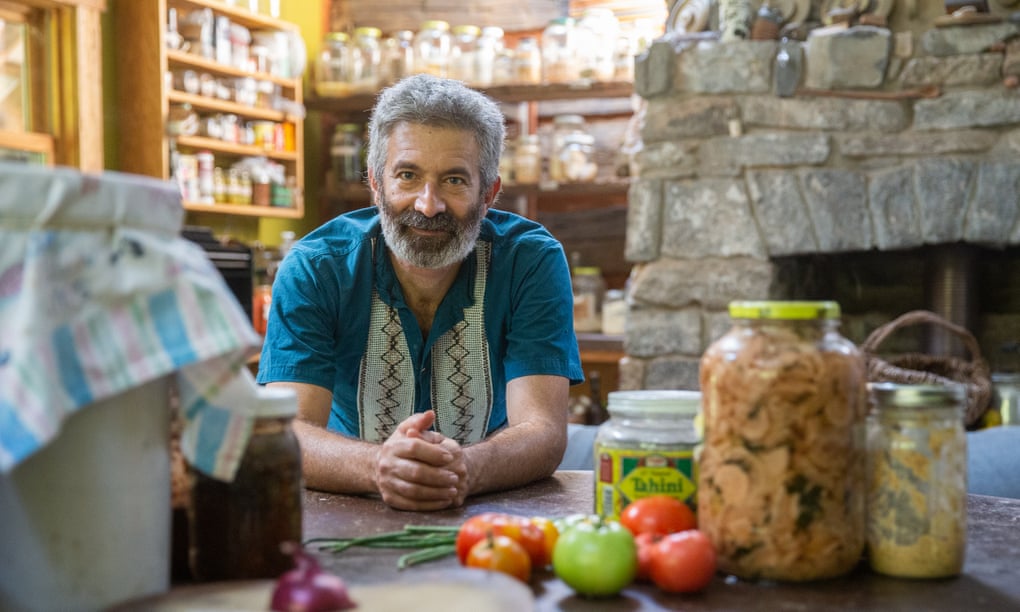
Fermentation guru Sandor Katz
Sandor Ellix Katz (born 1963), a tireless promoter of fermentation, has been inspiring the living culture movement with his workshops, lectures, and books for over twenty years. His seminal and now iconic book Wild Fermentation (2003) was also published in Czech under the title The power of natural fermentation (1st paperback edition: Grada 2015, 2nd hardcover edition Alferia 2020). After its first release in the US, Sandor embarked on a workshop tour that, according to him, has not ended to this day. This was followed by an extensive The Art of Fermentation (2012), referred to as the Bible of fermentation; its Czech edition in two volumes is being prepared for the fall of 2021. Sandor Katz is a living example of the beneficial effects of fermentation on the human body. He was diagnosed with HIV thirty years ago, and since then, strengthening his immunity has become his daily routine. After leaving New York, he lived for many years in a community in Tennessee, from where he recently moved to his own wooden house nearby, where he can continue to ferment successfully even during lockdown.
Kimchi recipe by Sandor Katz:
- Time: 1 week (or longer)
- Ingredients (per liter jar):
- sea salt
- 500 g of Peking or Chinese cabbage
- 1 white radish or a bunch of red radishes
- 1–2 onions and/or leeks and/or a bunch of spring onions and/or shallots, but you can add more
- 3–4 cloves of garlic (or more)
- 3–4 chili peppers (or more – it depends on how spicy you like your food). You can also use any other form of chili: fresh, dried or sauce (without chemical preservatives).
- 3 teaspoons (or more) grated fresh ginger
Procedure:
- Make a brine by adding 20g of salt to one litre of water and stirring it well to dissolve all the salt. It should be salty but still quite tasty.
- Cut the Chinese cabbage into larger pieces, then slice the radish and carrot and let the vegetables sit in the brine, covered and weighed down, until they soften – certainly a few hours, but even overnight. Feel free to add other vegetables to the brine such as sugar snap peas, seaweed, Jerusalem artichokes – whatever you like.
- Prepare the spices. Grate the ginger, chop the garlic and onion, remove the seeds from the chili peppers and chop or crush them. Alternatively, you can add them whole.
- Kimchi can handle a lot of spices, experiment with different amounts and don't be too afraid of it. Mix all the spices into a paste. You can add fish sauce if you want, but always check the label to make sure it doesn't contain preservatives that would kill the microorganisms that were originally supposed to ferment it.
- Drain the brine from the vegetables and save it. Taste to see how salty the vegetables are. If it seems too salty, rinse the vegetables thoroughly. If it seems too salty, add a little more salt and mix.
- Mix the vegetables with the ginger-onion-garlic-chili paste. Mix thoroughly and pack into a liter jar. Cover tightly. The kimchi should start to release juice. If it is not enough, add a little more brine - so that all the vegetables remain submerged under the surface of the brine. Secure with a small canning jar filled with water, or a bag filled with brine. If you check the kimchi every day, just tamp it down again with your washed fingers so that everything is completely submerged. Cover the jar with kimchi with cling film to keep out dust and insects.
- Let it ferment in the kitchen or some other warm place. Taste the kimchi every day and after about a week (when it has fermented sufficiently), move the kimchi to the refrigerator. A more traditional method encourages kimchi to ferment slowly, with higher amounts of salt, and in a cool environment, such as pits dug in the ground or cool basements.
(recipe is taken from Sandor Katz's book: The power of natural fermentation)