
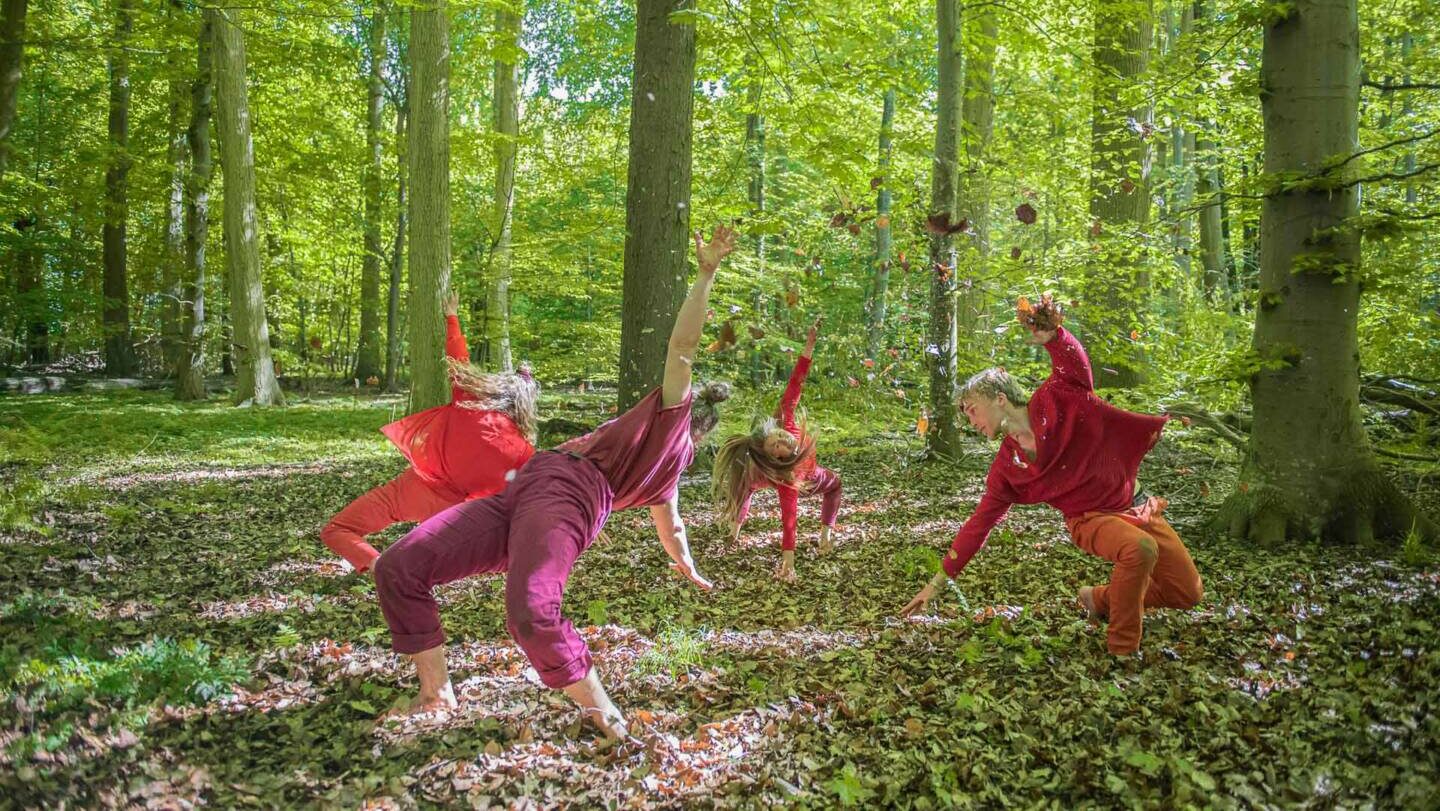
“A new current of change is flowing through the zeitgeist, bringing with it a desire for action, for fundamental change, and for the reintegration of humanity.”
to the community of Earth.
Cormac Cullinan
This is an abbreviated text of a lecture on the rights of nature at the eighth seminar of the Pilgrim Society's Traveling University of Nature. Anima Animalia and the rights of nature in Horní Maršov, delivered on August 10, 2023.
The planet’s rapidly growing environmental crisis – particularly the complete collapse of efforts to address the climate crisis and save the Amazon rainforest, the loss of biodiversity, and the need to protect indigenous and local communities from predatory mining – gave rise to a global movement for the rights of nature in the Americas in the first two decades of the 21st century, which is now spreading throughout the world.¹ Following the abolition of slavery in the 19th century and the advancement of women’s rights in the 20th century, the movement for the rights of nature represents the next great revolution in the field of law, which will undoubtedly be one of the defining features of the social transformation of the 21st century. It is increasingly clear that we will not be able to reverse the current self-destructive trend of our civilization, which in many areas is exceeding the planetary limits of sustainability, unless we fundamentally change the current legal philosophy, built on the idea of exclusive human ownership of the earth and all species, and if we continue to blindly pursue unlimited economic growth.
Although some successes have been achieved within the framework of contemporary environmental law – for example, in the field of protecting the rights of certain animals and the protection of endangered species – current environmental legislation is still not able to prevent the progressive damage and destruction of entire ecosystems. American lawyer Thomas Linzey, founder of the “civil rights” movement in the USA, states that environmental laws simply “permit” environmental pollution. According to lawyer Joseph Guth, environmental law is not able to calculate or “manage” the cumulative impacts of human activities and the reality of ecological limits. Cultural historian Thomas Berry states that Western industrial societies live in a false dualism that has allowed the creation of environmental laws that do not sufficiently protect nature; many legal and political systems legitimize or directly encourage the exploitation of the Earth. Therefore, we cannot achieve ecological sustainability within the framework of current environmental laws.
The key causes of our failure to effectively care for the natural world are three “harmful ideas,” as Canadian lawyer David R. Boyd, author of the book The Rights of Nature (2017). The first is anthropocentrism, a widely shared belief in our human separateness from nature and our superiority over it. We consider ourselves the pinnacle of evolution and see all of the non-human world as our own. ownership, as an object or resource that we have the right to use in any way for our own benefit. From this perspective, current law articulates only our claims, but practically no responsibility for what we own. We do not perceive the natural world, which is exposed to our endless needs, as a living entity, as a subject with its own legal rights. Through the prism of this property perspective, we strive to unlimited economic growth, which is the main goal of virtually all governments and businesses and consistently outweighs concern for the environment.
Anthropocentrism and its revisions
The above anthropocentric ideas have deep roots that go back far into the past. The ancient Greek philosopher Aristotle believed that humans have the right to appropriately use animals as resources, as inferior creatures. The emergence of the concept of ""ladder of life", which organized animals and plants hierarchically. In the Middle Ages, Christian philosophers followed suit, creating the so-called The Great Chain of Being, which defined a strict hierarchy of all life forms, with humans at the top of the chain, just below God and the angels. The Christian Genesis states that God created man in his own image and gave him dominion over all creation, "over the whole earth and over every serpent that creeps upon it"This attitude was further strengthened with the advent of the Scientific Revolution in the 17th and 18th centuries, when the position of animals, who began to be considered mere machines, deteriorated even further.
Anthropocentric ideas about human superiority are today not only professed by libertarian philosophers, but we even find them in groundbreaking international environmental agreements, such as the Stockholm Declaration of 1972, which proclaims that: "Of all things in the world, people are the most valuable." From this perspective, the focus of sustainable development is primarily on human beings. The idea of human beings' fundamental difference from other animals and our superiority over them still permeates Western legal systems today.
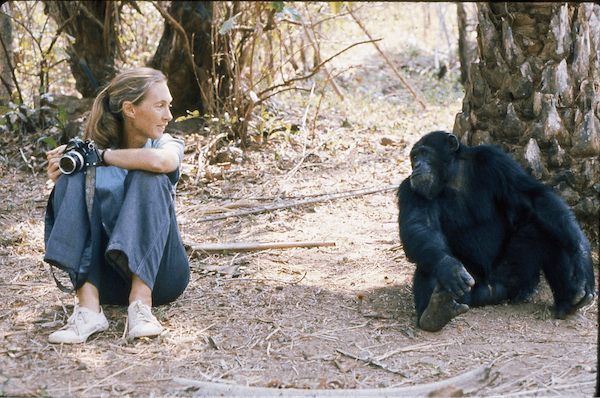
However, in recent years we have been surprised to discover that the characteristics that we have come to use to describe our human superiority over other animals cannot be applied only to our own species. That the characteristics of humanity that we value so much, such as intelligence, emotions, language, tool use, memory, culture, foresight, cooperation, altruism and self-awareness, are also inherent in many of our other animal species, for which we now have convincing scientific evidence. The scientific understanding of animal intelligence and consciousness has made enormous progress in recent decades. For example, there is no doubt that dolphins, whales, primates and elephants, as well as numerous birds, are highly intelligent. The myths of human superiority and exceptionalism have thus been convincingly refuted by science. The difference between humans and other animals is “one of degree, not of kind”, as Charles Darwin once succinctly put it. And primatologist Jane Goodall similarly states: “… there is no sharp boundary between us and the rest of the animal kingdom. … We are not the only creatures on the planet who have personalities and minds capable of rational thought and feeling.”
Our awareness and appreciation of the value of other animals, other species, and the Earth is clearly undergoing a fundamental transformation that is challenging every aspect of modern life. Scientists who specialize in classifying species have recently changed our place in nature's taxonomy - to the family Hominidae, which was previously reserved only for humans, now houses all great apes (chimpanzees, gorillas, orangutans). A new scientific field has also emerged anthrozoology, which examines the positive effects of human-nonhuman-animal studies (HAS). Unfortunately, our laws and actions have not yet changed to keep pace with this evolution of our values.
The question of ownership
That nature is merely a collection of things intended for human use is one of the least questioned concepts in our society. In the 18th century, the famous English jurist William Blackstone (1723-1780) wrote that "The earth and all things therein are the common property of mankind by the immediate gift of the creator, from which all other beings are excluded." So, as Boyd puts it: “… although millions of animal species live on Earth, a single species of hyperintelligent primate – Homo sapiens – claims, through legal ownership, almost every square meter of the planet’s 148 million square kilometers of land.” Today, there is almost no “terra nullius”, “no man’s land”, uninhabited by our species. Even the high seas are treated as a global commons for human use, as a shared resource. Moreover, deep sea mining, previously unthinkable, is now becoming a reality.
In addition to owning all the land, we also claim ownership of all the species that live on it. Animals are considered property, things or objects, even goods, no different in the eyes of the law from shoes, chairs, or trinkets, and this applies to both domestic and wild animals. Ownership of an animal includes the right to possess it, use it, move it, sell it, even destroy it, and exclude others from its use. Wild animals are owned by state and provincial governments, and regardless of where they live, they belong to people.
If we are the only species with rights, then we are also the only species that really matters. We have become the rulers of the world and the sole standard of reality and value. As our laws extend the human right of private property to all other life, nonhuman nature, especially the billions of other animal species on the planet, becomes a virtual outlaw in the legal system. Andrew Angyal points out in this regard: "If there is no right for anything other than human, and no protection for it, then we establish a predatory relationship with the nonhuman world. When we begin to consume everything that is not human, we risk losing our own humanity, which can only be defined in the context of the larger community of the Earth."

The doctrine of discovery and learning from indigenous cultures
Our concept of private property, however, is still foreign to indigenous cultures. As Chief Oren Lyons, a member of the Onondaga and Seneca Indian tribes and a member of the Council of Chiefs of the Iroquois Confederacy, put it succinctly: "Private property is a concept that is incompatible with our understanding of life and, we would say, with the reality of life. Private property is an idea, a human idea, which is tantamount to personal greed."
A fundamental clash between the Western concept of property rights and indigenous customary law occurred during the colonization of North America by European settlers, who legitimized this colonization with the so-called the doctrine of discovery, proclaimed by European monarchies and supported by the Pope. According to this doctrine, the discovery of a territory previously unknown to Europeans gave the discovering Christian nation ownership of that territory; as well as sovereign and commercial rights over the indigenous people who lived there. This arrogant idea thus allowed European states to seize lands inhabited by non-Christian indigenous peoples between the mid-15th century and the mid-20th century. Although Pope Francis apologized in Canada and Bolivia in 2015 for the negative role that the Church played in the colonization of indigenous peoples of North and South America, the Vatican has still not provided evidence of the revocation of the papal bulls that established the doctrine of discovery. Moreover, in the United States, this doctrine still fundamentally defines international property law and is used by international corporations and nation states to extract resources from indigenous lands around the world; and deprives Native Americans in the US of their right to their own land.
However, thanks to the nature rights movement, indigenous cultures are increasingly beginning to have a voice and to speak out about the state of the world today. They show us, as the “Fundamental Call to Awareness” that a delegation of indigenous leaders addressed to the United Nations in Geneva in 1977 states, "that our society is heading in a fundamentally wrong direction, that nature is not man's enemy, that we need to stop attacking Mother Earth with unbridled consumer practices, and that if we want to survive, we must consider nature our friend..."From this perspective, the UN Declaration on the Rights of Indigenous Peoples adopted in 2010 represents, as Philip P. Arnold put it, not only a step towards improving the lives of indigenous peoples, but also "a significant step towards the survival of us all".
Some of the major developments in the field of nature rights in the last twenty years have been carried out in close collaboration with, and often directly initiated by, indigenous communities. Let us recall the historically groundbreaking implementation of laws on the rights of nature in the Ecuadorian National Constitution, adopted in 2008, and the national Law on the Rights of Mother Earth, adopted in 2020 by Bolivia. Both laws grant nature positive rights, including the right to exist, renew and regenerate, and also grant broad legal personality that allows everyone to speak on behalf of nature and defend its rights. Indigenous communities also played a very important role in the preparation and promulgation of the Universal Declaration of the Rights of Mother Earth in 2010 at the World People’s Conference on Climate Change in Cochabamba, Bolivia. This document, which fundamentally revises the current philosophy of international law, has become the cornerstone of the activities of the Global Alliance for Nature Rights and the International Nature Rights Tribunal, in which many indigenous activists and scholars are now active. The groundbreaking granting of legal personality to Te Urewera National Park (2014) and the Whanaganui River (2017) in New Zealand was also initiated by the patient, long-term work of indigenous Maori activists such as Timothy Kruger. This legal revolution, as David Boyd has written, "is of fundamental importance not only for relations between indigenous and colonial peoples around the world, but also for pointing the way to an overall restoration of a healthy and sustainable relationship between us humans and the ecosystems of which we are a part."
Similar transformational legal work is being done by Terri-Lynn Williams-Davidson, a distinguished Haida lawyer and artist who is the General Counsel of the Haida Nation. Like Maori activists, she has brought into Western legal thinking a recognition of the vibrancy and spirituality of nature inherent in the Haida tradition. In this spirit, she has defended the cultural significance of the red cedars and old-growth cedar forests of Haida Gwaii before the Supreme Court of Canada. Indigenous ethics and perspectives permeate all aspects of Terri-Lynn Williams-Davidson’s work and that of the law firm White Raven Law, which she founded. Her credo is as follows: “How can we live together with this land? How can we reconcile Aboriginal law with the British Crown’s property rights? How can we achieve reconciliation?” IN Earth Convention, which she developed, prioritizes people's responsibilities to the Earth over their personal rights. They include 1/recognizing that we are all part of an interconnected world; 2/preserving and restoring the Earth, the species and cultures that it supports; and 3/managing our use of the Earth in a way that respects its cycles and relationships, does not exceed planetary limits, and is mindful of future generations.

Earthly community
The work of leading thinkers in the field of natural rights, such as cosmologist Thomas Berry and lawyer Cormac Cullinan, has also been profoundly influenced by the worldview and teachings of indigenous peoples and traditional communities around the world. In particular, they view the land not as a commodity but as a community – of which we are an integral part – which extends our ethical concern to all members of that community and leads us to a comprehensive understanding of human responsibility towards nature.
The concept of an integral Earth community is central to Thomas Berry's thinking. Berry argued that it is essential for modern man to realize that the Earth and all its living and non-living components form an integral, interconnected community; that we humans are members of this community and that we will achieve our greatest fulfillment by working for its well-being. He spoke of the need to develop mutually reinforcing and enriching relationships between ourselves and the Earth and to promote the functional convergence of the entire Earth system so that the Earth can function "like one cell"Such a future, Berry argued, can only exist if we understand the universe as a community of subjects to be interacted with, rather than as a collection of objects to be exploited. We must abandon “exploitation” as our primary relationship to the planet, he emphasized.
Without living in a larger earthly community, we are not only unable to survive physically, but we cannot be fully ourselves without it, since this larger community, as Berry emphasized, shapes our larger self. According to the ethicist and anthrozoologist Paul Waldau, we will not be able to achieve full “self-realization” if we think of ourselves as separate from the rest of the world, or rather, if we claim to be superior to it. Waldau considers human exceptionalism to be the dominant narrative of our time, even though, as he states, there are many profound formulations in our wise traditions about the recognition of the importance of non-human “others” whenever a human individual or a human group strives for full self-realization. Similarly, Andreas Weber reminds us that we can only know ourselves in the eyes of other beings. When we realize this connection, we realize that the current destruction of the Earth is also degrading our soul, our deeper sense of self, and therefore our collective psyche. Whatever we do to the outer world, we also do to our inner world.
From the Anthropocene to the Symbiocene
We urgently need to make fundamental changes in the governance of our society and find a new civilizational paradigm that is based on an Earth-centered perspective. "We need to integrate humans into the dynamics of the planet, instead of integrating the planet into the dynamics of humans." (T. Berry) That is, learning to live by the "rules" of the wider community, by the laws of the Earth from whose creativity we were born, which means a radical transformation of the existing legal philosophy.
The problem is that our current secular legal philosophy denies the need for continuity between our legal systems and the Earth system. We have forgotten that living in harmony with the rhythm of the planet was once the main purpose of human regulatory systems, as we can still see in some indigenous cultures today. However, this situation is starting to change. Within the burgeoning nature rights movement, there is now intense collaboration between Western lawyers, environmentalists and activists and members of indigenous cultures, which clearly shows that we can only solve the serious problems of the contemporary world together. Only if we expand our Western perspective, guided by the lens of scientific knowledge, to include an indigenous perspective based on the experience of intimate human participation with nature.
One of the key moments in the development of the natural rights movement is the formulation of a philosophy and principles terrestrial jurisdictions (earth law / Earth Jurisprudence) Thomas Berry. Berry used this term to describe a philosophy of public administration and law in which the primary interests of the Earth, of the entire terrestrial community, are not just those of humans. He argued that a legal system exclusively for humans is not realistic, that we need a law that would ensure the rights of both human and geological and biological components of the terrestrial community. Humans are only one part of a larger terrestrial community of beings, and the well-being of each member of this community depends on the well-being of the Earth as a whole. The primary lawgiver is the universe. The laws of nature are "analogous," that is, they already exist, not created by human law, but rather by the very act of the universe creating its evolutionary processes. "Where there is life, there are rights", says Berry. Human communities will only be viable and flourish if they behave as part of the larger community of the Earth and if they do so in a way that is consistent with the fundamental laws or principles that govern the functioning of the universe – that is, if they are in harmony with the so-called “great law.”
The Earth community and all beings that make it up have the right to be, the right to habitat, and the right to fulfill their role in the ever-renewing processes within that community. The rights of all natural beings are species-specific and limited. The difference in rights is qualitative, not quantitative. Trees have the rights of trees, insects have the rights of insects, rivers have the rights of rivers, mountains have the rights of mountains. Human rights do not infringe on the rights of other modes of being to exist in their natural state and are therefore not absolute. They simply represent a specific relationship between a particular human ‘owner’ and a particular piece of property, which the owner enables to fulfill its unique role in the great community of life.
As Andrew Angyal wrote: "Berry imagines the Earth as an ultimate good in itself, regardless of what benefit or profit humans may derive from it." His vision of a mutually enriching earthly community in which the rights of all subjects are respected represents a huge paradigm shift. “Within this context, the various components of the Earth would be a community and together would form an integral expression of the greater community of the planet and would be shared proportionately among all members of the community according to need.” (T. Berry) In such a context, each individual being is supported by every other being and in turn contributes to the well-being of all other beings within the earthly community. Angyal believes that Berry's vision will allow us to rethink the basic institutions of government, religion, education and business in the future, and he expressed the belief that a truly new earthly jurisdiction, earthly law, could be born from it.

This Berry concept was thoroughly analyzed and further developed by South African lawyer Cormac Cullinan in his groundbreaking book Wild Law / A Manifesto for Earth Justice (2002). He has made the idea of terrestrial jurisdiction part of the nature rights movement worldwide. Cullinan has also developed the related concepts of Great Jurisprudence and Wild Law. Wild laws are wild in the sense that they support human creativity and connection with nature. They are grounded in terrestrial jurisdiction and should reflect the complex nature of the reality they regulate and guide human behavior in a way that supports the integrity and functioning of the entire terrestrial community in the long term, over the interests of any one species. Wild laws should balance the rights and responsibilities of humans and other members of the terrestrial community and motivate us to change our relationship with nature from exploitation to more “democratic” participation in the community of other beings. In this view, human rights are a dependent and interrelated subset of Earth rights, in which we should play a mutually reinforcing role within the larger community of life.
Berry and Cullinan's concept of terrestrial jurisdiction, developing a vision of integrated coexistence of humans with the natural world – earthly democracies –, represents an important step towards an ecological civilization, as envisioned by visionary Jeremy Lent, for example. Lent states that our primary task in this critical transformational time for us is to learn to harmonize the power of our conceptual consciousness with the living intelligence that is within us and that is inherent in all life on Earth. He believes that through such a process of integration, we could arrive at a new form of symbiosis with the world, which would allow for “the mutual flourishing of human and non-human nature into the distant future.” “A fundamental principle would be to recognize fractal flourishing, where the well-being of each person is fractally related to the health of the entire world.”
Comment:
¹ As of 2021, at least 39 countries, including dozens of cities and counties in the United States, have laws on the rights of nature at both the local and national levels. They take the form of constitutional provisions, contractual agreements, statutes, local ordinances, and court decisions. (Source: Wikipedia)
Literature:
Glen Albrecht, "Exiting The Anthropocene and Entering The Symbiocene". In: Mindful Nature 9 (2) 2016.
Andrew Angyal, "Thomas Berry's Earth Spirituality and the Great Work". In: The Ecozoic Reader 3, 2003, p. 173.
Philip P. Arnold, The Urgency of Indigenous Values (Haudenosaunee and Indigenous Worlds). Syracuse University Press 2023.
Thomas Berry, Great Work / Our Journey into the Future. Malvern, Prague 2021.
Thomas Berry, "The Origin, Differentiation and Role of Rights", 2021.
David R. Boyd, The Rights of Nature. ECW Press, Toronto 2017.
Cormac Cullinan, Wild Law / A Manifesto for Earth Justice. Green Books, Cambridge 2011 (2nd edition).
Jeremy Lent, The Web of Meaning. New Society Publishers (Canada), 2021.
Barry Lopez, "The Leadership Imperative." In: Orion, February 2007.
Paul Waldau, "Humilities, Animalities, and Self-Actualizations in a Living Earth Community." In: Living Earth Community, edit. Sam Mickey, Mary Evelyn Tucker, and John Grimm. Open Book Publishers, Cambridge UK 2020, p. 41-51.
Andreas Weber, He feels, therefore he is. Malvern, Prague 2022.